
CommercialLindsay SaundersThu 16 Apr 26
Precinct Masterplan for $1.13bn Hobart Stadium Released

The masterplan for the precinct on Hobart’s waterfront that will be home to the city’s contentious $1.13-billion stadium has been released.
The Tasmanian government’s Macquarie Point precinct plan outlines a staged vision that prioritises construction of the stadium ahead of housing and broader mixed-use development.
The plan will guide the transformation of the 10ha site into a mixed-use precinct incorporating the multipurpose stadium, commercial space, housing and supporting infrastructure.
Delivery will be executed across three overlapping stages—the first focused on the stadium, an underground car park and a new northern access road including an event bus plaza.
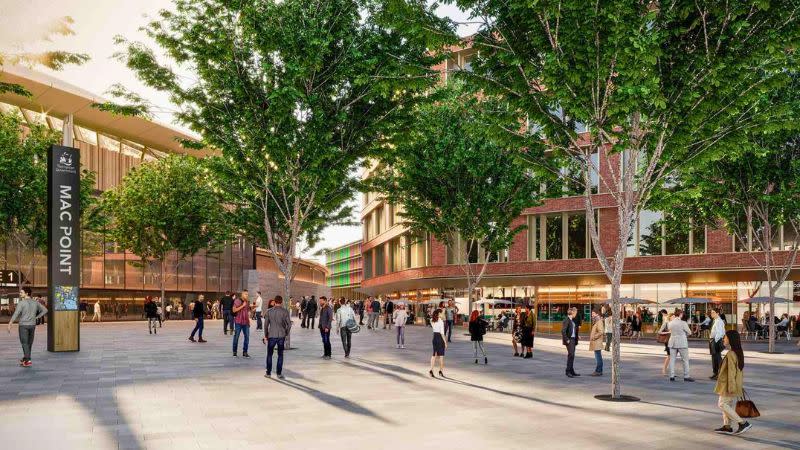
Later stages will introduce residential, commercial and public realm elements as the broader precinct is built out.
The residential component is concentrated around the Regatta Point foreshore, where the plan allows for about 100 homes, including a portion allocated to affordable and essential worker housing.
At full build-out, the precinct is expected to support up to 27,000sq m of commercial floor space and around 1800 jobs.
Building heights across most of the site will be capped, with non-stadium development generally limited to an RL24 envelope—24m or about 7 to 8 storeys of residential built form.
The masterplan follows Federal approval of the broader precinct and housing plans, which secured a $240-million Commonwealth funding commitment tied to delivering housing outcomes alongside the redevelopment.
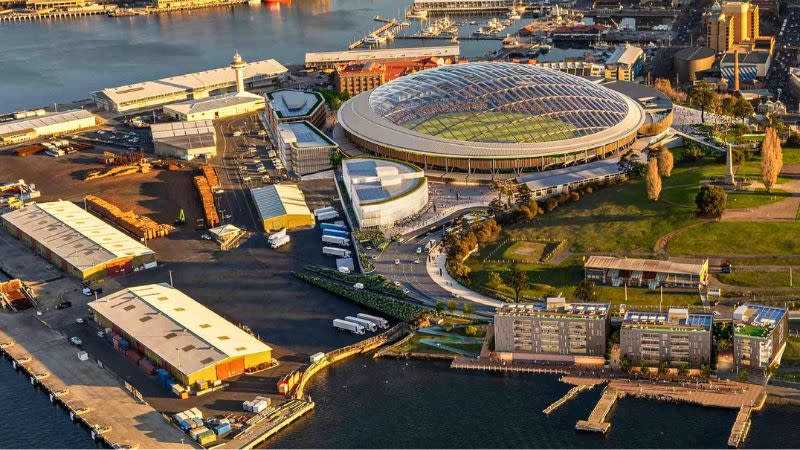
The stadium remains the centrepiece of the project, forming part of a wider strategy to establish a major events and urban renewal destination on Hobart’s waterfront.
The proposed roofed stadium has been costed at about $1.13 billion, following a series of revisions that saw earlier estimates rise from about $715 million to $945 million before climbing again ahead of parliamentary approval.
The project was approved by Tasmania’s upper house in late 2025 after prolonged political debate, clearing a key condition tied to securing an AFL licence for the state’s new team.
Construction is expected to run through to around 2030, with the venue unlikely to host AFL matches until at least that time.
Despite this progress, the stadium has faced sustained criticism over cost, scope and its impact on the broader precinct.
Concerns have been raised that the headline construction cost excludes associated infrastructure such as access roads, transport and parking, potentially pushing the overall investment significantly higher.
Industry groups have also warned the project could divert skilled labour away from housing construction, exacerbating supply shortages and delaying residential delivery across the state.
Planning and heritage concerns have been central to opposition, with critics arguing the scale and design of the stadium would impact Hobart’s waterfront character and surrounding historic areas.
The Tasmanian Symphony Orchestra and nearby tourism operators have also objected to the location, citing potential noise impacts and broader economic risks to existing businesses.
Public opinion has remained divided, with cost pressures and funding priorities emerging as key issues among opponents, particularly amid concerns about state debt and potential impacts on essential services.
The debate over the stadium’s role has extended to the sequencing of the precinct, with critics warning that prioritising the venue could delay housing and wider urban renewal outcomes at Macquarie Point.