

IndustrialLeon Della BoscaFri 26 Jun 26
Spectre Plots Thornbury Scheme as it Pads Out $375m Industrial Pipeline

Spectre Property is moving ahead with its plans for an industrial project at Thornbury as it adds a $50-million development to its Victorian pipeline.
The industrial developer said its planned industrial project would be the first in the suburb, 8km north of the Melbourne CBD, in seven years.
It paid $12 million for the site.
Forty-five industrial units are planned for the 9000sq m site at 1 Matisi Street. About 20 per cent of the lots had already attracted enquiry before detailed designs were finalised, according to Spectre.
Founder and managing director Jason Grasso said that “industrial opportunities in locations such as Thornbury rarely come to market, which is why we moved quickly when this site became available”.
“The inner north remains one of Melbourne’s most supply-constrained industrial markets,” Grasso said. “There has been very little new product delivered in recent years and demand from owner-occupiers continues to outpace supply.”
Pre-design interest across roughly a fifth of the project confirmed the strength of underlying demand, Grasso said. The Thornbury project is expected to launch in August, and construction is scheduled to commence in February next.
In five years of operation, Spectre has delivered or progressed more than 745 lots across Victoria, and holds a development pipeline valued at $375 million across commercial and industrial assets.
Alongside the Thornbury acquisition, the company is preparing to launch The Precinct Vermont, which has reached approximately 25 per cent in pre-launch sales.
Its Braeside industrial development, Found Braeside, achieved 70 per cent sold before construction completion.
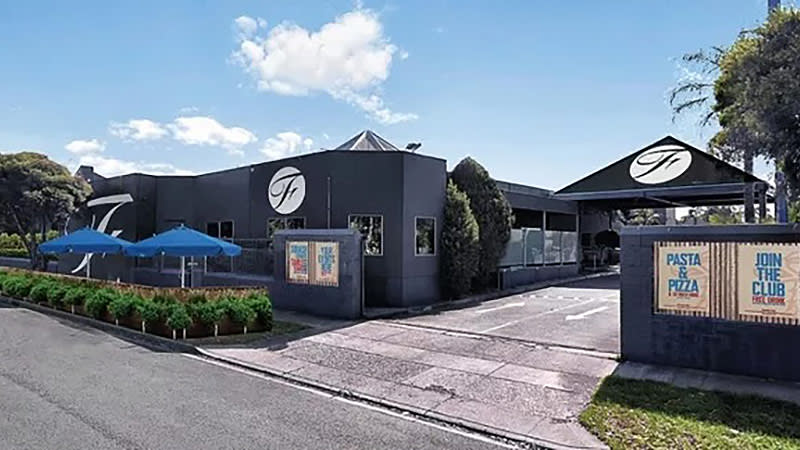
The site was once home to the Italian Furlan Club, built in 1957 by Friulian immigrants and one of the first Italian clubs in Australia.
It occupied the site for nearly seven decades before a 2024 fire and subsequent ownership change.
The Darebin City Council sought heritage protection for the building, but the Department of Transport and Planning refused the application for an interim and permanent heritage overlay in August 2025, citing uncertainties over the continuation of the club’s activities and the fire’s impact on its heritage significance.
Without heritage protection, the demolition application was able to proceed.
Grasso said growth had been guided by site selectivity rather than volume.
“We’ve always taken a selective approach to acquisitions,” he said. “We’re not interested in growth for growth’s sake, we’re interested in projects where we can create long-term value and genuine market demand.”





