
ResidentialChris ThomsonMon 23 Mar 26
Bid to Bring Adelaide’s Le Cornu Precinct Back from ‘Point of Failure’

A private development conglomerate is working to bring a government-initiated urban renewal project in Adelaide back from the “point of failure”.
The group, Locale Corporation, has responded to criticism by South Australia’s state architect of its revised scheme for the 3.5ha former showroom site of the defunct Le Cornu furniture brand.
In a six-page letter late last year, Government Architect Kirsteen Mackay said she was unable to support major changes proposed by Locale to an approved scheme for a mixed-use precinct at the cleared site on the corner of Anzac Highway and Maple Avenue in Forestville.
“While I continue to support the ambition for a cohesive and mixed-use urban precinct, in my view fundamental aspects of the original proposition have been diluted through redistribution of land uses across the site,” she said.
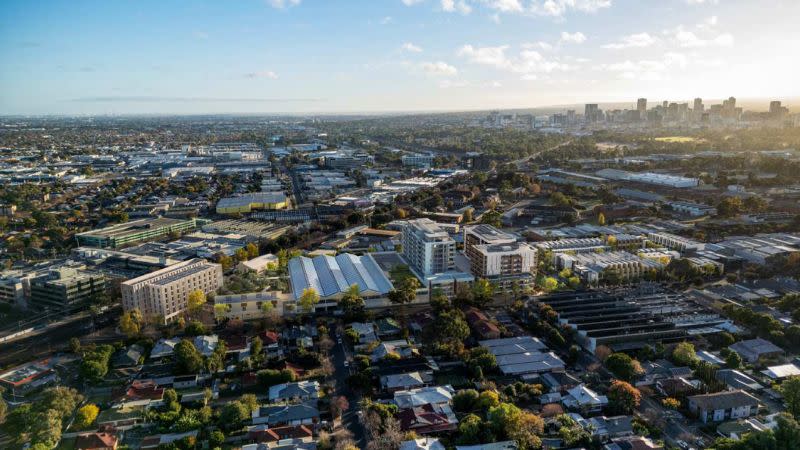
The site, 3km south-west of the Adelaide CBD, has been vacant since October 2016 when the well-known Le Cornu furniture and homeware store ceased operating. In October of the next year, German retailer Kaufland bought the land and got planning consent to erect a two-level retail project that did not proceed.
Government development agency Renewal SA bought the plot in November 2020 with plans to deliver a $250-million mixed-use precinct. In 2022, Locale—a conglomerate of the Chapley family’s Commercial Retail Group, Buildtec and Peet Limited—successfully bid to become Renewal SA’s partner to develop the site.
In March 2024, Locale won consent to build a two-level podium topped by two eight-level towers, a seven-level tower and a six-level tower for the western half of the precinct.
Locale now wants to amend the development concept for the western portion to bring it back from the brink of failure.
The company wants to reposition residential apartments from the frontages of Anzac Highway and Maple Avenue to the eastern edge of the site and contain the apartments in one tower rather than in several buildings as previously approved. The revised scheme would see the number of apartments reduced from 102 to 93.
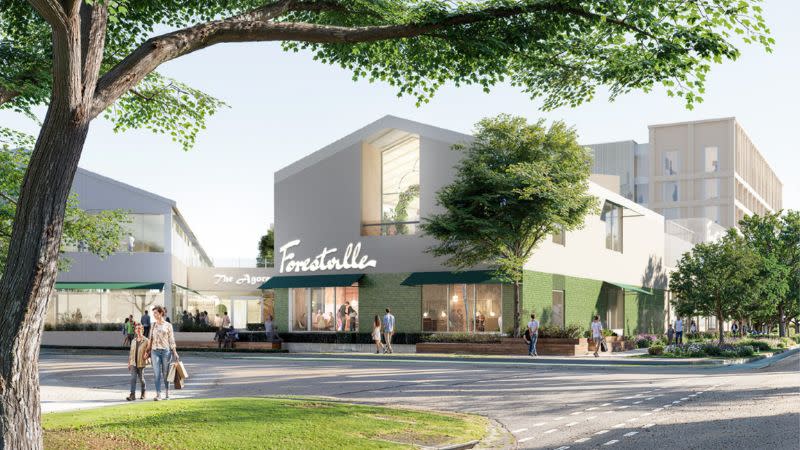
Moving a school and a rooftop farm, reducing the project’s retail trading area from 5490sq m to 4389sq m and deleting an office tower—while incorporating office space elsewhere—are among many other changes requested by Locale.
Mackay considered that relocating apartments away from the street frontages and reducing integration with the rooftop urban farm would “dilute the original public value proposition of delivering a genuinely mixed-use precinct”.
“I acknowledge the variation has been informed by stakeholder input and market feedback,” she said.
“However, I am concerned by the fundamental shift in the overall site organisation—in particular the relocation of the residential apartment building—which in my view has diminished the integrity of the mixed-use ambitions and fundamental urban design principles of the precinct.
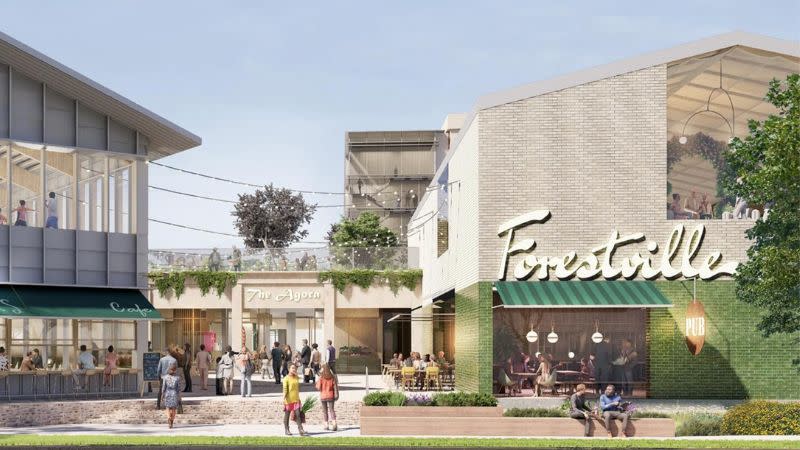
“While I continue to support the concept of a rooftop urban farm, in my view its place-making potential is currently compromised by limited connectivity and visibility from the street level.”
In response, Future Urban associate director Christopher Webber, on behalf of Locale, last month advised that changes had been made to the amended plans.
“The applicant remains committed to working collaboratively with the government architect through the detail[ed] design process post planning consent to ensure the delivery of a high-quality design outcome,” Webber said.
He considered that the previously approved concept was a “vertically integrated mixed strategy, overlaying private residential and retail commercial activities, with residential and short stay buildings located along ANZAC Highway that are grounded with retail”.
“In the current development context this strategy of layering private and commercial uses is creating several financial and buildability complexities which has brought about the re-establishment of the site master planning to create a viable development that can deliver on the vision and role of the site for the precinct,” Webber said.
“The complexity both from a constructability and financial perspective of the cross section laboured the viability of the development to a point of failure, and hence the purpose of re-establishment.”
The changes to the previously proposed amendment include revised access to the rooftop farm and relocating a connection to communal open space to provide “more equitable and central access point for residents”. The revised amendment—designed by Melbourne-headquartered KTA Architects and Nelson and Koo Architects— also now envisages increased built form on Anzac Highway “to improve internal amenity and building proportions to the streetscape”.
In his recommendation to SA’s State Commission Assessment Panel, senior government planner Ben Scholes has recommended that Locale’s changes be conditionally approved.
“Following a balanced assessment of application details, advice from referral agencies and views submitted by representors, the proposal is supportable,” he said.
The panel will consider Locale’s proposed amendments when it next meets on Wednesday, March 25.
Commercial Retail Group director Spero Chapley was contacted for comment.