
Freecity Plans Modular Skyscraper Hub in West Sydney

A $248.8-million tower in Western Sydney would start a two-site push into highrise modular housing after Australia’s first modular design competition.
Freecity’s State Significant plans for a 40-storey build-to-rent tower at 1 Barrack Lane and 81-83 George Street are on exhibition until December 10, with a second major housing project advancing next door at 89-91 George Street.
The FK-designed tower emerged from an invited competition earlier this year, with all entries required to support a factory-built delivery program.
Prefab Projects reported it as the first modular design competition for a major Australian highrise.
Planning documents said the tower would “be delivered through Volumetric Modular Construction (VMC) … involving the off-site fabrication of building modules that are transported and assembled on-site”.
Freecity said it chose the modular method due to timing pressures because traditional construction “wasn’t able to deliver the project as efficiently and within the Housing Accord period (2029) as VMC”.
The first project would deliver 383 build-to-rent apartments above a three-storey podium, using factory-made modules to reduce delivery time by 40 per cent.
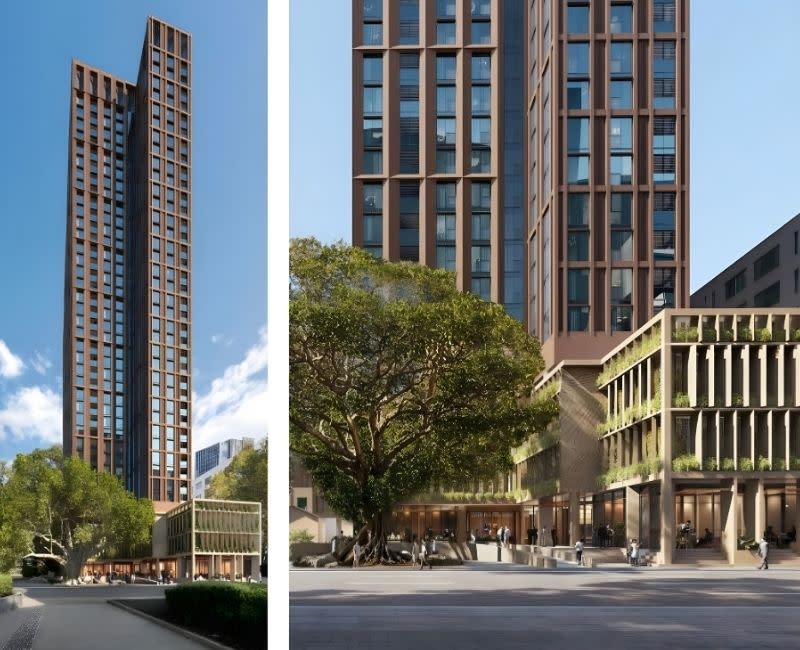
The tower would rise from a traditional concrete podium and core, with steel modules—typically 11.2m long and 3.5m wide—craned into place and locked together.
Freecity said this approach would reduce noise, dust, construction traffic and impacts on heritage items including Perth House, the Warders Cottages and the convict-era drainage system.
The 3071sq m site fronts George Street and Barrack Lane inside Parramatta’s E2 Commercial Centre zone, 24km west of the Sydney CBD and close to Parramatta Station, the light rail, the ferry wharf and future Metro West station.
Existing buildings—a three-storey office at 81 George Street, a three-storey commercial building at 83 George Street and a two-storey building at 1 Barrack Lane—would be demolished.
The ground floor would hold flexible retail space, a lobby, management rooms, waste facilities, separate residential and service vehicle entries, four service bays and bicycle repair amenities.
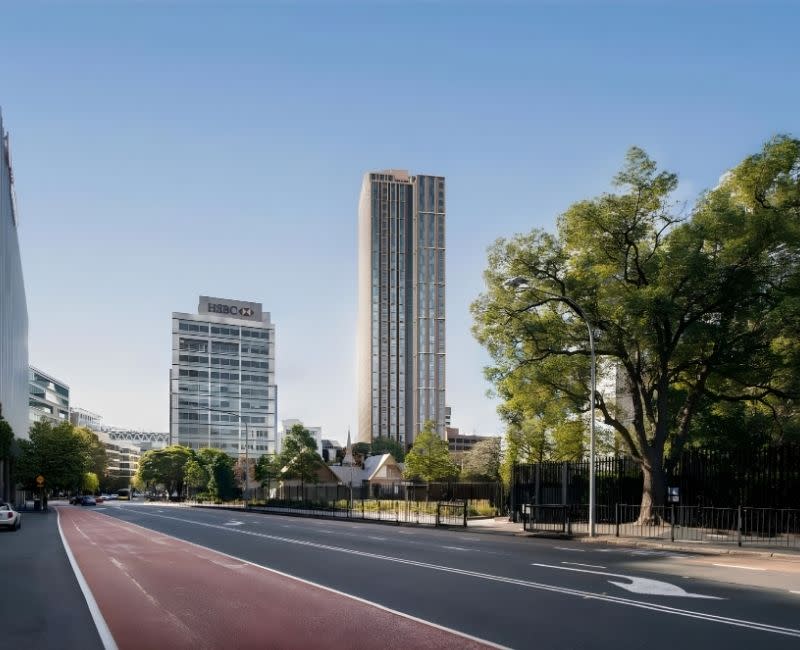
Two podium levels above would include 71 parking spaces, hundreds of bicycle spaces, motorcycle bays, storage and plant.
A third podium level would provide outdoor communal space.
Above the podium, 37 residential floors would deliver 383 apartments, including 235 capable of dual-key layouts.
Communal rooms, lounges, workspaces and recreation areas would be spread throughout the tower.
Balconies would be enclosed because “traditional open balconies are incompatible with the waterproofing requirements of the VMC method”, planning documents said.
Freecity’s second project at 89-91 George Street is progressing through the Housing Delivery Authority pathway.
A scoping report outlined plans for a 71-storey mixed-use tower with about 530 dual-key build-to-rent units and 300 co-living units, built around the same modular system.
Planning documents said both towers would support the restoration and adaptive reuse of Perth House and its stables and help activate part of George Street.
The block has shifted purpose several times.
ASX-listed developer GPT once assembled the 81 George Street and 1 Barrack Lane block as part of a proposed $1.6-billion office precinct with towers rising 60 and 35 storeys.
According to Real Commercial, the group sold its Parramatta holding in mid-2024—along with a North Sydney site—to Freecity in a deal reported at $219 million.

Freecity has repositioned the block into a living-sector precinct, one piece of its 6000-home pipeline the company aims to deliver using Volumetric Modular Construction.
Executive director of development Michael Romano told The Urban Developer the 40-storey project would deliver “enough to house up to 1100 residents” in an area where demand for rental homes continues to climb.
“We’re committed to the build-to-rent sector for the long term,” he said.
“This model can give Sydney renters more secure tenancies and properly managed buildings with communal spaces, creating a place that feels like home.”
He said modular construction was central to Freecity’s pipeline.
“[Our] focus is to deliver much-needed homes across the living sector and prove VMC can be part of the solution to Sydney’s housing crisis. We’re focused on quality, speed and sustainability—all of that means people in homes sooner.”
Parramatta’s development pipeline continues to intensify as Metro West reshapes the CBD spine.
Sydney Metro secured concept approval for a 2.5ha integrated station precinct of four towers around the future Parramatta Metro station.
The plans include three office towers rising 38, 28 and 25 storeys, a 33-storey residential tower, 505 parking spaces and ground-floor retail.
Two consortia—Lendlease and a Gamuda–Billbergia–MTR partnership—have been shortlisted to deliver the precinct at 41-59 George Street and 220 Church Street.
More height is arriving across Parramatta Square.
RF Corval secured approval for a 47-storey build-to-rent tower and a 30-storey office building at the Octagon site on 20–22 Phillip Street, with 397 apartments in the taller tower and 46,238sq m of commercial space in the other.
Planning panels also approved a 32-storey, 492-unit residential tower at 61 Cowper Street in Granville, designed by PBD Architects for Starryland and Longton Capital.
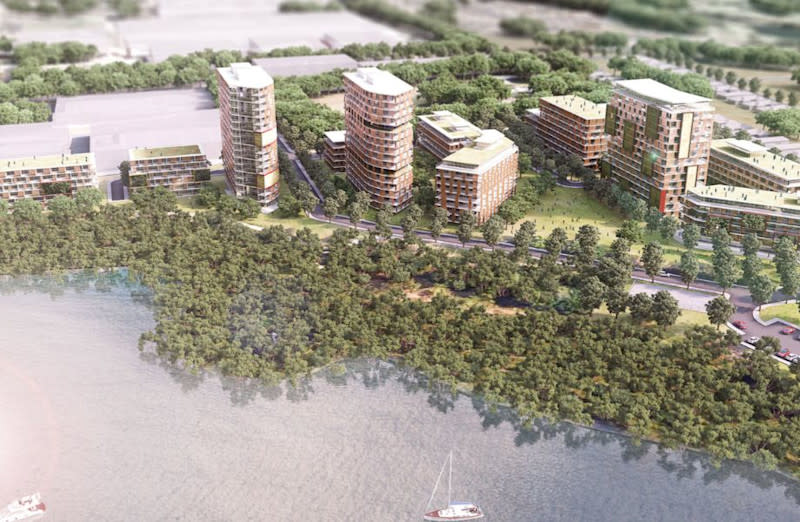
Further west, Holdmark has filed plans for the next stage of its Melrose Park precinct on the Parramatta River.
The $507.8-million stage includes three buildings rising up to 29 storeys with 1029 homes, each designed by separate architects after a competition.
The developer said the full Melrose Wharf precinct would deliver around 5500 homes and extensive waterfront parks as the 55ha former industrial zone is redeveloped.


