

LivingHudson FarrFri 10 Jul 26
‘Profound Shift in Affordability’ as Australian Rents Break Record

Australia’s median weekly rent has reached a record $705 as rental growth accelerates despite a modest rise in vacancy rates and growing affordability pressures.
New data from Cotality, Domain and REA Group showed rents continued to climb through the June quarter, with limited supply supporting higher prices across much of the country.
Cotality data showed national home rents increased 1.6 per cent over the quarter, lifting annual rental growth to 5.9 per cent, up from 5.7 per cent in the March quarter.
Over the past five years, median rents have increased 40.6 per cent, adding $204 a week to the cost of renting a home. In comparison, rents rose by $55 a week, or 12.2 per cent, during the previous five-year period.
Cotality Australia head of research Gerard Burg said the sustained pace of rental growth had significantly affected affordability, with rents rising faster than household incomes.
“We are seeing a profound shift in affordability across the market,” Burg said.
“In March this year, the typical household was allocating roughly one-third of their gross income to rent, compared to around 37 per cent just five years ago.”
The national home vacancy rate remained historically low at 1.6 per cent during the June quarter, below the five-year average of 1.8 per cent.
Sydney, Brisbane and Hobart recorded the highest vacancy rates among the capitals at 1.9 per cent, while Adelaide remained the tightest rental market at 1.0 per cent.
Limited rental supply continued to underpin price growth, although affordability constraints began to weigh on some markets.
Melbourne, Adelaide, Perth and Hobart recorded slower rental growth during the quarter as tenants reached the limits of what they could absorb, while Sydney, Brisbane, Darwin and Canberra continued to record stronger increases.
The quarter also marked a shift in rental performance, with house rents growing faster than unit rents.
Median house rents increased 1.7 per cent over the quarter compared with 1.2 per cent for units, reversing the trend recorded in the March quarter when unit rents outpaced houses.
However, units have recorded stronger long-term growth, with median unit rents increasing 46.3 per cent over five years compared with 38.5 per cent for houses.
In Melbourne, unit rents have overtaken house rents, reflecting continued demand for more affordable, well-located housing options.
REA Group economist Luc Redman said rental growth had remained resilient despite a slight easing in vacancy rates.
“National median rents reached a new high in the June quarter, with widespread price growth across the capitals,” Redman said.
“The rent increases occurred despite a small increase in the rental vacancy rate over the same period.”
Redman said the impact of changes to investor tax settings announced in the May Federal Budget was yet to fully emerge, with the measures introduced partway through the quarter.
Regional rental markets were more subdued, with rents unchanged over the quarter but 5.3 per cent higher year-on-year, indicating growth outside the capitals continued to moderate.
Gross rental yields also edged higher as rents increased while home values softened.
National home yields rose to 3.7 per cent in June, from about 3.5 per cent at the end of 2025, although they remain below long-term averages.
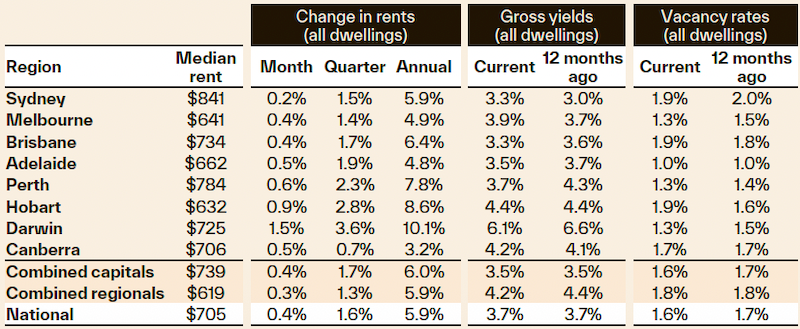
Cotality said yields were expected to continue rising in the near term as rental growth outpaced home value growth, but worsening affordability could limit further increases.
Domain chief residential economist Dr Nicola Powell said the June quarter had been a significant change in rental pricing behaviour, with landlords responding to expectations about future market conditions.
“The acceleration we’ve seen this quarter was too sudden and concentrated to be explained by seasonal factors alone,” Powell said.
“As more clarity emerged around proposed housing investment policy changes during April and May, many landlords appear to have responded by increasing asking rents where market conditions gave them the opportunity.”
Powell said the changes did not necessarily indicate a deterioration in rental supply, but suggested investor sentiment was already influencing pricing decisions.
“The real test will come in the months and years ahead as investors adjust to the new policy environment and those decisions begin to flow through to housing availability and rental conditions,” she said.