

Sponsored ContentPartner ContentMon 27 Apr 26
GPS’ Arkus Fund Backing SEQ Builders with Local Capital

Private credit providers are increasingly reliant on offshore wholesale capital, with funding lines that can be withdrawn without notice when international markets shift.
Many of those same lenders have also moved up the market, leaving projects in the $5 million to $20 million range increasingly difficult to finance outside the major banks.
GPS Development Finance has spent 30 years building an alternative. Its lending model draws from six Australian retail investor funds, with a $320-million book concentrated in the residential construction segment others have left behind.
Sitting within that structure is Arkus, the most recently launched of the six funds and the retail-facing arm of GPS Investment Funds.
Arkus was built to open private credit to investors who have traditionally been locked out. High minimum entry points have historically restricted the asset class to high-net-worth individuals.
Investors in Arkus can start with as little as $1, which GPS Development Finance executive director Shelby Clark described as “unheard of in private credit”.
Monthly contributions as small as $10 are accepted, with compounding and withdrawals processed monthly rather than quarterly, compared to the quarterly cycles that are standard across most pooled funds.
Capital is drawn from investors across Australia, though deployed exclusively within South-East Queensland.
“The money is not coming from any one source. If something happened and one of our wholesale lines decided to leave us tomorrow, there are five other funds that can replace the money,” Clark said.
GPS Investment Fund Limited has recorded no retail capital losses across its 30-year history*.
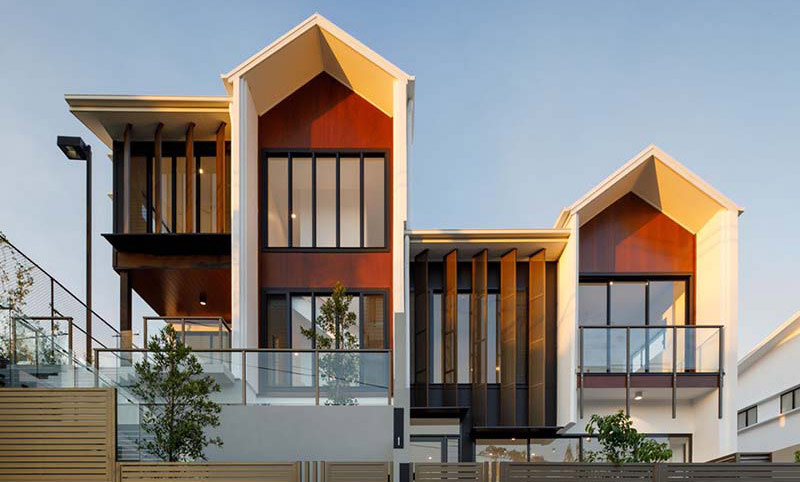
Lending activity covers residential construction projects from $5 million to $45 million, exclusively in South-East Queensland.
Developers borrowing from GPS gain access to a lender whose capital held firm through the global financial crisis and the pandemic. Approximately $150 million in funds under management currently represents around $280 million in active projects across the lending book.
Loan terms differ from the major banks. GPS lends up to 70 per cent loan-to-value ratio (LTV), stretching to 75 per cent on stronger deals, and does not require pre-sales.
“We prefer to back the developer or back the builder,” Clark said. Three decades in the region means GPS knows most active participants in South East Queensland’s construction sector.
That flexibility extends to contract structures other lenders have declined, including a recent Construction Management Agreement where GPS worked with its legal team and panel solicitors to reach an arrangement that allowed the project to commence ahead of schedule.
Geography also shapes how the business operates. Portfolio managers must be able to drive to any active site within two hours. Being close to projects allows the team to monitor progress directly and assist when problems arise.
Over 30 years, GPS has built a network of quantity surveyors, valuers and builders it can call on when a project runs into trouble, whether that means replacing a builder who defaults or finding a project manager to get a stalled site moving again.
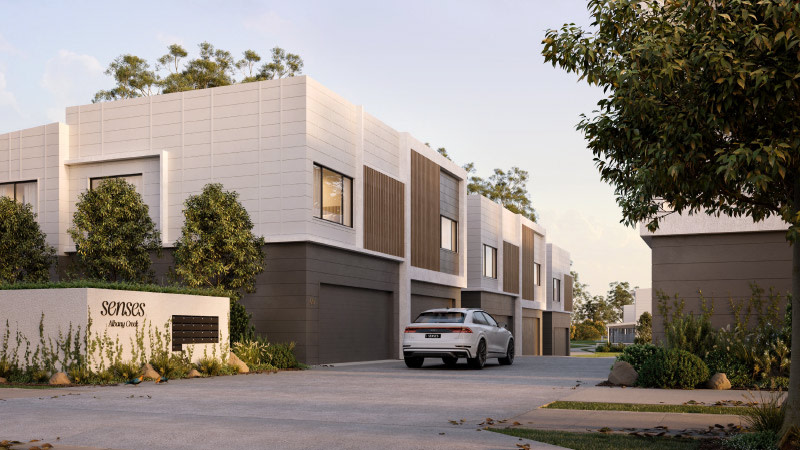
Repeat and pipeline financing is also core to the model. Those who stay within their established project type and geography can access follow-on funding as soon as the slab is poured on a current project. Construction teams can then move from one site to the next without delay.
GPS’s ability to structure debt across multiple simultaneous projects has proven critical in some cases.
One repeat borrower faced a scenario in which equity was tied up across two active projects: one in sell-down, one under construction. Then, a third site became available.
GPS structured a facility using a stretched first mortgage position of up to 75 per cent LTV and cross-collateralisation across all three projects. By modelling and monitoring the sell-down process, GPS was able to release equity ahead of schedule, allowing the client to settle on the new site.
Both original projects completed and sold successfully, with the third now under way.
Without that structure, the client would likely have lost the site.
Every borrower works with one project manager from application to completion. Founder Richard Woodhead remains involved, which allows for faster responses than most larger lenders with multiple approval layers can offer.
“We are small and mighty,” Clark said. Rather than chasing larger deals, GPS focuses on the $5–$20 million range, a segment many private credit lenders have left behind.
“That $5 million to $20 million market is what we have built the business on, and we are relationship focused to grow with the developers who are in it,” Clark said.
“If we can get those developers and build them up to eventually get up to the 45 townhouses, that is the aim of the game.”
*Past performance is not an accurate indicator of future performance.
The Urban Developer is proud to partner with GPS Development Finance to deliver this article to you. In doing so, we can continue to publish our daily news, information, insights and opinion to you, our valued readers.





