
InfrastructureVanessa CrollMon 04 May 26
Powerhouse Parramatta Leads $1.3bn Renewal Program

A $915-million museum has risen from Parramatta’s old David Jones carpark, recasting a former riverfront landholding as Western Sydney’s first state cultural institution.
Lendlease completed main building works on Powerhouse Parramatta, moving the 30,000sq m project into exhibition fitout and final public domain works after more than four years on site.
Funded by the NSW Government and delivered by Infrastructure NSW, the museum is due to open this year as a two-million-visitor-a-year anchor for Parramatta’s CBD.
Powerhouse Parramatta leads the institution’s wider $1.3-billion infrastructure renewal program, which also includes expanded research and public facilities at Powerhouse Castle Hill, the renewal of Powerhouse Ultimo and heritage restoration at Sydney Observatory.
Premier Chris Minns said the opening could come as soon as September, while Powerhouse would only confirm it would open this year.
Designed by French-Japanese practice Moreau Kusunoki with Australian practice Genton, Powerhouse Parramatta is the largest museum built in NSW and the first state cultural institution built in Western Sydney.
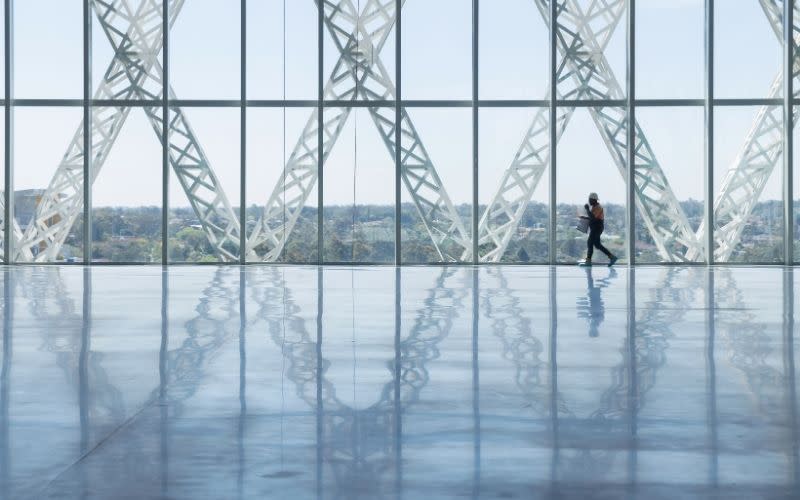
More than 18,000sq m of public and exhibition space sits across seven exhibition areas, including one of Australia’s largest-volume column-free halls.
It also includes a demonstration kitchen, rooftop terrace, garden and the Lang Walker Family Academy, with 60 beds for regional NSW and Western Sydney students.
More than 10,000 NSW public school students a year will use the academy for immersive STEM programs.
Construction drew more than 4000 workers across 2.7 million hours. Three-quarters of the workforce came from Western Sydney and $329 million in contracts was awarded to businesses in the region.
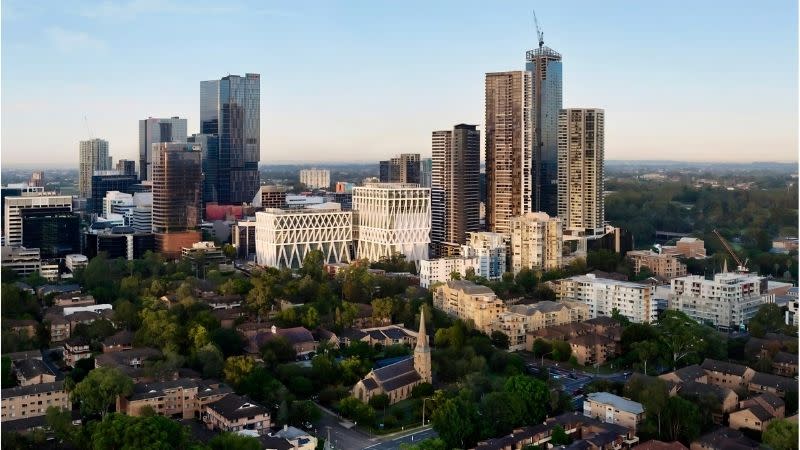
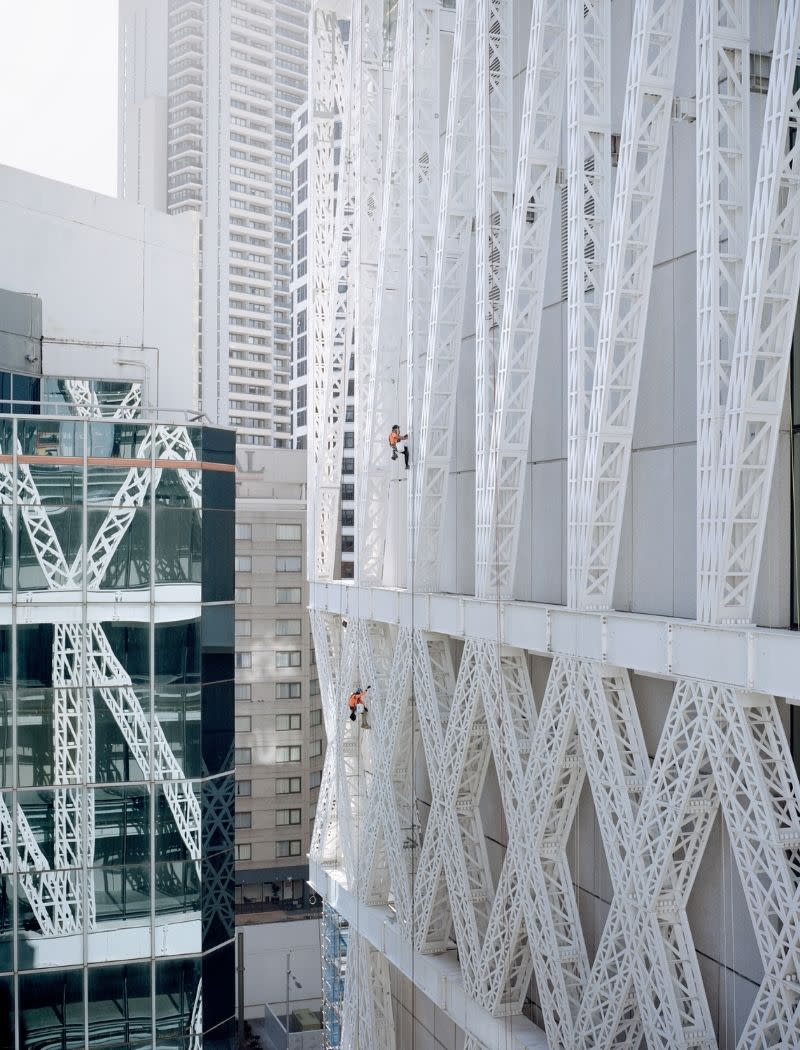
Its most visible construction move is the external exoskeleton.
Steel framing carries the load outside the exhibition spaces, freeing the main halls from internal columns and beams.
By night, the completed frame gives the riverfront building a lantern-like presence.
About 12,000 tonnes of structural steel were used across the project, much of it in the exoskeleton.
Lendlease said the project carried major architectural and engineering complexity, while Powerhouse described it as one of Australia’s largest and most complex cultural infrastructure projects.
Moreau Kusunoki and Genton won the international design competition in December 2019, after Create NSW began the process in January 2019.
Moreau Kusunoki led the design, with Genton as local design architect on the Australian delivery.
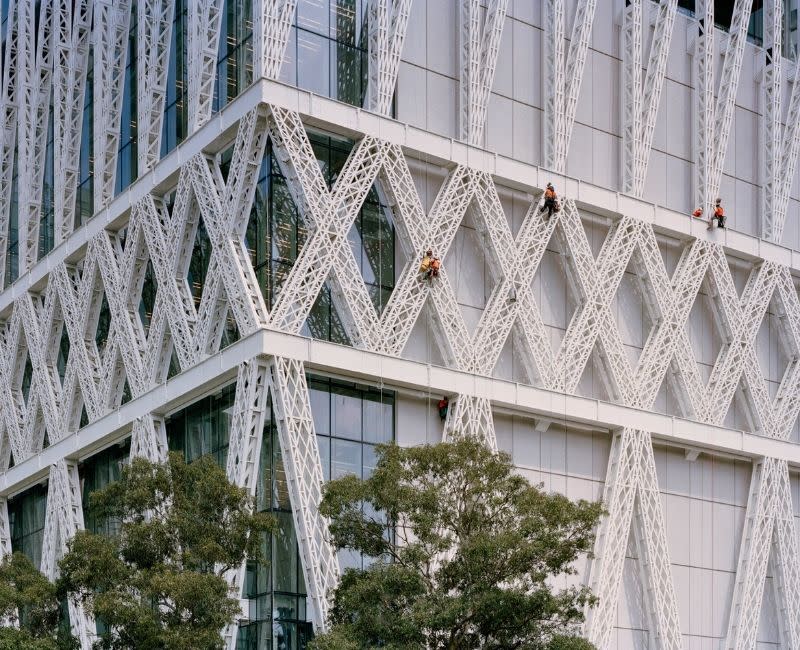
Genton principal Steven Toia said the external frame gave the building its flexibility.
“We’ve really sought to refine the exoskeleton down to minimum componentry to achieve maximum structural integrity—this creates entirely column free space which gives ultimate flexibility,” Toia said.
This approach gives Powerhouse large flexible spaces, rather than conventional column-lined galleries.
Powerhouse’s biggest exhibition space spans more than 2000sq m and rises 18m, giving the museum room for large-format shows.
Task Eternal, an aerospace exhibition tracing humanity’s quest to defy gravity from First Nations sky knowledges to modern space exploration, will be one of five major exhibitions opening with the museum.
A delivery path dating back to April 2016 began when the NSW Government chose the Riverbank site for the new Powerhouse.
On the south bank of the Parramatta River, the Riverbank site was known locally as the old David Jones carpark.
The City of Parramatta and the NSW Government signed a heads of agreement in 2017 for a $140-million sale, with the council saying proceeds would help fund Riverside Theatres and its wider cultural plan.
The site also contained two locally listed heritage items: Willow Grove, a 19th-century Italianate villa, and St George’s Terrace, a Victorian terrace row. Heritage groups opposed their removal before the NSW Government decided in October 2020 to relocate Willow Grove.
State Significant Development consent followed on February 11, 2021, covering demolition, relocation of Willow Grove, retention of St George’s Terrace, two museum buildings, museum uses, servicing, coach facilities, bicycle parking and road works.
Lendlease was awarded the main works contract in September 2021 and began on site in January 2022, with main works starting the next month.
A modification approved on August 17, 2022 allowed fitout and adaptive reuse of St George’s Terrace to support the Powerhouse program.
Parramatta is already NSW’s second-largest economy, with the council putting annual output at up to $29 billion and its jobs base at about 178,000.
The council is chasing another 150,000 jobs by 2050, when it says the local government area is on track to pass 500,000 residents.
Powerhouse adds a major state cultural asset to a CBD already carrying office, transport, education and residential growth.
Powerhouse Trust president David Borger said completion marked a major Western Sydney investment.
“The completion of Powerhouse Parramatta is a landmark moment for Western Sydney and a transformative investment in NSW’s future,” Borger said.
He said the milestone showed the project would be “a major driver of jobs, opportunity and cultural participation for one of the fastest-growing regions in the country”.
Powerhouse chief executive Lisa Havilah said the museum had been designed to connect industry, community, collections and ideas.
“Powerhouse Parramatta is a new generation museum, conceived to redefine the role of cultural institutions in contemporary life,” Havilah said.
She said its infrastructure and programs would create “a dynamic ecology that will bring together industry and community, present collections, histories, and ideas in new ways”.
Powerhouse Parramatta is also the first public building in Australia, and the first project in Western Sydney, assessed as a 6 Star Designed project under the Green Building Council of Australia’s new Green Star Buildings assessment tool.
Exhibition installation is under way across the museum, with final public domain works continuing before its 2026 opening.