
Student AccommodationClare BurnettWed 14 Jan 26
Court Refuses Eastern Sydney Co-Living Scheme Appeal

A student-focused co-living proposal in Sydney’s east has been knocked back by the NSW Land and Environment Court over fundamental design and amenity flaws.
Melbourne-based TAL GP had proposed a part-eight, part-six-storey mixed-use development at 229 Anzac Parade at Kensington.
Designed by WMK Architecture, the plans comprise 62 student accommodation units, largely one and two-bed studios, plus a retail tenancy and communal areas.
The proposal was pitched as a design-led development that would deliver diverse housing options for a well-serviced site.
A previous proposal for the site, between a UNSW College building and a mixed-use development, was approved in 2023, but did not go ahead.
TAL GP’s plans would have replaced a two-storey brick building on the 505.9sq m site, which is 200m from the UNSW light rail stop, 350m from the Kingsford light rail station and 7km from the Sydney CBD.
However, the scheme was refused by the council in July 2025, and TAL GP took the matter to court.
Despite conciliation conferences between the council and developer—and amendments to the application—issues relating to amenity, bulk, scale and lot size were cited as ongoing problems.
Central to the refusal was the site’s failure to meet minimum lot size requirements for co-living developments.
While the Housing SEPP sets an 800sq m minimum, the Kensington site measured just 505sq m.
Although TAL GP sought a variation, the court found the undersized lot resulted in “practical design implications”, forcing compromises to achieve the proposed yield.
These included the removal of street setbacks, reduced building separation and reliance on privacy screens that would further limit solar access to courtyard-facing rooms.
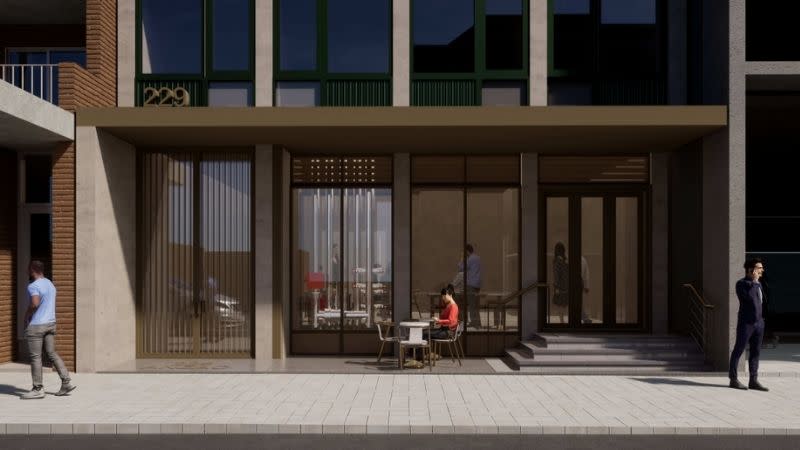
Presiding LEC Commissioner Emma Washington also criticised narrow internal layouts, noting that some bed and dining spaces were less than 2m wide.
“These rooms are simply too deep and too narrow to provide adequate amenity, and will result in an unacceptable reliance on artificial lighting and mechanical ventilation,” Washington said.
The absence of setbacks to Anzac Parade and Houston Lane compounded the impacts, with neighbouring apartments losing all direct sunlight between 9am and 3pm.
“This is an avoidable and unacceptable impact,” Washington said.
Further concerns were raised about substandard floor-to-floor heights, with first-floor levels falling well below the 3.3m requirement.
The court ruled that the amenity impacts of the proposed development would be “unacceptable” and the development does not exhibit design excellence.
The appeal was dismissed and the LEC refused the project.
Guildford co-living plan succeeds
Meanwhile, the LEC has also ruled on an appeal over a co-living proposal at Guildford.
A development application for a 44-unit co-living development with seven boarding rooms at 459-461 Guildford Road was submitted to the Cumberland City Council in 2025.
The five-storey project for the site 28km west of Sydney CBD was proposed by YM Property Development and refused by the council due to its bulk and height, as well as its appropriateness for the site.
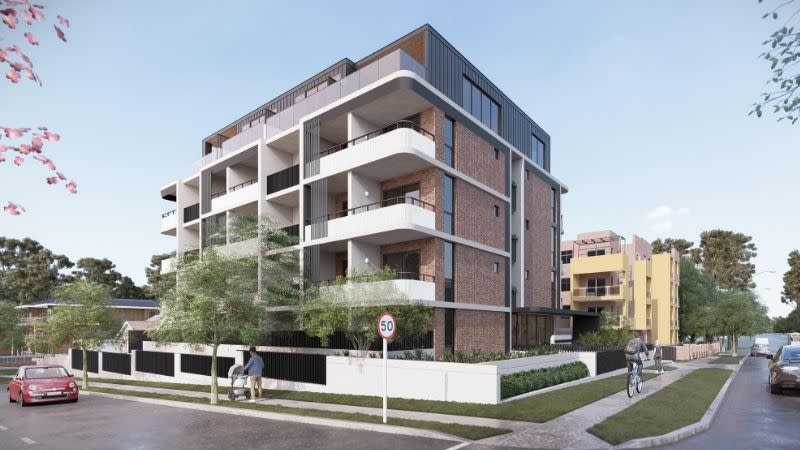
However, following conciliation conferences, the proposal was amended and the court ultimately found that it complied with Housing SEPP provisions for co-living and boarding houses, with only a minor height exceedance.
The court overturned the council’s refusal, approving the project.





