
CommercialLindsay SaundersMon 29 Jun 26
Research Sounds Death Knell for Traditional Mixed-Use Formula

The long-standing formula for mixed-use development is no longer a guaranteed pathway to commercial value, fresh research says.
According to a report by Hassell, traditional mixed-use projects anchored by office towers above retail and hospitality bases are fading from favour across the Asia-Pacific.
The report, The New Realism: How mixed-use is being redefined across the Asia-Pacific, says the traditional “big bang” approach to precinct development is being challenged by weaker office demand, more selective capital, shifting consumer expectations and rising delivery complexity.
For decades, mixed-use projects have relied on a fixed model where large-scale office development was underpinned by ground-floor retail and the expectation that surrounding urban growth would eventually validate the upfront investment.
Hassell said that assumption was now breaking down, with cities entering a new phase of development where large, fixed masterplans are giving way to more adaptive and resilient urban systems.
Hassell head of research Dr Daniel Davis said there is now a “great mismatch” between ambitious civic visions and the commercial realities facing developers and investors.
He said the traditional office-and-retail formula no longer delivered the certainty it once did, and developers increasingly needed mixed-use models that reflected how people actually live, work, learn and spend time.
The research, based on interviews with developers, investors, operators and public-sector leaders across Australia and Asia, found that successful precincts were becoming more localised, flexible and system-based rather than reliant on global template designs.
It highlighted three key structural shifts shaping the sector—rising market pressure on office demand, increasing capital selectivity, and more complex operating environments for large precinct developments.
It also found that local context was now more important than global design models, with the strongest projects emerging as highly specific responses to policy, market and community conditions.
Another major shift identified in the report was the growing role of government, with public-sector involvement increasingly acting as a risk-sharer, anchor tenant or long-term partner in major precinct developments, particularly in Australia.
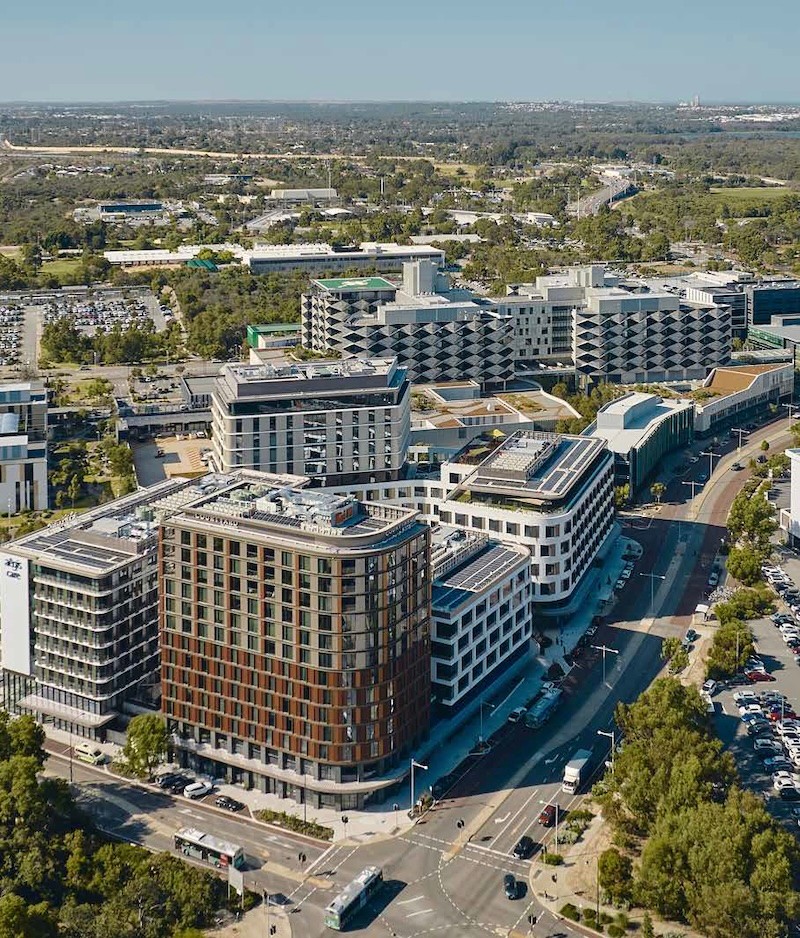
In that market, Hassell pointed to growing momentum around health, education, housing, aged care and social infrastructure as emerging anchors that can provide public value and long-term precinct stability.
Across Asia, while retail remains important, its role is evolving, as healthcare, childcare, education and vocational training are embedded into mixed-use precincts as core attractors and functional components.
The report outlined three emerging development models for the next phase of mixed-use precincts, including neighbourhood ecosystems that operate as self-sustaining local systems from day one.
It also identified civic-commercial hybrid models where government played a long-term operational role, and “ready-made pivot” approaches that prioritise flexibility over fixed masterplanning to reduce the risk of future obsolescence.
Dr Davis said developers and policymakers must bridge the gap between ambitious city-shaping goals and increasingly strict commercial realities if mixed-use was to remain viable at scale.
“If cities keep treating mixed-use as a retail-office equation, they miss the chance to solve more pressing urban problems like ageing populations, housing stress, access to care, lifelong learning and the need for more resilient local economies,” he said.
“Mixed-use is no longer a “nice-to-have”. We need more diverse, high-performance systems that unlock the immediate value required to anchor a long-term precinct.”
Hassell said its findings signalled a shift toward more diverse, high-performance precinct systems designed to unlock immediate value while still supporting long-term urban growth.





