InfrastructureKirsten CrazeThu 29 Oct 26
Councils, Developers Unite for NSW Infrastructure Push Ahead of Poll

Two NSW property industry bodies are calling for billions of dollars in infrastructure funding ahead of the 2027 state election, warning that housing targets will remain out of reach if roads, utilities and community facilities cannot keep pace with development.
The Urban Development Institute of Australia NSW and Local Government NSW (LGNSW) have aligned on a key housing supply issue ahead of the March 2027 poll.
Both argue that planning reform alone will not deliver more housing if infrastructure cannot be funded in time.
However, the two bodies differ on the scale of their proposals.
UDIA NSW wants $500 million to facilitate interest-free loans for councils, while LGNSW is seeking a $5 billion loan facility and $3 billion in forward-funding for state and regional infrastructure.
Inner West Council Mayor and LGNSW president Darcy Byrne said that if the state was serious about delivering more homes, it needed to act on all stages of the housing pipeline.
“This is an economically responsible proposal that will give our growing communities the infrastructure they desperately need,” Byrne said.
“Councils often need to deliver essential infrastructure years before collecting sufficient developer contributions to pay for it.
“It’s a classic chicken-and-egg problem. We can’t build homes without infrastructure, but can’t fund infrastructure until development gets under way.”
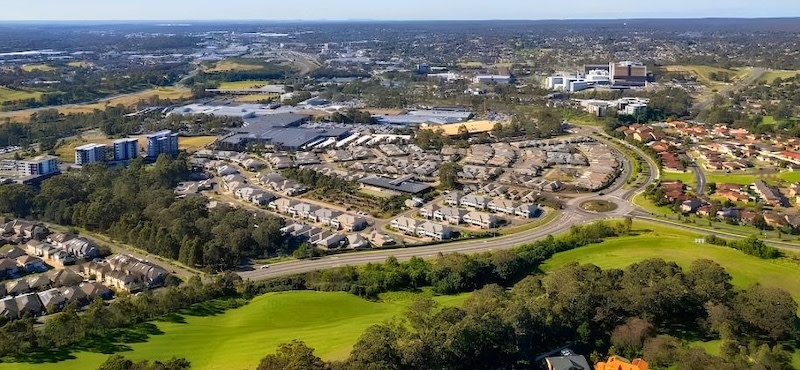
Funding the growth areas
LGNSW proposes councils take out interest-free loans from the state to deliver infrastructure identified in contributions plans, then repay loans as developer contributions are collected over the lifespan of those plans.
A separate $3 billion allocation would forward-fund state and regional infrastructure, with the state progressively recovering costs through Housing and Productivity Contribution receipts.
“We’re not asking the state to permanently foot the bill. We’re proposing smarter public financing to deliver more homes and better communities,” Byrne said.
LGNSW estimates its proposal could help unlock almost 70,000 homes across eight Greater Sydney growth-area councils and generate $1.8 billion in stamp duty revenue.
Its case studies highlight the scale of the funding gap.
At Schofields, in Sydney’s north-west, the LGNSW said an $85 million infrastructure package would support more than 5000 homes.
Without accelerated investment, up to 3500 homes could be deferred by about seven years.
The report also highlighted a need for about $133 million in infrastructure investment at Leppington in Sydney’s south-west to unlock 6000 homes.
And at Campbelltown, the research estimates that more than 12,000 additional lots are awaiting rezoning, with infrastructure constraints expected to delay the delivery of about 3500 homes.
Targeting feasibility and planning
UDIA NSW is also targetting the costs and regulations affecting individual projects.
Alongside its proposed $500 million council loan allocation, the institute is requesting $2 billion in state investment through a Housing Infrastructure Acceleration Fund and $500 million to for a Housing and Productivity Fund.
The body is asking for the cap on works-in-kind funding removed, allowing developers to deliver agreed infrastructure rather than make cash contributions.
“This election is not a time to play politics with housing. NSW must double down on increasing the supply of new homes or risk locking out generations of future owners,” UDIA NSW chief executive Stuart Ayres said.
“With NSW 40 per cent behind its Housing Accord completions target, we cannot afford to lose any more ground. The status quo is not an option.”
The UDIA NSW is also pushing for the removals of minimum lot sizes in new residential zones, a statewide affordable housing scheme by replacing local government contribution schemes, a seniors right-sizing stamp duty exemption and incentives for more seniors housing.
“Ultimately, the measure of success must be completed homes, greater housing choice and more affordable places to live,” Ayres said.
“We need government to be agile and responsive to changing market conditions and the challenges facing industry. Feasibility must be central to housing policy. It determines whether the capacity created through reform becomes new housing supply.”