InfrastructurePhil BartschThu 29 Oct 26
Taskforce to Head Off Quarry Supply Crunch Threatening Qld Pipeline

Queensland is in a race against time to stop its accelerating pre-Olympics infrastructure megaprojects and private development pipeline crashing into a rock-hard reality check.
As reported by The Urban Developer in April, the state is facing a shortfall of essential construction aggregates as major housing pushes and the build for the 2032 Brisbane Games gear up.
To head off critical supply bottlenecks, the Queensland Government has established a taskforce to secure material supply across the state.
The move follows sustained advocacy from peak bodies Cement Concrete & Aggregates Australia and the Institute of Quarrying Australia.
Announcing the initiative this week, Natural Resources and Mines Minister Dale Last said the Queensland Quarry Supply Chain Taskforce would bring government agencies and industry leaders together to dismantle planning hurdles and logistical friction.
“We want to identify potential constraints before they become critical,” he said.
“The task force will allow us to take a coordinated whole of government approach of the quarry supply chain and identify practical actions that can strengthen it.”
Underlying data highlights the potentially crippling degree of the impending supply squeeze.
According to the Queensland Government’s forecasts, quarry demand for hard rock and sand is expected to rise from 56.4 million tonnes in 2023-24 to 66.1 million tonnes by 2029-30.
In South-East Queensland, CCAA-commissioned research from Oxford Economics paints an even tighter picture.
Peak annual hard rock demand in SEQ is projected to reach 28 million to 30 million tonnes between 2027 and 2029. That significantly outstrips existing approved production limits of 23.8 million tonnes, leaving a prospective deficit of up to 6.2 million tonnes annually.
“Queensland cannot deliver its housing and infrastructure ambitions without reliable, affordable access to construction materials,” CCAA chief executive Michael Kilgariff said.
Crucially, the looming supply crunch won’t be caused by a lack of suitable raw rock in the ground.
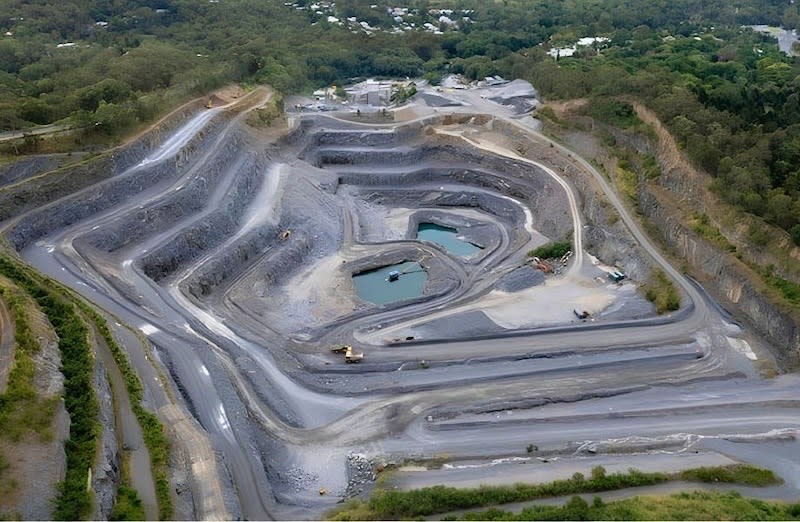
Government data indicated Queensland holds unextracted reserves of about 2 billion tonnes of hard rock and 179 million tonnes of sand—meaning it fundamentally comes down to regulatory, planning and transport logistics constraints locking up critical capacity.
CCAA has identified nine quarry proposals across the state that were refused, withdrawn, significantly delayed or entangled in prolonged litigation—amounting to an additional 12 million tonnes of potential annual production capacity.
Hauling aggregate from distant sites also adds massive cost burdens.
Oxford Economics modelling also revealed that sourcing construction materials for its five-year Transport and Main Roads Despartment’s Sunshine Coast and North Brisbane infrastructure program from 190 km away rather than local quarries 40km away could blow out freight budgets by between $305 million and $397 million.
“Every home, road, school and hospital in Queensland starts with sand, gravel and rock from a quarry,” IQA chief executive Jane Schmitt said.
“Queensland has the resources. The challenge is getting them to market—and that comes down to planning, approvals, transport and coordination across government.
“That is exactly what the taskforce is set up to tackle. Our members plan the resources, run the quarries and move the materials. That practical knowledge is what the taskforce needs, and we are ready to bring it to the table.”
Immediate fix crucial, says industry
With the taskforce convening its inaugural meeting on November 12, the industry push will be for immediate fixes, including streamlined brownfield expansion caps, alternative sand extraction channels, and heavy vehicle route optimisation.
“We welcome the government’s co-ordinated response, but South-East Queensland quarries are already close to operating at practical capacity, with demand increasing further from early 2027,” CCAA’s Michael Kilgariff said.
“The taskforce must agree immediate measures and delivery timeframes at its first meetings, alongside its longer-term work.
“At the same time, we must progress the medium and longer-term reforms needed to support the next generation of greenfield quarries.
“That means protecting quarry resources and haul routes and providing greater certainty in approval processes and decision-making so industry can invest with confidence.
“We must also address workforce shortages, build stronger community confidence in the industry’s environmental and safety standards, strengthen coordination across governments and improve visibility of future project demand.
“This work must progress alongside the immediate measures needed to unlock supply now.”