
ApartmentsTaryn ParisFri 10 Apr 26
Australia Needs Explosive Growth, Not Drip Feed Supply

In Partnership With Mitchell Brandtman

We know the numbers; they are written into just about every development application that comes across the desk at The Urban Developer.
Australia needs to build 240,000 homes every year to meet its target of 1.2 million homes by 2029. But the reality is that without some structural shifts, that figure is nothing but a fantasy.
This week, The Urban Developer is launching a content series exploring how gentle density can address housing shortfalls and provide greater diversity and affordability across the housing continuum.

We want to hear from industry about what can be done to address the missing middle from policy to planning and the cost of construction.
Complete our survey below and help drive conversation and meaningful change.
Widening gulf between approvals and starts
Australian Bureau of Statistics data points to a slight uptick in home approvals, which rose almost 30 per cent in February 2026.
ABS head of construction statistics Daniel Ross said the rise in total homes approved had been driven by a 101.2 per cent rise in apartments and townhouses.
“There has been a total of 195,434 homes approved, in original terms, over the past 12 months—a 9 per cent increase on the 12 months prior to that,” he said.
And while at first blush this looks like positive news, the devil is in the details. There is a widening gulf between approvals for new housing and housing starts.
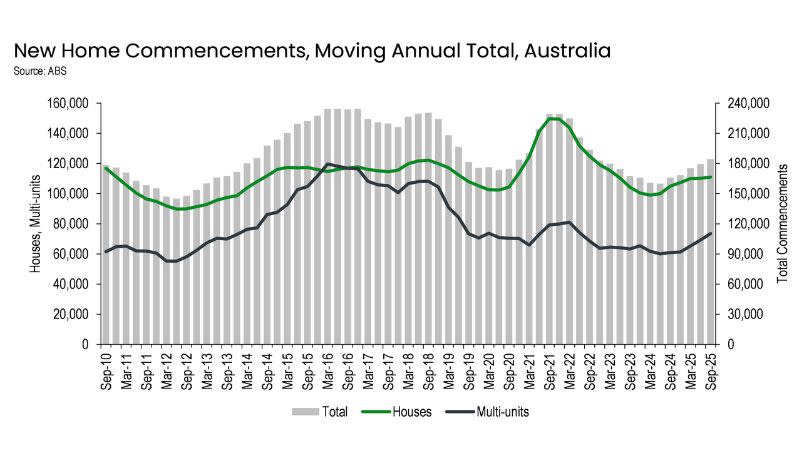
HIA senior economist Maurice Tapang said the number of dwelling commencements in the 12 months to September 2025 has increased 11.2 per cent on the previous year but it was still falling well short of targets.
In the 12 months to September 2025, 184,460 housing starts were recorded.
“The volume of home commencements remains below the [target of] 240,000 new homes per annum. They also remain below the average volume commenced over the past decade,” Tapang said.
“These are positive signs that confirm our expectation that the number of homes commencing construction will see steady, not explosive, growth over the next couple of years.”
The problem is we need explosive growth.
‘Delivery is the challenge’
That steady growth is expected in apartment projects. But with a looming construction crunch in South East Queensland and the war in Iran pushing fuel prices and material costs up, that trajectory is in question.
“In order to increase the supply of homes, governments need to help lower the cost of delivering new homes to market,” Tapang said.
“Demand is not the challenge. Delivery is. Land supply, infrastructure timing, planning bottlenecks and workforce capacity will shape the 2026 experience more than interest rates.”
| National | NSW | VIC | QLD | SA | WA | TAS | NT | ACT | |
| 12 Months to Sep-25 | 184,463 | 47,198 | 55,227 | 38,726 | 14,022 | 22,608 | 2313 | 546 | 3729 |
12 Months to Sep-24 | 165,917 | 43,012 | 53,721 | 34,614 | 11,106 | 17,362 | 2301 | 384 | 3521 |
| % change | 11.2% | 9.7% | 2.8% | 11.9% | 26.3% | 30.2% | 0.5% | 42.2% | 5.9% |
Source: ABS Building Activity (September 2025)
Australia’s cities are highly populated but low-density, characterised by single-family homes on large land lots, which have led to sparsely populated, sprawling cities.
In fact, according to CEDA senior economist Danika Adams, Australia has three of the world’s Top 200 most populous cities. But, in terms of density, all three rank very low on the list.
Adams says gentle density, often described as the missing middle, is a crucial middle ground that needs focus amid the tussle between house-and-land communities in outer growth corridors and high-density apartment blocks in the inner city.
In a December 2025 CEDA report, Adams said gentle density in well-located areas could deliver attainable housing while leveraging existing infrastructure and transport networks.
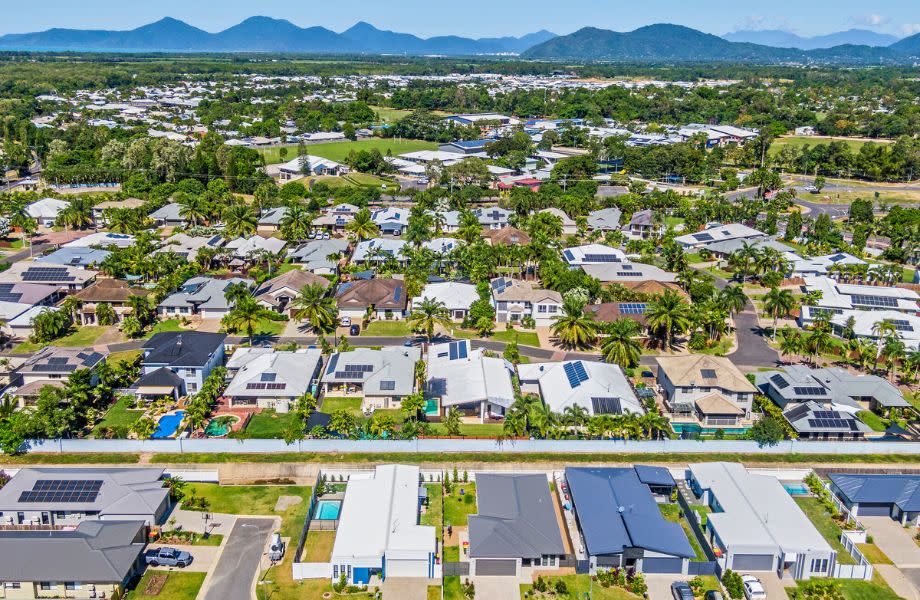
“Even modest increases to housing density could add close to one million new homes across Australia’s five largest cities,” the report said.
Queensland, NSW and Victoria have all moved to enable greater flexibility to deliver gentle density in the middle-ring suburbs.
But delivery challenges remain.
Planning reforms focused on the missing middle
Queensland
South-east Queensland’s councils have moved to increase infill density. Ipswich City Council’s new planning scheme has provided an opportunity for greater density in existing centres.
Brisbane City Council released its ‘More Homes Sooner’ amendment proposal, which seeks to increase density in low- to medium-density residential areas through increased height and smaller lot sizes and a targeted reduction of car parking requirements in well-serviced locations.
The Brisbane council has also applied a targeted densification for suburban hubs at Nundah, Indooroopilly and Carindale.
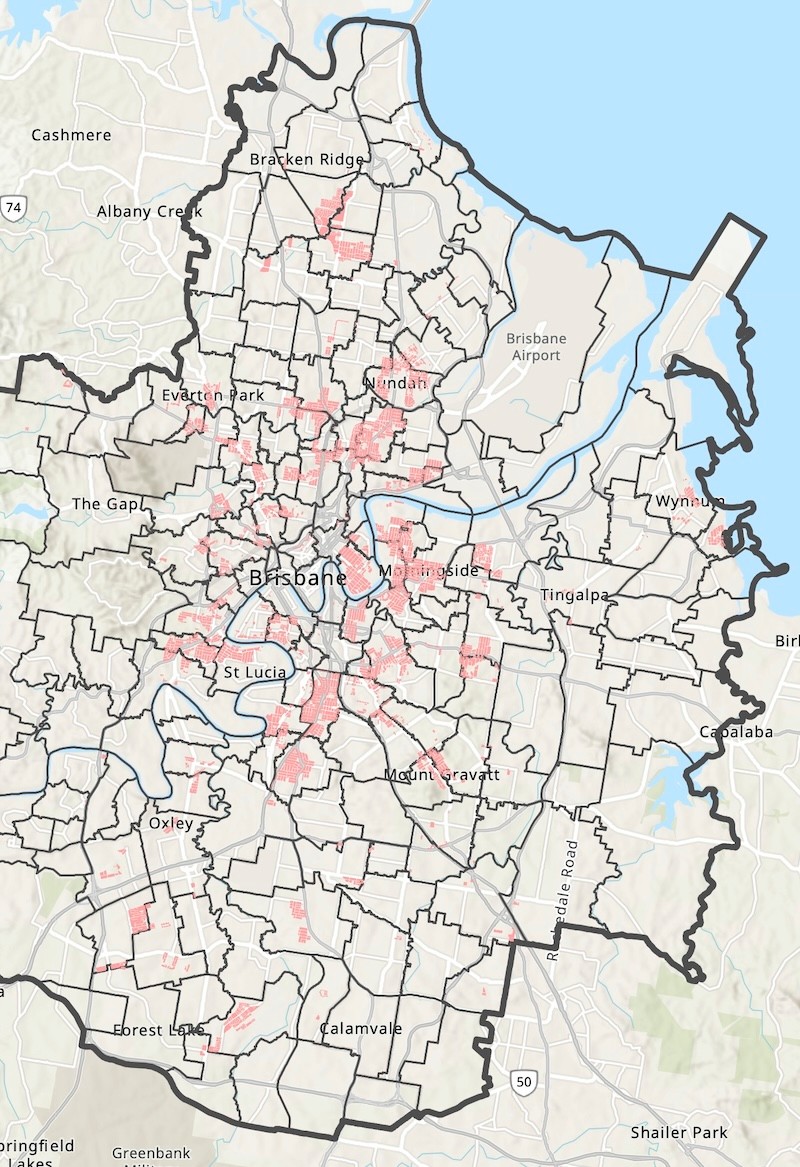
Economic Development Queensland is also working to unlock surplus land for housing through its Land Activation Program, releasing land at Banyo, Northshore Hamilton, an industrial site at South Brisbane and a former university site at Mt Gravatt.
The State has also reinstated its State Facilitated Development pathway, which offers expedited planning approvals for predominantly residential developments.
NSW
The NSW Government released a Draft Sydney Plan aimed at increasing housing diversity and choice through low- and mid-rise housing, Transport-Oriented Development (TOD) precincts and council-led planning.
The TOD Program provides new planning controls to increase mid-rise residential and mixed-use projects within 400m of 37 stations in Greater Sydney.
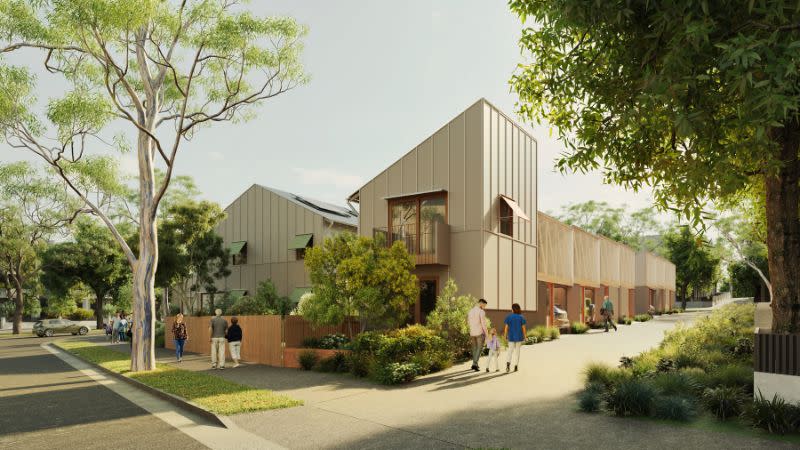
This complements the Low and Mid-Rise Housing Policy, which is for sites in well-located areas within 800m of shops, services and transport that are not identified as TODs.
The NSW government also signposted the use of inclusionary zoning, utilising government land and mandatory housing affordability contributions to grow social and affordable housing supply in Australia’s most expensive city.
It has also established the Housing Delivery Authority to help expedite larger projects.
Victoria
The Activity Centres Program has expanded the areas within Melbourne’s metropolitan area where mid-rise apartment buildings can be delivered.
Victoria introduced the Mid-Rise Code in March, as part of its implementation of the Victorian Housing Statement. It established a new assessment framework for mid-rise buildings of four to six storeys and adopted a deemed-to-comply model to simplify the planning approval process.
The changes will be adopted from April 16 and will reduce planning risk for developers in the mid-rise residential sector.
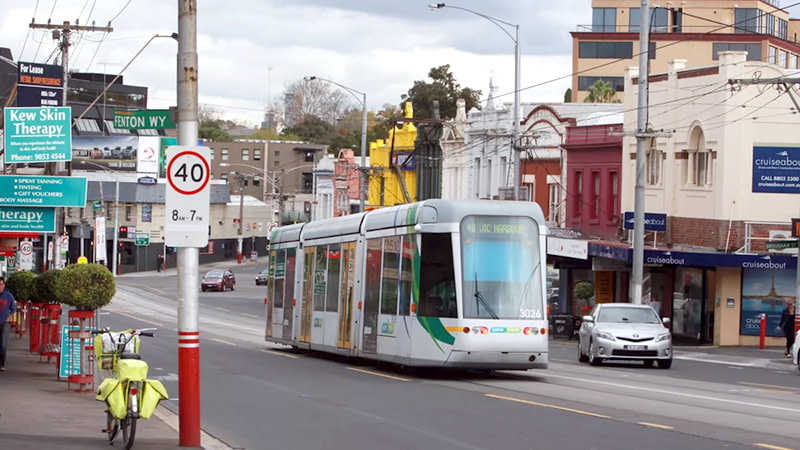
But planners from Tract believe there could be some issues with its implementation.
The main sticking point is that it will require land amalgamation in a city where fragmented ownership is common, as noted in this report by Tract.
Planning overlays are also likely to affect the deemed-to-comply benefits, including the removal of the third-party right to appeal.
Over the next month, The Urban Developer will explore gentle density and the key issues affecting its implementation in Australia’s biggest capital cities where feasibility, construction costs and planning risk headwinds prevail.