
Energy & UtilitiesHudson FarrThu 15 Oct 26
Victoria Clears Path for Southern Hemisphere’s Biggest Wind Farm

Victoria has given final state approval to the Warracknabeal Energy Park, a 219-turbine wind farm the developer says can generate enough electricity for 1.2 million homes.
Planning minister Sonya Kilkenny signed off on the project this week, five months after approving its Environment Effects Statement.
The approval is the last required from Victorian authorities—the project now goes to the Federal environment minister for approval under national environment laws.
In her decision, Kilkenny found construction was likely to have “some significant environmental impacts”, but that these could be managed or mitigated.
WestWind Energy plans to build the turbines across 26,000ha of farmland west of Warracknabeal and north of Horsham, more than 300km north-west of Melbourne.
At 1.5 gigawatts, the project would overtake Golden Plains Wind Farm west of Geelong—which has 215 turbines and a capacity of 1.33 gigawatts—as the largest in the Southern Hemisphere.
Monash University Grid Innovation Hub director Behrooz Bahrani said integrating a wind farm of this size posed technical demands for the National Electricity Market.
Bahrani said next-generation wind farms needed to support the transmission network during disturbances and that adding megawatts was only part of the task.
With more than 1.5 gigawatts, the project’s nameplate capacity translates to a long-term average delivery of about 545 to 580 megawatts.
Two 300-megawatt battery storage systems would be installed at the site, with their storage capacity listed at 300 to 600 megawatt-hours each.
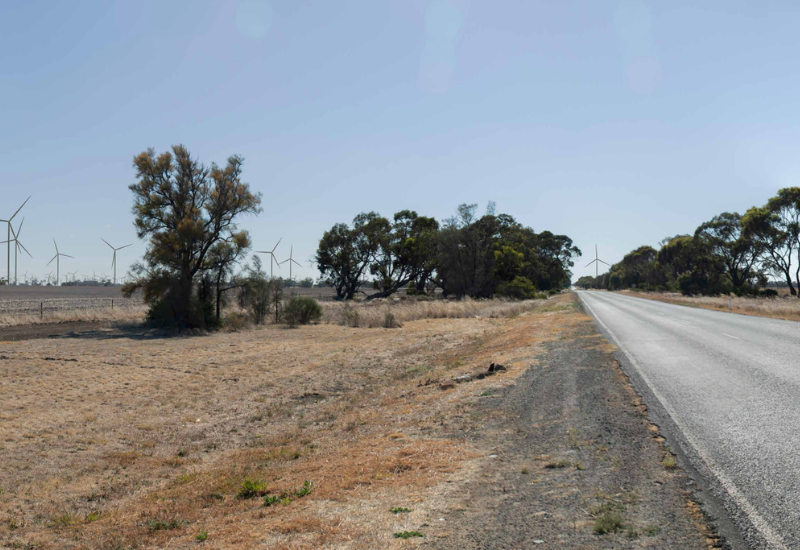
WestWind said the park could supply about 12.5 per cent of Victoria’s electricity demand.
About 34km of overhead high-voltage transmission lines would be built to connect it to the grid, including 13km linking the southern section to the Murra Warra Terminal Station.
WestWind estimated the project at $5 billion in capital investment. The state expects almost 950 jobs to be created during construction.
Ongoing local jobs will also be created once the facility is operational.
The Environment Effects Statement process, which began in 2024, drew 70 community responses. Thirty were mostly positive about job opportunities, social impacts, sustainability, community development and population growth.
A similar number posed concerns about a strain on housing and worker accommodation, visual amenity, and impacts on local flora and fauna.
WestWind began engaging with the region and landowners in 2017.