
ResidentialLindsay SaundersTue 08 Sep 26
Gamuda Consortium Lands $800m Parramatta Metro Precinct Deal

Plans for a major mixed-use precinct around Parramatta’s future Metro station have been expanded to deliver 970 homes and student accommodation units, almost nine times the residential component originally approved.
The development is to be delivered under an $880-million contract awarded to a consortium led by Gamuda Engineering and involving Gamuda and MTR Corporation for the design and construction of the Parramatta Metro station and integrated development.
The integrated station development will include 470 build-to-rent apartments and 500 student accommodation units across two towers.
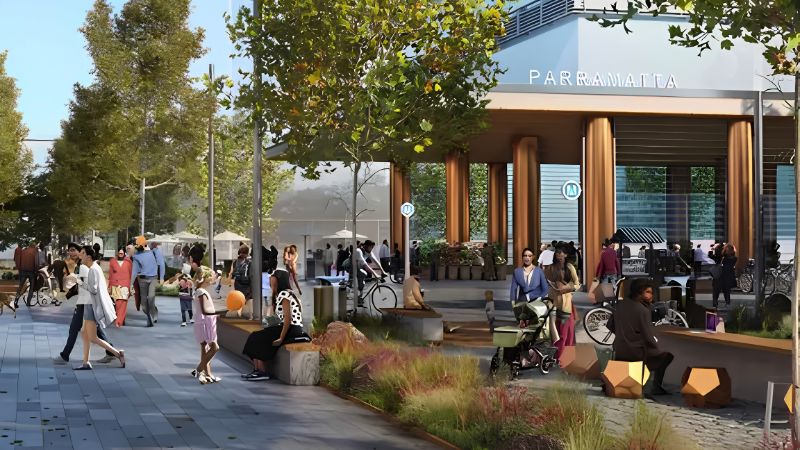
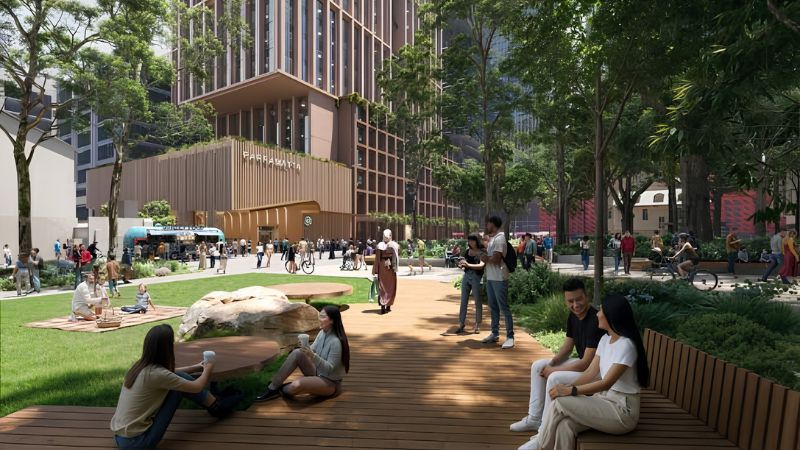
The revised scheme, on land of the Burramattagal clan of the Dharug Nation between Church, Macquarie and George streets, will comprise four buildings—a 43-storey build-to-rent tower, a 24-storey student accommodation building, a 29-storey commercial tower and an eight-storey hotel.
The project was initially approved with provision for 111 homes.
The buildings will be arranged around a landscaped public park forming part of the future Civic Link, which will connect the station precinct with the Powerhouse Museum and Parramatta River foreshore.
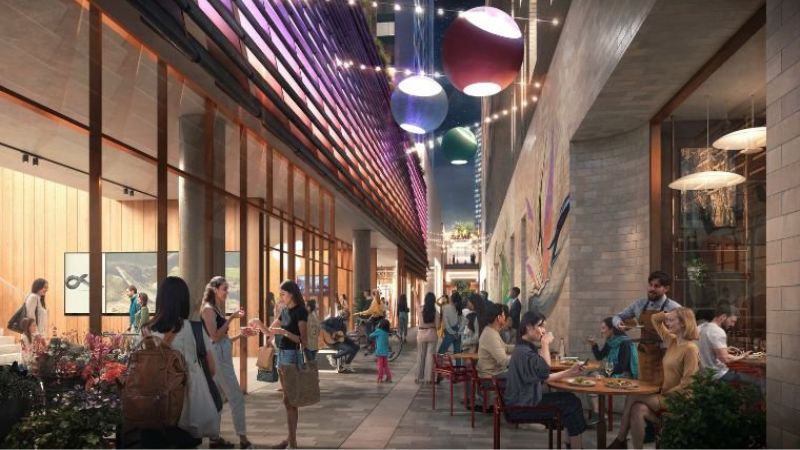
Pedestrian laneways will connect the development with Parramatta’s existing rail, light rail and bus networks.
The project is one of several major housing opportunities being pursued around stations on the Sydney Metro West corridor as the NSW government seeks to increase housing supply close to public transport.
The government has identified potential for thousands of additional homes around the Metro West corridor, including at Bays West, Pyrmont, Sydney Olympic Park, Burwood North and North Strathfield.
At Parramatta, major excavation and tunnelling for the Metro station has been completed following three years of construction activity.
Station construction is scheduled to begin in mid-2027, and Metro West is slated to open in 2032.
1 of 3
More than 100,000 archaeological artefacts were uncovered during investigations at the site, including First Nations artefacts associated with the Burramattagal clan and remains linked to early European settlement.
The Parramatta precinct is part of a broader push to concentrate higher-density development around new transport infrastructure across Sydney’s west.
Nearby, a proposed rezoning of the Westmead South precinct could facilitate up to 13,000 additional homes, including buildings of up to 38 storeys close to the future Metro station.
Planning minister Paul Scully said that “connecting major transport investments with more homes, close to jobs, services and amenities [was] sensible city planning”.
“Increasing the number of homes on this site from 111 to 970 shows what is possible when we take a considered approach to planning around new infrastructure,” he said.
“The ... government is committed to unlocking housing supply in the right locations, and Parramatta’s city centre, sitting alongside a new metro station, in an area surrounded by jobs, green space and services is exactly the right location for a mix of homes, student accommodation, and commercial space.
“This precinct will also deliver genuine public benefit, with a new landscaped park connecting into Parramatta’s Civic Link, the Powerhouse Museum and the river foreshore, giving the community a real destination as well as new homes.”