
Land & CommunitiesLeon Della BoscaMon 13 Jul 26
First Movers Will Win: Michael Long on Sector’s Failure to Modernise

Nail guns and a handful of modular systems. That about sums up the innovations in construction during the three decades Lewis Land Group head of development Michael Long has worked in the sector.
“That’s about it,” he told The Urban Developer. “Meanwhile, every other major industry has been transformed by technology and process innovation. Construction has largely drifted through that revolution.
“We are building the same way today as we were when I started.”

This stagnation, Long said, also played a part in the productivity problem facing developers and, ultimately, homebuyers.
“Until we confront that as an industry, housing costs will keep climbing.”
Large-scale, factory-style modular construction for mid-rise residential, he said, is the greatest untapped opportunity in the built environment.
“Done properly, it could fundamentally reset the cost curve on apartment delivery,” he said, yet few developers had pursued the model at genuine scale because “the setup costs are enormous, the timeline to return is long, and most developers don’t have the balance sheet”.
Long believes the reward will go to whoever cracks the model first, calling it “a real advantage that would be very hard to replicate”.
“I wish I had pursued scalable modular construction for midrise apartments 20 years earlier,” he said.
“The economics of housing cannot be solved through incremental improvements to conventional construction. We need a step-change in how we manufacture homes.”
Modernisation is not the only thing holding back the industry.
“For the first time in my career, there is genuine political will, across all tiers of government, to seriously address the housing supply crisis,” Long said.
“[But] political will and actual planning approvals to project delivery are two very different things, and right now the gap between them is enormous.
“Red tape, approval timelines, and legacy planning frameworks are strangling projects before they get off the ground. Closing that gap is the defining challenge of the next decade.”
Scaling modular construction to a feasible state, Long said, is as much an organisational challenge as a technical one.
Moving into large-scale commercial projects taught him “to seek out the best people in any room, people who know more than you, and listen to them,” he said.
“And I’ve come to believe that leaders who never let their people fail are holding them back … creating an environment where it’s safe to fail, if you own it, you learn from it” which can make teams “far more capable and far more confident”.
It’s a mindset Long suggests the industry will need more of if modular construction is to reach genuine scale.
Betting on an unproven model means being prepared to make and endure early mistakes, and businesses unwilling to let people test and fail are unlikely to be the ones that crack the modular code.
As Long puts it: “The industry needs people willing to absorb that upfront pain for the long-term gain.”
Long, whose path from apprentice carpenter to head of development gives him a ground-up view of how precincts are built, said his vision for the city of the future means building differently to how Australia does now.
“I think the city of the future looks a lot more like Paris or Madrid than what we’re building today,” he said. “Genuinely mixed-use, human-scaled density, pocket parks and shops woven through neighbourhoods, and a real sense of community rather than just proximity.
“I am genuinely driven by the belief that great design and development can change how people live.”
Progress toward that vision, he says, is “not even close” to fast enough.
Long said the gap between “the approvals, the financing, the construction challenges, the things that can, and do go wrong” often keeps him awake at night but “if it were easy, it wouldn’t be worth doing”.
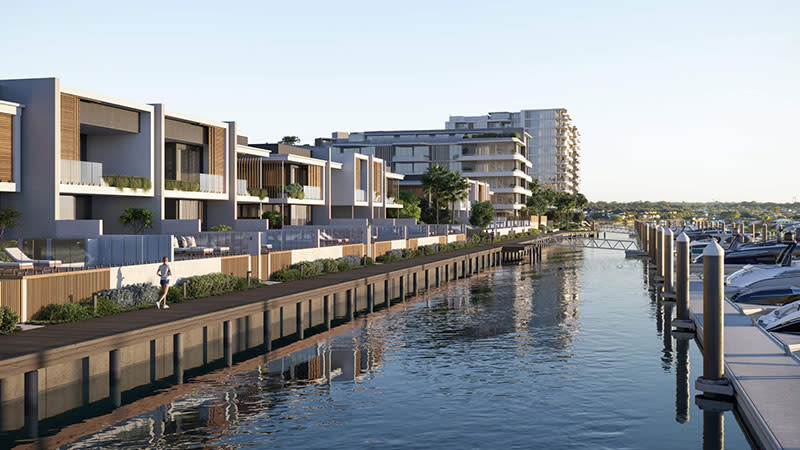
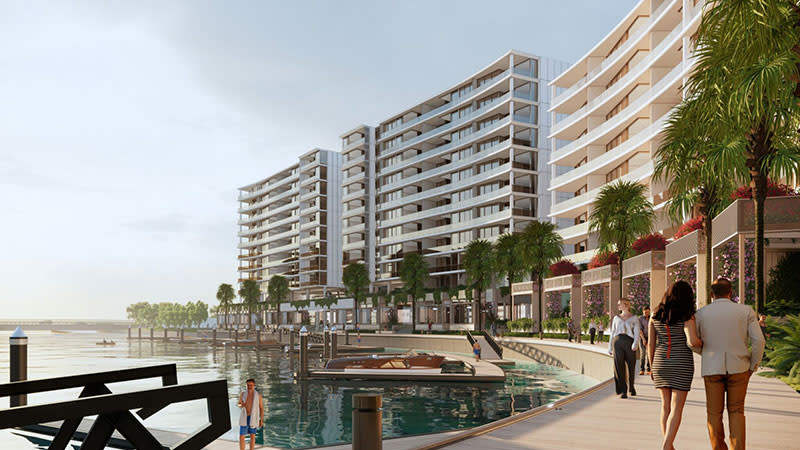
With Lewis Land Group, Long has worked across several major Gold Coast developments and currently leads the $1.5-billion Harbour Shores masterplan, alongside the approved Harbour Cove precinct. He’ll bring this experience to Urbanity-26, where he’ll explore the Gold Coast’s shift from tourism destination to lifestyle city.