
Co-livingPhil BartschThu 07 May 26
Gold Coast Faces Co-Living Test as Southport Scheme Filed

A co-living tower proposal in the heart of Southport is poised to test the Gold Coast’s appetite for more flexible, affordable housing models within its designated growth areas.
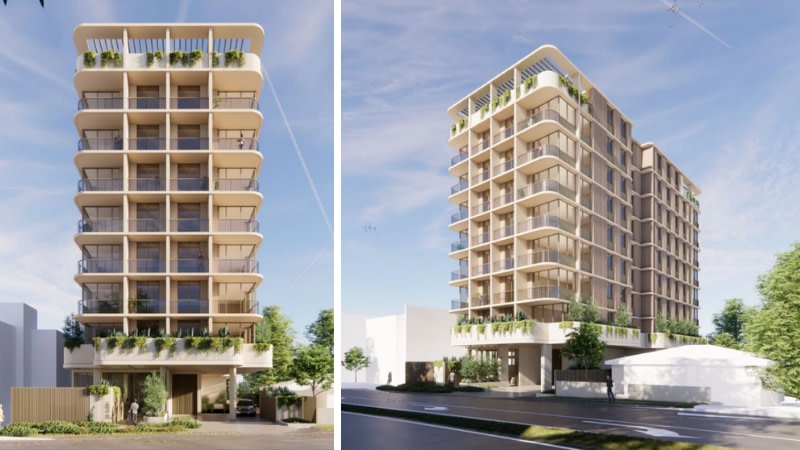
The proposed development would rise 10 storeys and deliver 126 sole-occupancy micro-apartments with shared amenities.
Earmarked for a 1032sq m site at 132 Queen Street, it has been lodged as a rooming accommodation application by an entity led by Gold Coast financial advisor Gareth Croy.
Property records indicate the site—within the Southport CBD priority development area—was acquired by the applicant in November last year for $3.217 million.
“The proposal comprises an underrepresented housing typology within the city, but specifically Southport,” a planning report prepared by Urban Planning Services said. “The inclusion of multi-key arrangements will allow an affordable housing product to accommodate a range of future residents looking for flexibility within their arrangements.”
Under the scheme designed by Clarke Hopkins Clarke, the accommodation would be spread across seven levels, each with 18 micro-apartments.
Each of the 126 units would include a bedroom, bathroom and kitchenette, with a mix of dual-key and tri-key configurations incorporated across the building.
In total, 28 units are capable of dual-key use and 21 can operate as tri-key, allowing for flexible occupancy arrangements—effectively, enabling them to function either as single tenancies or configured to accommodate multiple occupants, adapting to demand and affordability pressures.
Adaptability is increasingly seen as critical in affordable housing models in urban centres where housing costs continue to outpace income growth.
At ground level, the scheme includes a lobby with communal seating, a shared laundry, building services and an on-site manager’s residence. A commercial-grade kitchen is also proposed for the preparation of meals for residents, operating as an ancillary component of the development.
And while the proposed development is entirely residential in its current form, the ground floor has also been designed with sufficient floor-to-ceiling height to allow for potential future conversion to commercial use.
Communal amenities are focused at the rooftop, where residents will have access to indoor and outdoor lounge areas, kitchen and dining spaces, as well as dedicated work zones, including meeting rooms and private pods.
Two basement levels would provide parking for 32 cars, along with two motorcycle and four bicycle spaces.
Unlike most planning jurisdictions across the Gold Coast, the Southport PDA operates under the Economic Development Act 2012—a framework designed to fast-track projects that stimulate economic growth while diversifying housing supply.