
ResidentialPatrick LauTue 12 May 26
Chalmers’ Property Tax Overhaul Dominates Budget

Treasurer Jim Chalmers has handed down a reform-focused Federal Budget aimed at overhauling the housing market that includes a list of measures that will impact the property development sector.
Changes to negative gearing and capital gains tax discounts are the centrepiece of the 2026-2027 Budget, framed as a dramatic rethink of intergenerational equity in Australia, as well as the future shape and direction of the economy.
Speaking to the Parliament, Chalmers said that “This is the most important and ambitious budget in decades”.
Acknowledging that the Iran conflict had “exposed weaknesses in the global economy” and “intensified challenges at home”, Chalmers said the budget would respond “to the pressures of the here-and-now while embracing our intergenerational responsibilities”.
“Global uncertainty is not a reason to delay reform. It’s why we must move with urgency and ambition,” Chalmers said.
CGT, negative gearing shake-up
Tax reform of the housing market was heavily foreshadowed by the government ahead of the Budget’s release, but the exact form was not revealed ahead of it being handed down.
The new tax regime announced by Chalmers, to come into effect from July 2027, will restrict negative gearing to new builds. Properties held before Budget night, however, will be able to apply existing negative gearing arrangements.
It will also remove the 50 per cent capital gains tax discount in favour of inflation-adjusted indexation. New build homes will retain the 50 per cent discount, but a minimum 30 per cent tax rate will apply to capital gains. Discretionary trusts will also apply the 30 per cent minimum, with exemptions for agricultural businesses and charities.
An extension to the restrictions on foreign buyers of existing property will continue, but new builds will be exempt. The 5 Per Cent Deposit Scheme has also been extended.
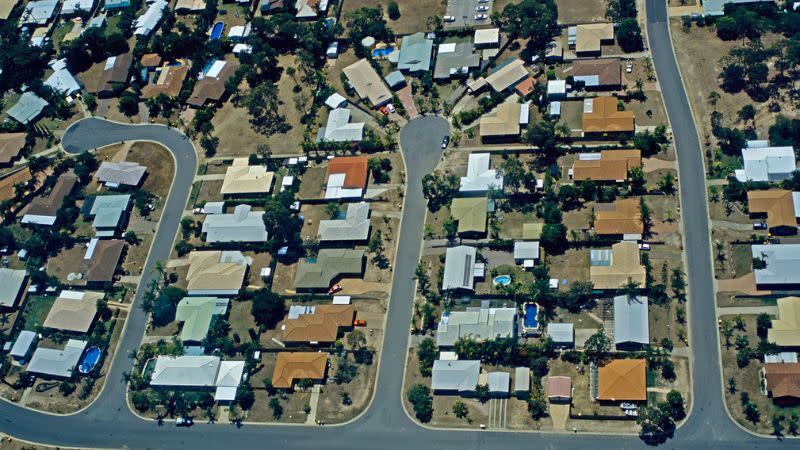
Announcing the changes, Chalmers said that the new tax rules would assist 75,000 Australians to access the property market for the first time. Revenue raised through the changes would be returned in the form of tax relief for workers.
Labor’s Bill Shorten took a housing tax reform platform to the 2019 election, but Labor’s 2025 win was predicated on supply-side reform of the sector backing up its target of 1.2 million new homes.
The changes come a week after the Reserve Bank delivered its third rate rise for the year, and as rental affordability hits “catastrophic” lows while the development industry stares down cost of delivery challenges and a productivity crisis.
Suite of new spending on development
Local governments will benefit from $2 billion in additional funding for enabling infrastructure, supporting 65,000 new homes over the coming decade. State-owned utilities will also be able to access the funding, which ringfences $500 million for regional projects. Access to the grants will be tied to states’ fast-tracking rezonings.
Environmental assessments under the Environmental Protection and Biodiversity Conservation Act will receive a $500-million overhaul, including $250 million dedicated towards the establishment of a new National Environmental Protection Agency. A $105.9-million commitment towards developing an AI tool for streamlined environmental assessments will run for a four-year period.
Consultation is currently open on the design of the NEPA, and will be ongoing throughout the year on National Environmental Standards supporting the EPBC.
Work will continue on a Single National Market, and mutual recognition of skills, which will benefit the construction industry. Builders and tradespeople have been supported with free access to Australian Standards, removing the $1600 in average annual fees.

Meanwhile, the Instant Asset Write-Off has been permanently enshrined. The tax scheme allows businesses with a turnover of less than $10 million to fully depreciate purchases up to $20,000 in the year of acquisition, and has been in place as a temporary provision in various forms since 2011.
The construction industry will also benefit from the $10 billion attributed to bolstering fuel security, including the $7.5 billion in the form of loans, guarantees, and insurance for fuel trade and supply.
Chalmers also touted a suite of measures described as “the broadest productivity push in a budget since the 1990s”.
The measures include reducing compliance costs and speeding up approvals “so businesses can move quickly from an investment decision to shovels in the ground… and simplify building regulations for when these projects begin construction”.
Simplification of tax for small businesses will also save 376,000 hours of labour per year, Chalmers said, while superannuation regulation will be revisited to incentive investment in renewable energy and housing.
Industry, infrastructure and logistics to gain
Industrial and infrastructure projects have also been winners under the Budget, with several high-profile line items announced.
An additional $3.8 billion in Federal funding will go towards Melbourne’s Suburban Rail Loop project, taking total Commonwealth funding to $6 billion of the project’s mooted $34.5-billion first stage.

A further $1.75 billion has been announced for freight rail infrastructure, lifting total investment in the Network Investment Program to around $2.8 billion. The Sydney-Canberra commuter line has also received $50 million towards a $100 million package of upgrade works.
However, funding for the $45-billion Inland Rail project was axed, leaving trackwork after the Melbourne-to-Parkes section completes in limbo. The long-planned extension to Brisbane has now effectively been cancelled.
Care economy under scrutiny
The Budget also seeks to draw a line under the ballooning costs of the NDIS and the healthcare sector, while also taking aim at aged care fiscal reform.
The changes have the potential to impact developers active in private hospitals, specialist disability accommodation and the senior living sector.
Chief among the measures is the suite of reforms to the NDIS, aiming to bring annual costs for the disability scheme down from a projected $70 billion by 2030, to $55 billion. A total of $152 billion will be saved over the decade, funding much of the budget’s new measures.
Eligibility assessments will be tightened, aimed at reducing the current 760,000 scheme participants to 600,000 instead of the 900,000 projected for 2030. Providers to the scheme will also be more tightly monitored.
However, the changes are not expected to heavily impact the cohort of specialist disability accommodation users, nor the providers in that sector.
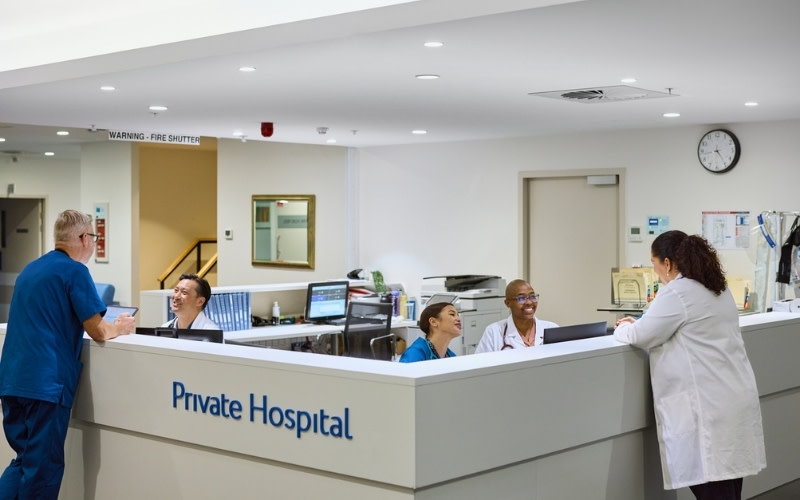
Senior living also came under focus, with health minister Mark Butler previously saying that Australia needs a new aged care home every three days for the next 20 years. In the coming four years, Australia will gain a net increase of 300,000 over-80s, compared to the 70,000 gain in the years 2012-2016.
A Howard-era private health insurance subsidy for over-65s will be scrapped, delivering an estimated $3 billion in savings over the four-year estimates. That funding will be hypothecated to a support package for the aged care sector, while private hospital advocates have argued that the reform will place additional pressure on the public hospital system.
Of that funding, $1 billion will be directed to the Support at Home program. The program will also include targeted capital subsidies for aged care developers, and increases and expansions to the Accommodation Supplement. In total, the package aims to deliver an additional 5000 beds per year.