
ResidentialClare BurnettFri 27 Mar 26
Devil’s in Detail for Brisbane Low-Medium Residential Reforms

Brisbane’s proposed low-medium density residential (LMR) zone changes aim to support better supply and diversity of housing in well-located areas.
But while it’s a positive step, it does not go far enough to outweigh cost escalations, Place Design Group associate planner Renee Livingstone told The Urban Developer’s Explained: Brisbane’s Proposed LMR Changes members-only webinar last week.
“Initially, particularly in the planning industry, we were all ecstatic. It is overdue,” Livingstone said.
“But you start to look into it, and the devil’s in the details with an amendment like this.”
Announced in December, the amendment package includes proposed changes to building heights, lot sizes, and other built form and design requirements.
This includes allowable building heights from 2-to-3 storeys to 3 storeys, and up to 4 storeys permitted near high-traffic areas such as public transport or shops, as well as minimum lot sizes of 120sq m in key locations.
“Its intent is to help create walkable neighborhoods by providing low-medium homes as well as other small-scale services and community uses in areas that are really well located,” Livingstone said.
The aim is to create “gentle density” while reducing urban sprawl by creating infill development opportunities that increase density but also maintain suburban neighbourhood characteristics.
But as the industry looked closer, the cracks began to appear.
Major issues emerge
Low-medium residential zones make up 14 per cent of Brisbane’s residential areas, but development in these areas fell from 1100 homes to just 445 homes being built in 2023.
And there are reasons behind this lack of activity which will not be waved away by the LMR proposals, Livingstone said.
These include building character protections—obligations that can neutralise the density and feasibility of the amendments, Livingstone said—overland flow and flooding, which impacts LMR sites such as Bulimba, and service constraints.
“I’m sure all developers would agree there is already limited space for compliant bin storage, and you’re competing with habitable space, parking, landscaping, required setbacks and a small site frontage, which also make it quite difficult for bin collections.
“And then you have conflicts within collection vehicles and parking areas.”
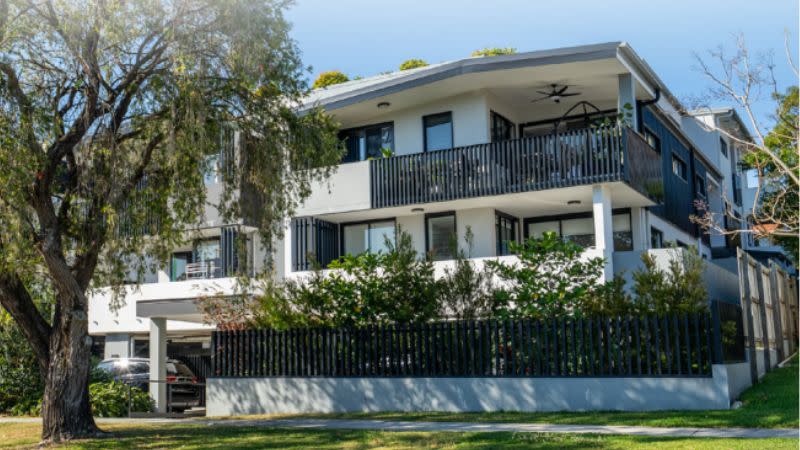
The zones themselves, and their locations are also proving problematic.
“We really need a bit of a broader review into the zones and an expansion of them, because there’s quite a few low density residential zone sites that are in really well-located areas, but are not capturing the uplift.”
These issues have not yet been ironed out. But more importantly, while the height uplift is welcome, it does not take into account the actualities of current costs.
“The high uplift is not really enough to help offset high land values, construction costs and infrastructure charges,” Livingstone said.
A reduction in car parking requirements was also welcome, but does not go far enough and many sites will still be required to provide structured car parking, which can add considerably to build costs .
“The height will help with getting things like semi-basements done, but it’s still probably not enough to bridge that overall feasibility gap,” Livingstone said.
Feasibility issues surface
The Brisbane City Council said the initiative could deliver up to 6000 homes by 2032, but this was probably optimistic, Livingstone said.
“Overall, it’s positive and there are going to be sites that benefit. But the number of sites that benefit are going to be a little bit more constrained than initially anticipated,” she said.
The amendments are not a silver bullet, Livingstone said.
“The amendments don’t sufficiently align with planned controls or real world construction economics.
“So even with these amendments, many LMR sites still remain developable on paper, but not really viable in practice, which will continue that pattern of under delivery within the zone.”
Brisbane could take its cues from the likes of Sydney, where its low and midrise reforms have been taken up with gusto by the industry.
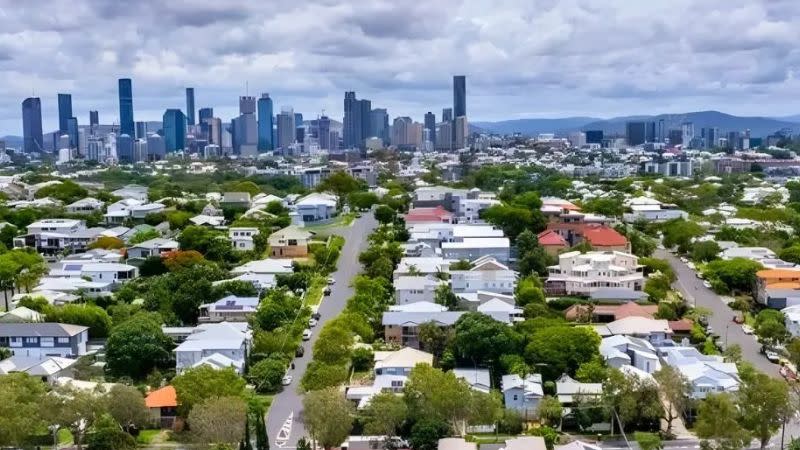
“It’s no secret that Sydney’s a bit more advanced than we are in terms of accepting density, but I don’t think that we can rule out that we will get to that level of density at some point, and planning for that now, rather than later, and trying to do things retrospectively, would benefit everyone.
“The proposed amendments are definitely it’s a step in the right direction, but I think we need to be quite conscious that this is one mechanism.
“If we really want to achieve a meaningful difference, there are still quite a few other aspects and development constraints that really need to be reviewed to help make any sort of meaningful change.”
The consultation period finished this month—the Brisbane City Council will review feedback before finalising the low-medium residential zone reforms.





