
Sponsored ContentPartner ContentTue 24 Feb 26
Inside Rothelowman’s Portfolio Design Strategy

Balancing design vision with commercial performance may sound simple but achieving it in practice is far more complex.
As pressure mounts on housing supply, national architecture and design firm Rothelowman is drawing on its long-term partnerships with leading developers to achieve both.
Harnessing its portfolio approach, the company prioritises desirability and feasibility, while reducing risk and strengthening the way residential products evolve over time.
The value of portfolio relationships
For these portfolio relationships, there is no contractual exclusivity from either side, and each commission is earned through performance.
It requires honest, regular communication and a shared understanding of what “value” looks like for every client.
Rothelowman’s growing portfolio of work with developers including Aria, Hirsch & Faigen, Novus, and LDK reflect this performance-based approach.
“We’re only as good as our last project,” Rothelowman managing principal Nigel Hobart said.
“Portfolio work is a mutual commitment that only works when both parties stay aligned, accountable, and focused on continuous improvement.”
The advantages for developers are far-reaching—from the accountability that comes with a trusted partner who can evolve the product, to reduced briefing time, faster project commencement and the avoided cost of re-educating new design teams.
As construction costs and timelines continue to present challenges, others benefits include the opportunity to de-risk project delivery through design consistency.
Building efficiencies through consistency
Rothelowman’s approach to design extends far beyond a visual outcome, and strategically magnifies opportunities by maximising a project’s value, functionality, and desirability.
Around 70 to 85 per cent of each design informs future developments for the same client, leaving flexibility for site, location, and end-user needs.
Consequently, less time is spent re-establishing the brief, and more time is invested into genuinely evolving the product, as seen in Rothelowman’s long-standing partnership with Aria Property Group.
Compounding knowledge enables Aria to deliver a recognisable level of quality and amenity across projects, while still tailoring each building to its specific site.
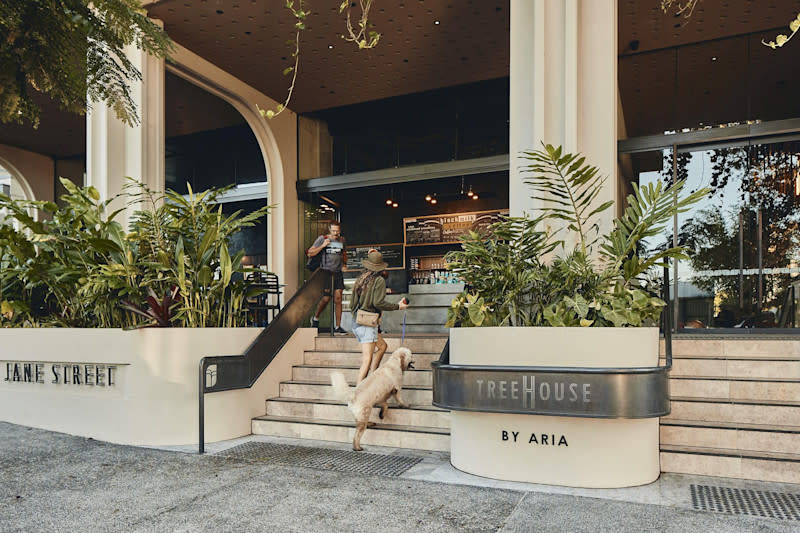
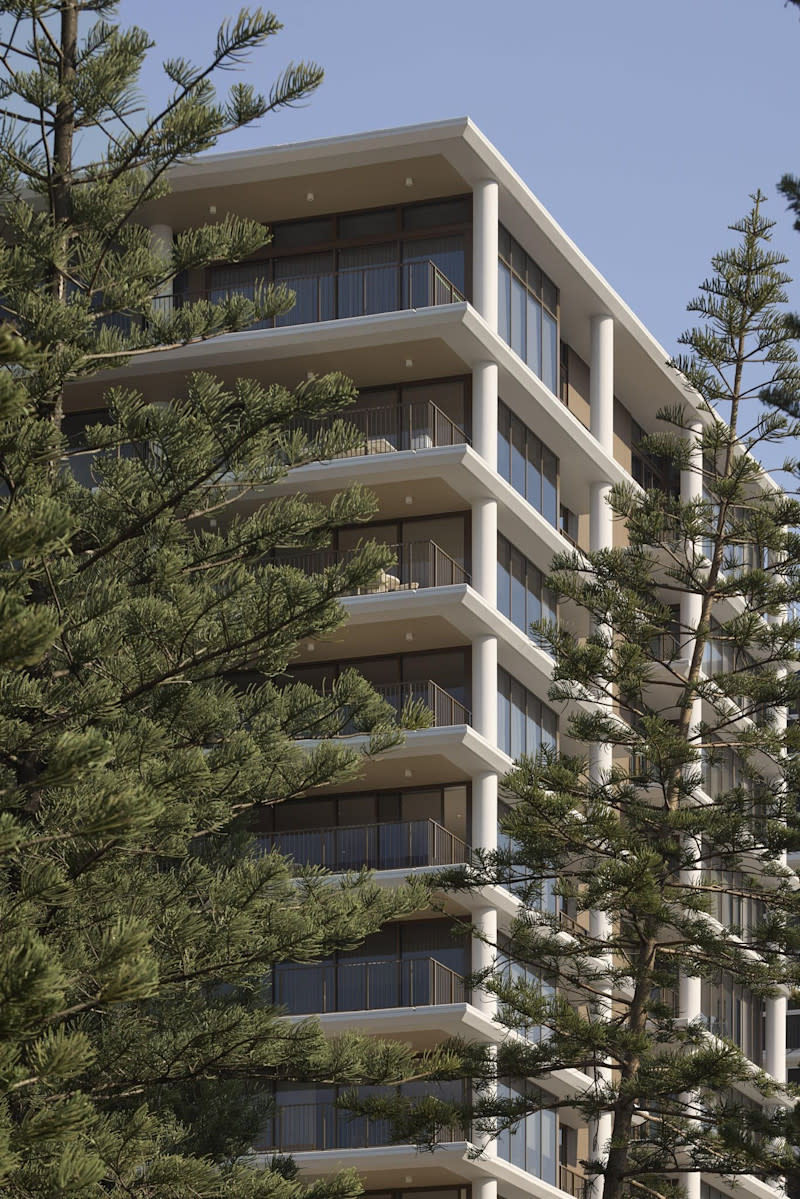
“Casamia was intentionally designed as an evolution of its neighbour, Treehouse,” Hobart said.
“It occupies a smaller, more intimate site, so we kept the design simple and buildable to align with Aria’s vision for a cultural space.”
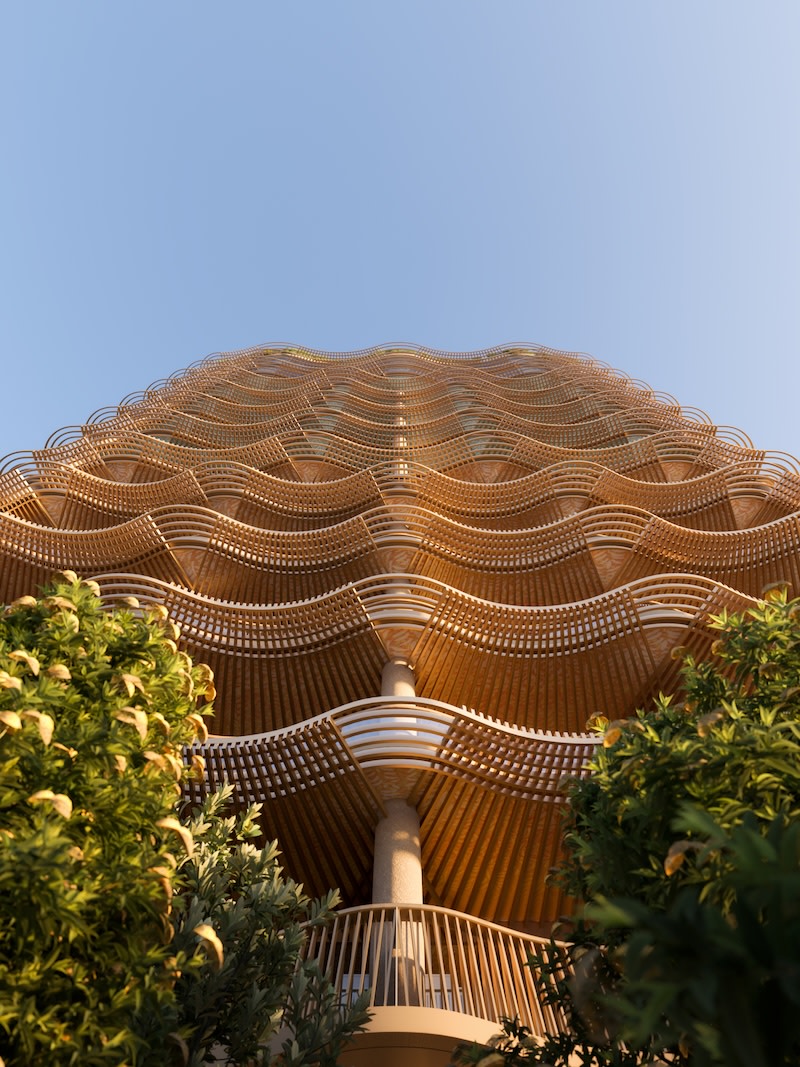
Both build on the lessons learned from Aria’s Trellis [pictured at top] to celebrate Brisbane’s subtropical climate and align with the city’s “buildings that breathe” principles.
Minimising cost and risk
Guided by the philosophy that “design inspires, viability delivers,” Rothelowman reduces risk and controls design stage costs by fully investing in the developer’s operational model.
“Every time you work with a client, you learn something about their processes and how they deliver projects,” Hobart said.
“No two operate the same way. When those relationships are built on trust and mutual understanding, you can navigate challenges together and deliver more efficiently.”
With speed critical to project viability, Rothelowman also uses its portfolio approach to streamline settlement and help projects reach full occupancy.
Over time, this approach can extend beyond architecture and enables Rothelowman to work alongside preferred construction and consultant partners, minimising delays.
“You end up with a team who can walk a completed building together, point to what worked well and what could have been better, and carry that shared understanding straight into the next project,” Hobart said.
This philosophy guided the successful first stage of LDK’s seniors living community, Amberfield, where Rothelowman delivered a design that aligned with LDK’s vision in a buildable and costeffective way, allowing both teams to move into the next stages of delivery with clarity.
Activating design cohesion
Partnering with developers who are defining their own brand identity has become another key strength of Rothelowman’s approach.
By working across entire portfolios, the firm delivers a consistent design language while ensuring each project responds to its unique site, context and users.
Rothelowman’s ongoing collaboration with Hirsch & Faigen along Queensland’s coastline is a clear example.
The firm’s designs for Emerson, Hemingway, and Yves each express a “laid-back coastal charm” that reflects the Gold Coast lifestyle, while maintaining individuality within a cohesive portfolio.
For a build-to-sell developer, this portfolio mindset protects and amplifies brand equity, giving buyers confidence that every project will meet and exceed a recognisable standard.
A similar philosophy guides Rothelowman’s relationship with build-to-rent developer Novus.
“When we design a one or two-bedroom apartment, certain design elements like orientation, light, and amenity remain consistent, while the layout, interior design, and amenities can evolve with each project,” Hobart said.
“This approach to design allows every building to feel unique while maintaining the efficiency and quality that come from working together over time.”
For residents, this means their experience of the brand continues to improve.
For Novus, it means a more reliable translation of their operational model and customer promise into each new building.
A cycle of learning
For Rothelowman, designing for portfolio clients is about refinement, not replication.
Each project builds on shared knowledge, which strengthens outcomes over time.
But Hobart is clear: the model only works when both sides remain committed to performance.
“There’s no entitlement in a portfolio relationship,” he said.
We have to earn every project.
“That’s what keeps the work sharp, outcomes improving, and the partnership honest.”
The Urban Developer is proud to partner with Rothelowman to deliver this article to you. In doing so, we can continue to publish our daily news, information, insights and opinion to you, our valued readers.