
ConstructionTaryn ParisThu 17 Sep 26
Contractors Cop the Cost in Australia’s Fierce Tender Wars

Australia’s construction sector is absorbing a fresh wave of input cost inflation rather than passing it through to tender prices, according to Rider Levett Bucknall’s (RLB) Construction Market Update for the September quarter.
RLB Oceania director of research and development Oliver Nichols said renewed conflict in the Middle East had driven up the cost of diesel, freight, concrete and other petroleum-linked materials, but competitive tendering was preventing most of that hit from reaching clients.
“These costs are being absorbed by contractors in most Australian cities, but Perth is bucking the trend with tender prices now forecast to rise more rapidly,” Nichols said.
Wholesale diesel prices are approaching $2.50 a litre, and concrete suppliers have reinstated surcharges of roughly $7 to $9 per cubic metre after removing them in June, according to RLB.
National TPI holds, but masks two-speed market
RLB’s national Tender Price Index (TPI) forecast for 2026 is unchanged at 4.6 per cent.
But the firm says that figure disguises sharp divergence between cities.
Perth has been upgraded from 5.6 per cent to 6.5 per cent—now equal-highest among the major markets alongside Townsville, at 7 per cent.
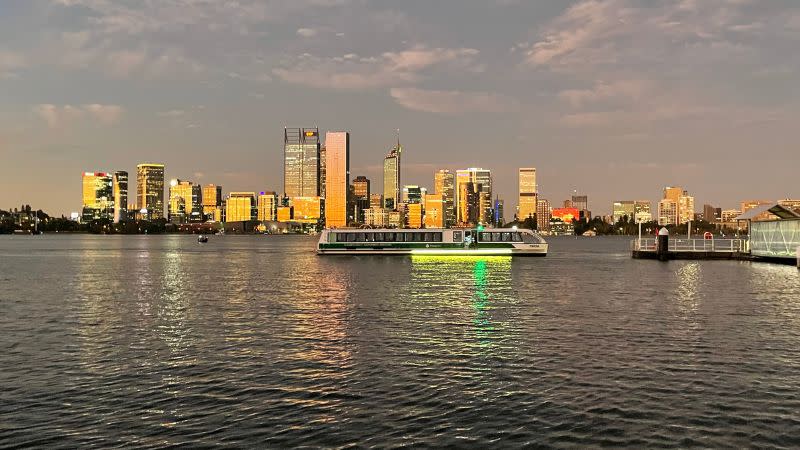
RLB said the Perth revision reflected the state’s construction sector running at or near peak capacity, across defence, healthcare, renewable energy, manufacturing and residential work.
Softer market conditions have downgraded Darwin’s forecast from 6.9 per cent to 5.9 per cent, and the Gold Coast from 6 per cent to 5.5 per cent.
Sydney and Melbourne remain comparatively soft. Subcontractors in Sydney are actively chasing forward work, helping moderate the impact of higher fuel and material costs on tender prices.
Brisbane window narrows ahead of Games pipeline
RLB said there was a window of about six months for Brisbane projects under $80 million that were ready to tender now, as contractors sharpen pricing ahead of the city’s Olympic-linked pipeline.
Once that demand builds, RLB expects the pressure on resources and prices to increase.
RLB’s forecast TPI growth for Brisbane is 5 per cent for 2026, stepping up to 7 per cent annually from 2027 through to 2029.
| City | 2025 | 2026 (June qtr) | 2026 (latest) | 2027 | 2028 | 2029 |
| Adelaide | 3.5pc | 5.1pc | 5.1pc | 5.5pc | 5.5pc | 5pc |
| Brisbane | 5pc | 5pc | 5pc | 7pc | 7pc | 7pc |
| Canberra | 3.75pc | 4.7pc | 4.7pc | 4.8pc | 4.3pc | 4pc |
| Darwin | 5pc | 6.9pc | 5.9pc | 5.1pc | 4.6pc | 4pc |
| Gold Coast | 4.5pc | 6pc | 5.5pc | 7pc | 7pc | 7pc |
| Melbourne | 4pc | 4pc | 4pc | 4.25pc | 4.5pc | 4.5pc |
| Perth | 5.4pc | 5.6pc | 6.5pc | 5.9pc | 5.5pc | 5.1pc |
| Sydney | 4.5pc | 4pc | 4pc | 4.5pc | 5pc | 4.5pc |
| Townsville | 6pc | 7pc | 7pc | 7pc | 7pc | 7pc |
Labour, not fuel, biggest medium-term risk
Fuel and freight volatility is a short-term shock layered on top of the deeper, slower-moving iceberg: labour shortages, according to RLB.
“Construction labour markets are already tight, particularly in Queensland, Western Australia and South Australia, where online job advertisements for construction workers remain well above pre-Covid levels,” Nichols said.
Trade and apprenticeship commencements have “increased only slightly,” he said, while migration was slowing and few visas were being issued to construction workers.
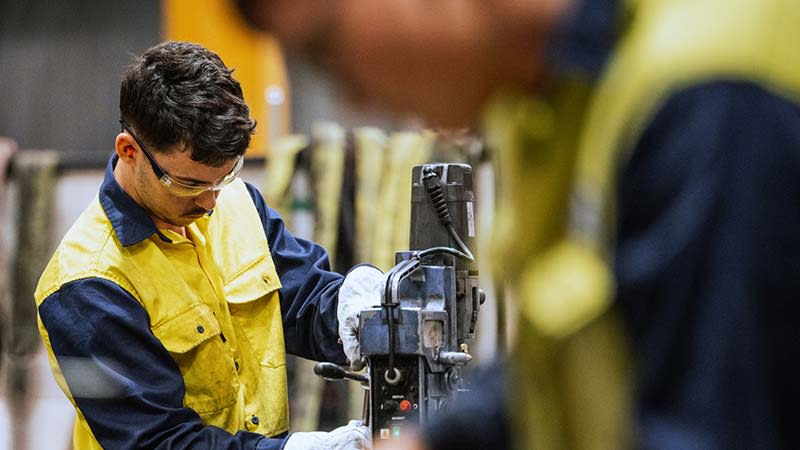
RLB expects competition for labour to intensify as data centre, residential, defence and health projects move through the pipeline alongside the Brisbane 2032 Olympics. And it is going to be expensive.
Construction enterprise agreement wage growth is already at its highest level since the late 1990s.
That is against a backdrop of record activity: construction work done hit $328 billion in 2025–26, up 4.2 per cent on the prior year, with apartment and townhouse construction climbing 13.2 per cent and non-residential work up 9.3 per cent, driven partly by data centres and health projects.
Forecast: relief, not reversal
RLB expects TPI growth to average more than 5 per cent across major markets over the next few years — well above the 3.3 per cent average recorded between 2014 and 2019.
“Competitive tendering is providing some relief from the immediate impact of higher input costs, but it should not be mistaken for a return to a low-cost construction environment,” Nichols said.
“The underlying fundamentals remain challenging.”





