ResidentialLindsay SaundersTue 03 Nov 26
Fifth RBA Rate Rise Deepens Housing Feasibility Challenge

The Reserve Bank of Australia has lifted interest rates for a fifth time this year, adding to pressure on development feasibility as inflation remains above target and residential construction struggles to gain momentum.
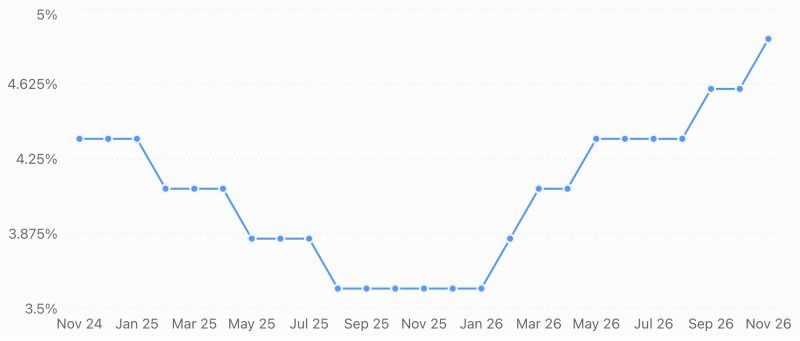
The RBA’s Monetary Policy Board increased the cash rate by 25 basis points to an 18-year high of 4.85 per cent at its November 3 meeting, in a further move to bring inflation under control.
Annual headline inflation climbed to 4.3 per cent in the year to September, up from 4 per cent in August, while underlying inflation rose to 3.6 per cent. Both measures remain above the RBA’s 2 to 3 per cent target range.
For developers, higher rates add to the cost of funding land, construction and project pipelines, while potentially weakening buyer demand and the prices projects can support.
The latest building approvals figures underline the challenge. Total homes approvals rose 5.1 per cent in September to 17,948, according to the Australian Bureau of Statistics, but remained 0.8 per cent below the same month last year.
The value of residential building approvals fell 2.8 per cent to $11.06 billion, while private sector house approvals declined 5.3 per cent to 10,432. The increase in total approvals was driven by a 16.6 per cent rise in private sector dwellings excluding houses.
But, Oliver Hume Property Group chief economist Matt Bell said, the increase was unlikely to change the outlook for housing and land markets, given it had been widely anticipated.
Strong population growth and a persistent undersupply of homes continued to underpin demand, Bell said, although higher borrowing costs would make the remainder of 2026 and early 2027 difficult for the market.
Greater certainty around interest rates could help restore transaction activity and support moderate price growth, he said.
Realestate.com.au senior economist Angus Moore said the increase would extend the housing market downturn, with higher mortgage costs further reducing borrowing capacity and adding to downward pressure on prices.
RBA rate decisions of past two years to November 2026
National home prices had fallen for seven consecutive months and were 4.3 per cent below their peak, Moore said.
However, he described the correction as orderly rather than distressed, pointing to resilient labour market conditions, low mortgage arrears and substantial household repayment buffers.
Master Builders Australia chief executive Denita Wawn said the rate increase further weakened the financial case for construction projects, compounding pressure from rising materials costs, labour shortages and higher building costs.
The cost of building a new home had increased 53 per cent since the pandemic, while non-residential construction costs had risen almost 40 per cent, Wawn said.
She warned that downgraded construction forecasts and additional costs facing more than 90,000 building businesses risked undermining investment, confidence and the industry's capacity to deliver housing and infrastructure.
Housing Industry Association managing director Jocelyn Martin said the increase would push Australia further away from its National Housing Accord target, with the country forecast to fall about 200,000 homes short of the 1.2 million dwelling goal.
Higher borrowing costs were reducing households' capacity to buy homes and weakening new housing delivery, Martin said.
She called on all levels of government to reduce taxes, infrastructure charges, regulatory costs and approval delays, warning that barriers to investment would further constrain supply and worsen housing affordability.