
Sponsored ContentPartner ContentSun 10 May 26
Property Industry Foundation: 30 Years Fighting Homelessness

Since 2018, Property Industry Foundation chief executive officer Kate Mills has led the organisation’s national efforts to build homes for young Australians experiencing homelessness. Here she explains how youth homelessness is growing faster than ever—and how you can help.
The Property Industry Foundation turns 30 this year. For three decades we have raised funds to build homes for homeless young people and the bedrooms we have built now deliver more than 100,000 safe sleeps each year.
But despite that, homelessness among young Australians is not receding. It is accelerating.
Young people under 25 account for nearly a quarter of everyone experiencing homelessness in this country, prompting us to ask: what must we do differently in the next 30 years?
There are two moments that always stand out when you work at the Property Industry Foundation.
The first is opening a Haven House.
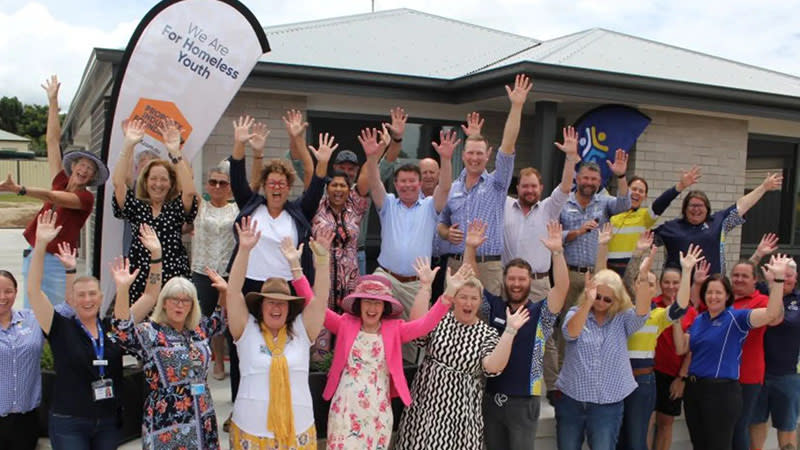
After years of work, standing in front of a completed home for young people in need and knowing the part we played in bringing it into being is deeply satisfying.
I didn’t come into this role with a background in construction or development, but I have developed a deep respect for the industry.
People in this industry take on complex, high-risk projects every day. It is the key industry that can address the housing crisis, and it takes that responsibility seriously.
The second is when you hear directly from a young person who has experienced homelessness.
People with lived experience shape everything that we do. Every time I hear a young person speak, I learn something new. They remind me of how harsh the world can be, but also how resilient young people are, and how much care exists within the youth homelessness sector.
It’s not an easy sector to work in. It is underfunded and worn down by frontline realities, but it is full of extraordinary people who show up every day. Working with frontline service providers to increase and improve their accommodation is a privilege.
Homelessness is growing faster for young people than any other group. Between 2006 and 2021, the rate of homelessness (per 10,000) for 19–24-year-olds grew by 21 per cent. Last year, 46,000 young people aged 15 to 24 asked for help. One in two were turned away due to a lack of beds.
For an industry that understands unmet demand better than most, that figure should stop you cold.
Of those who do reach services, 35 per cent have experienced domestic and family violence, and nearly half are dealing with a current mental health issue.
These are not young people who have made poor choices. They are young people the system has run out of room for.
There is no single cause. Homelessness among young Australians is a compounding set of forces: domestic violence, disadvantage, mental health, and a housing crisis.
The rental market has moved further beyond reach with each passing year. A recent Anglicare survey of 45,000 rental properties found not one was affordable for a young person on Youth Allowance. Only one per cent were affordable for someone on minimum wage.
Structural, intergenerational inequity applies a grinding pressure on top of all of it. If we don’t change the trajectory now, we are locking in the next generation of homelessness.
There is no easy solution to youth homelessness. We must build more housing, but we must also stop people from becoming homeless in the first place.
A homelessness advocate once described the current system to me as an overflowing bathtub: you cannot empty it unless you turn off the taps.
If we are serious about reducing homelessness, we need to act upstream, preventing young people from becoming homeless, while also responding to those already in crisis.
What gives me genuine hope is how much the public narrative has shifted.
When I first entered this sector, there were still suggestions that young people were in some way responsible for their own homelessness—that it was about behaviour or poor choices.
That framing has changed.
There is now a clearer understanding of the role of domestic and family violence, of the failures of systems that should have caught these young people earlier and of the structural forces that push them into crisis.
That shift matters. It is the foundation for real change.
This year marks 30 years since the Property Industry Foundation brought together the property and construction industry around a shared purpose: to have a tangible, lasting impact on youth homelessness.
Our primary contribution has been through The Haven Project—increasing the supply of accommodation for young people—alongside advocacy and innovation in the sector.
We sit at the intersection of two worlds: an industry with the capability to build at scale and a sector working tirelessly to support vulnerable young people. Our role is to mobilise that capability—the skills, the capital, and the commitment this industry has in abundance—to build homes where there are none.
Thirty years on, there is still much to be done. But we are as committed as ever to a future where every young person in Australia has a safe and secure place to sleep.
If you share that commitment, we welcome you at the table. Find out more about how you can get involved at pif.com.au.
The Urban Developer is proud to partner with the Property Industry Foundation to deliver this article to you. In doing so, we can continue to publish our daily news, information, insights and opinion to you, our valued readers.





