IndustrialLeon Della BoscaWed 15 Jul 26
Tenacity, Delivery and Good Design Drives Young Gun Oscar Ledlin

An abandoned industrial site written off as undevelopable was the foundation of a career now changing how small-format industrial property is designed, priced and delivered.
Ledlin Group founder Oscar Ledlin has also built a sustainable materials businesses, but his path to that began with a stormwater pit lid and a $1.6-million valuation gap.
Two previous developers had walked away from the site after a civil engineer determined the stormwater levels made it unserviceable.

Rather than abandon the purchase, Ledlin lifted the pit lids and checked the invert levels, finding they did not match the drainage authority’s records.
“After insisting I double-check the data, our engineer redesigned the drainage system using the correct levels, we secured approval, and before we had even settled the purchase the site was revalued from our $800,000 purchase price to $2.4 million,” he told The Urban Developer.
“It taught me that tenacity is a competitive advantage. Since then, I’ve built a culture around the belief that every problem has a solution.
“It might require more effort, more creativity or a different perspective, but if you’re willing to keep digging, ‘impossible’ is surprisingly rare.”
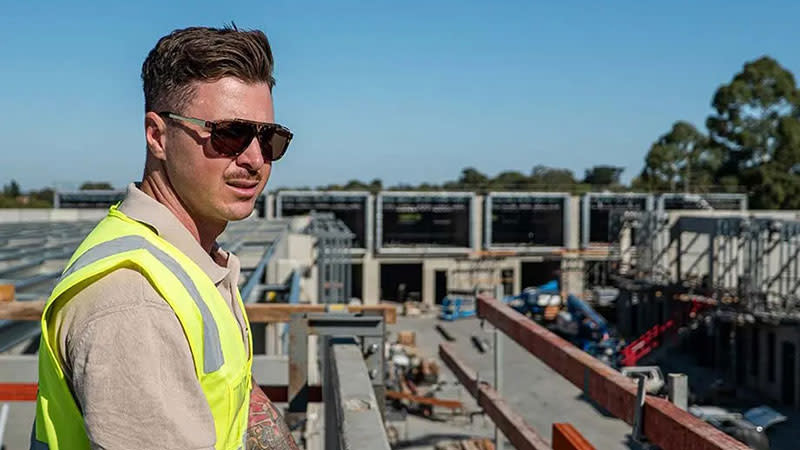
The late Jonathan Hallinan was Ledlin’s first property mentor and a close friend who taught him two lessons that stuck with him.
“The first was never to be ashamed of self-promotion,” he said. “Australia has a strong tall-poppy culture, but if you genuinely believe in what you’re building, don’t be afraid to tell people about it. Opportunities rarely find businesses that no-one knows exist.”
The second was to find the “good-for-all outcome over the ‘great-for-me’ one”, and that “win-lose outcomes are easy to create in business” but “long-term success comes from creating win-win outcomes, where every party walks away wanting to work together again”.
Ledlin’s read on the small-format industrial market points to a widening split between commodity stock and premium product.
“For years, industrial was treated as a commodity, four walls and a roller door,” he said. “Today, there’s a clear two-tier market emerging.”
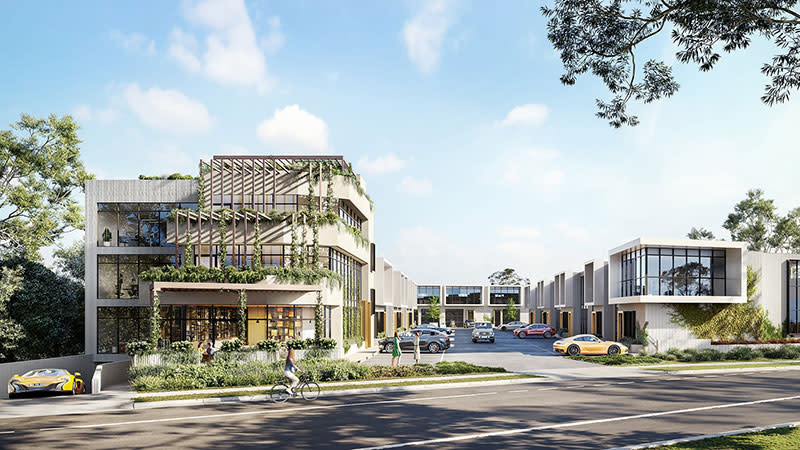
Features once reserved for offices and residential buildings, among them boardrooms, co-working facilities, rooftop terraces and landscaped communal spaces, are becoming real differentiators, he said, adding that “in the best business parks, we’re seeing these features support rents 20 to 30 per cent higher than neighbouring standard industrial units.”
The customer has changed too, Ledlin said.
“Small business owners increasingly want premises that reflect the quality of their brand, help attract talent and create a better place to work. I think developers who continue treating industrial as a commodity will be left behind.”
Execution matters more than access to funding, in Ledlin’s view.
“Delivery is more valuable than capital,” he said. “When I started, I thought capital was the biggest constraint to growing a development business.
“I’ve realised that execution is far more valuable than funding. Capital follows people who consistently deliver.”
Development success should be measured differently, Ledlin said.
“For decades, we’ve measured success by yield, site coverage, NSA and the number of units delivered,” he said.
“Those metrics matter, but they’re outputs, not outcomes. The better question is: will businesses thrive here? Will people genuinely want to work here? Will the development create lasting demand?”
His theory was tested in 2021, when Ledlin launched a premium storage concept called the Flexie Unit “featuring shared amenities such as boardrooms, co-working office and a rooftop terrace”.
He sold 45 units in four days.
Construction costs then rose by around 30 per cent, turning a $14.5-million budget into $19 million, leaving Ledlin to choose between rescinding the contracts or absorbing a $4.5-million hit.
“I lost a week’s sleep over that decision but ultimately chose what I believed was the right thing to do and honoured the contracts,” he said.
Asked what the city of the future looks like, Ledlin describes something “more mixed-use, more sustainable and far more productive”.
“It won’t just be about where people live,” he said. “It’ll be about creating places where people can live, work, innovate and build businesses within the same communities.”
It’s a sound vision but Ledlin isn’t convinced the industry is on track to realise it any time soon.
“I’d argue we’re moving in the wrong direction and I certainly don’t think we’re moving quickly enough to keep up with population growth or business demand.”
Hear more from Oscar Ledlin, including his forays into sustainable materials, when he takes the stage at Urbanity-26 this year.