

Energy & UtilitiesTaryn ParisMon 01 Jun 26
Fortescue Bets Big on Solar as Australia’s Renewables Transition Hits Crossroads

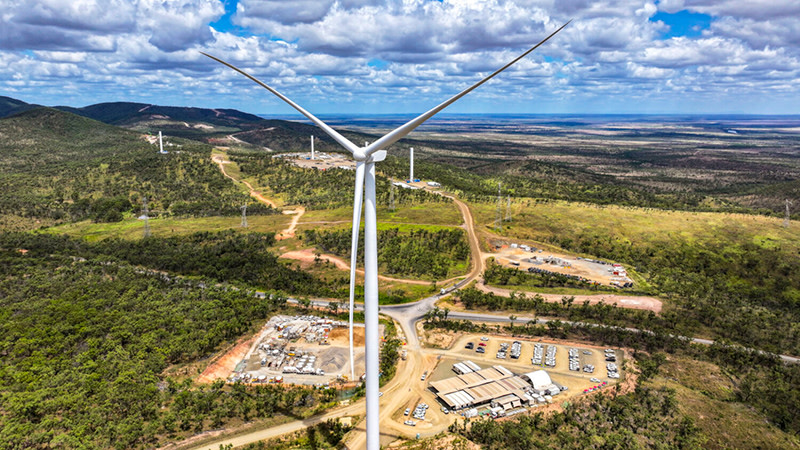
Construction has started on one of the biggest solar farms to be built outside of Australia’s main grid, alongside a giant battery at Turner River in Western Australia.
Iron ore miner Fortescue is pushing towards its “real zero” emissions by 2030 ambition with a major investment in green infrastructure.
The 690 megawatt (MW) Turner River solar farm is its biggest project to date and the largest in Western Australia. In terms of capacity, it will only be beaten by Acen Renewables’ 720 MW New England solar farm in NSW.
Fortescue is also building a 74 MW, eight-hour battery rated at 650 MWh, which will be integrated with the existing 190 MW solar facility at its nearly complete Cloudbreak mine at Mulga Downs.
Wind farms and solar panels are producing more of Australia’s electricity than ever, but slow approvals and investment commitments could stall progress, according to the Clean Energy Council.
A report on the state of the renewable energy transition in 2026 found that just 2.3 GW of new renewable energy generation reached financial close in 2025 — down 46 per cent on the previous year.
Clean Energy Council chief executive Jackie Trad said the grid was facing its biggest transformation in half a century.
“Australia’s clean energy transition is at a critical juncture. Renewables are supplying nearly half our electricity; we are now a top-three global player in big battery storage; and households are taking control of their own power bills in record numbers,” Trad said.
“But we need to be honest about where we are, and where we need to be. The number that demands attention is going in the wrong direction: financial commitments for large-scale wind and solar is at a decade low. That is a gap we must close.”
Connecting new generation, building interstate interconnectors, and integrating rooftop solar and electric vehicles into ageing infrastructure will require hundreds of billions of dollars by 2050. Digital twin technology is emerging as one tool utilities hope can help.
The technology has three components: a digital replica of an asset such as a substation or transmission line; continuous updates to keep that model current; and the ability to use it to inform operational decisions across its working life.
Bentley Systems director of industry strategy Paul King said that last element is where the real value lies — but cautioned against overhype.
“Every manufacturer is somehow positioning digital twins as almost like the magic bullet. But really, there’s a lot of misconception and hype,” he said.
Essential Energy, which operates distribution infrastructure across regional NSW, has applied digital twin processes to high-voltage substation design, reporting around 50 per cent reductions in design costs and up to 80 per cent fewer site visits.
The more ambitious application is in day-to-day network management — shifting from reactive fault response to anticipatory maintenance using IoT sensors and AI analysis.
“Digital twins are shifting the whole management of the grid from what they call ‘fail and repair’ to ‘predict and prevent’,” King said.





