
Data CentresLindsay SaundersWed 17 Jun 26
Firmus Plots AI Supercampus for Contentious Tassie Mill Site

Firmus Technologies has unveiled plans for a second major artificial intelligence factory in Tasmania.
The developer has filed its proposal for the site slated for the controversial Gunns pulp mill at Bell Bay as part of its strategy to establish the state as a global AI infrastructure hub.
Firmus Technologies is a privately held AI infrastructure developer that designs, builds and operates high-density computing facilities for training and running AI models.
The proposal now before the George Town Council would deliver a 300-megawatt AI factory at Bell Bay and significantly expand the company’s Tasmanian footprint beyond its first facility that is now under development at St Leonards, near Launceston.
The Bell Bay project is part of Firmus’ Project Southgate vision, which also includes a potential third site at Wesley Vale.
If all three proceed, Firmus would become Tasmania’s largest electricity consumer, requiring about 400 megawatts of power, equivalent to around a fifth of the state’s current electricity demand and more than the total consumption of all Tasmanian households combined.
The existing industrial zoning, access to transmission infrastructure and proximity to Bell Bay’s established industrial precinct have made the location attractive for energy-intensive digital infrastructure.
Planning documents show the development would comprise two purpose-built AI data hall buildings, an office building and a maintenance workshop.
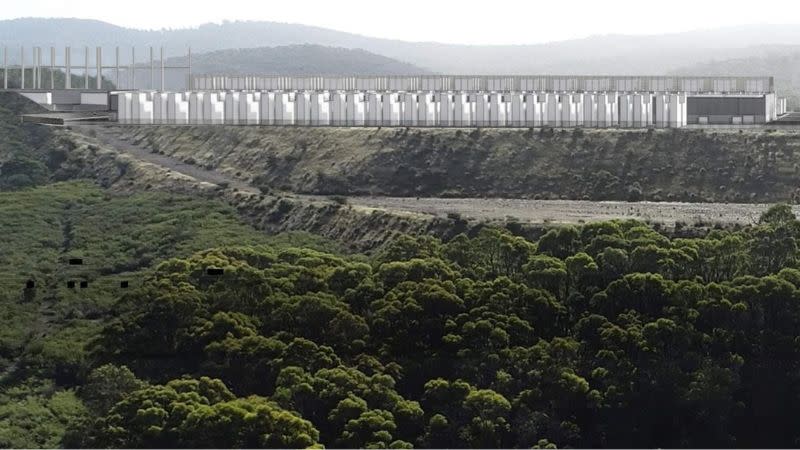
Unlike conventional data centres primarily designed for cloud storage and internet services, Firmus says its AI factories were specifically engineered to train and operate artificial intelligence models, requiring significantly greater computing power, cooling systems and specialised graphics processing infrastructure.
The facility would operate around the clock and connect directly into existing 220-kVA transmission infrastructure between Sheffield and George Town.
The project would also create a permanent workforce of about 70 who would work daytime shifts, alongside another 25 workers covering evening and overnight operations.
The scale of the infrastructure highlights the enormous demands associated with the AI boom.
Plans include 128 diesel back-up generators, each capable of storing 10,000 litres of fuel, as well as large battery energy storage systems and dedicated firefighting infrastructure.
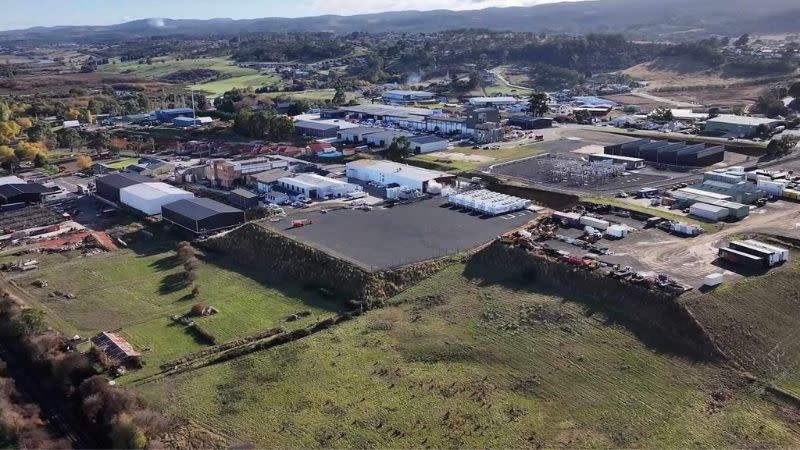
The proposal has fed debate over Tasmania’s energy future.
Critics have questioned whether existing electricity supplies should support energy-hungry AI facilities, while supporters argue the developments could unlock billions of dollars of private investment and accelerate the construction of new renewable energy projects.
Firmus has secured a three-year deal with government-owned retailer Aurora Energy in March for up to 104 megawatts of power for its Launceston plant, which the state said this struck at market rates and was not subsidised.
Firmus has said its projects will not simply consume existing energy supplies but instead act as a catalyst for additional wind, solar and hydro developments across the state.
The company has also argued Tasmania possesses a competitive advantage globally, combining a cool climate, a high proportion of renewable energy generation and available industrial land connected to major transmission infrastructure.
The company on its website also heavily promotes its use of liquid immersion cooling (submerging servers in fluid) to save energy.
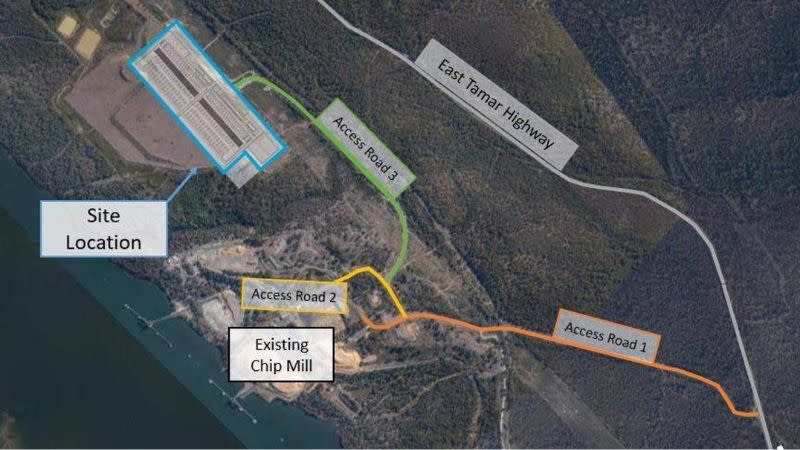
The Bell Bay project is currently open for public submissions, which is due to close June 29.
The proposal would repurpose one of Tasmania’s most prominent industrial sites.
The land was previously earmarked for the Gunns pulp mill project, a development that dominated political and environmental debate for years.
It sparked controversy due to serious environmental concerns, political interference and the company’s aggressive legal actions against conservationists.
Ultimately, the $2.3-billion project became financially unviable, leading to the collapse of the timber giant Gunns Limited in 2012.
The site was eventually sold for other industrial uses.