
ConstructionTaryn ParisThu 19 Mar 26
Australia’s Construction Hits $318bn as Cost Crunch Bites

Australia’s construction sector has maintained near record levels, with total activity reaching $318 billion in 2025.
But the window is closing, according to Rider Levett Bucknall, which is warning that developers in Sydney and South-East Queensland need to move projects to tender before capacity constraints intensify, likely from late this year.
Fresh cost pressures are beginning to build as major projects compete for labour and capacity.
New analysis from Rider Levett Bucknall (RLB) shows a strong national pipeline of investment in energy infrastructure, data centres and apartment development, with momentum particularly evident across Western Australia, South Australia and Queensland.
RLB Oceania director of research and development Oliver Nichols said while cost escalation moderated last year, the conditions for fresh increases are emerging.
“Renewed pricing pressure is coming through as large public and private projects compete for labour and contractor capacity,” Nichols said.
Construction cost increases forecast
RLB forecasts construction costs will rise between 4 and 6 per cent nationally in 2026, with higher increases expected in Adelaide (5.1 per cent), Brisbane (5 per cent), Darwin (5.2 per cent), Perth (5.4 per cent) and regional Queensland centres including the Gold Coast and Townsville (6 per cent).
Lower growth is forecast in Canberra (3.75 per cent) and Melbourne and Sydney are each expecting 4 per cent increases.
Engineering construction has strengthened as Australia ramps up investment in renewable energy and water infrastructure, while residential construction rebounded in 2025, rising 7.3 per cent.
Apartment projects accounted for much of that growth, signalling a shift back towards higher-density delivery amid ongoing housing supply pressures.

Non-residential construction remained relatively steady overall, although investment in data centres, hospitals and aged care facilities lifted.
Government spending leads build boom
Nichols said eastern seaboard markets were seeing particularly strong demand from the digital infrastructure sector, most pronounced in Victoria and NSW.
Government spending continues to play a significant role, with public sector projects accounting for nearly 29 per cent of total construction activity in 2024—up from around 15 per cent in the mid-2010s.
However, RLB expects private sector investment, particularly in housing and energy, to take a larger share of the pipeline over the coming years.
Building approvals rose 15.9 per cent in 2025, driven largely by apartment projects, although volumes remain below the peaks recorded in the mid-2010s.
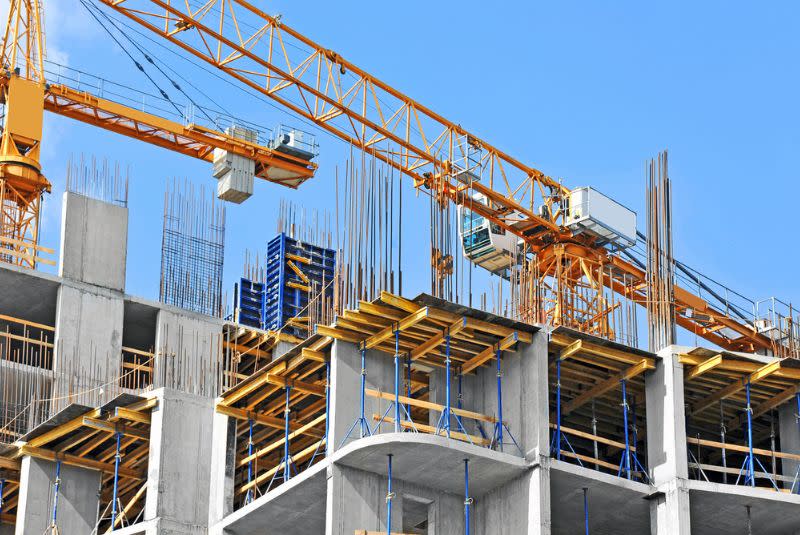
Queensland is expected to lead activity over the medium term as Olympics-related infrastructure gathers pace, adding further demand to an already tightening market.
Despite the strong pipeline, rising interest rates present a downside risk.
RLB analysis, drawing on Reserve Bank research, suggests that if the cash rate reaches 4.35 per cent, construction work done could be about $42 billion lower—down 3.5 per cent—across the 2026–27 to 2029–30 period compared with forecasts made in late 2025.
Labour shortages remain the sector’s most persistent constraint, affecting both trades and professional roles including engineers and construction managers. Limited competition among Tier 1 contractors, insolvency risks and weak productivity are compounding pressures, with construction productivity falling 3 per cent in 2024–25.
While cost growth eased in 2025—building costs rose 3.4 per cent and heavy engineering 1.8 per cent—recent data suggests a reacceleration. Building costs increased at an annualised rate of 4.9 per cent in the second half of the year, while house-building costs also rebounded.
RLB warned geopolitical tensions could further disrupt the sector’s cost base.