



Contractors for $488m NSW Central Coast Highway Fix Revealed
Lindsay Saunders
ExclusiveLeon Della BoscaThu 26 Nov 26
NZ design practice Warren and Mahoney says cost pressure is nothing new. Its approach offers lessons for Australian developers…

Rising construction costs have, in recent years, pushed feasibility to the top of the agenda for Australian developers.
For New Zealand-founded design practice Warren and Mahoney (WAM), working at what its leaders call the edge of the world, this cost pressure is nothing new.
Nick Deans, recently elevated to East Coast studio principal, told The Urban Developer in his first interview in the role that the discipline learnt in a smaller market can help Australian projects stack up.
“It’s become a problem in Australia because of construction prices, but it’s always been a problem in New Zealand,” Deans said.
“You’re on the edge of the world, your supply chain is pretty small and you have to make your budgets work a lot harder.”
WAM East Coast head of design Barrington Gohns framed these constraints “as a catalyst for good design”.
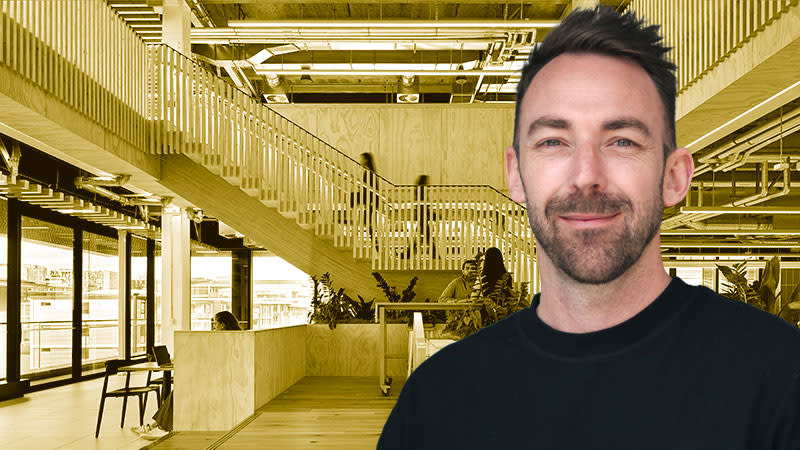
Announced on October 30, Deans’ appointment makes him responsible for a studio of 80 people across Melbourne and Sydney.
He joined WAM in 2015 and succeeds Daryl Maguire, who will now lead strategic projects and the firm’s sport and recreation portfolio.
Community and sporting projects often begin with briefs that are “very functional” and “quite binary”, according to Deans, who credits New Zealand for a different approach.
“One of the things our team does really well is the consultation piece,” he said. “That’s probably born out of the practice’s lineage in New Zealand, where consultation is a heavy part of design.”
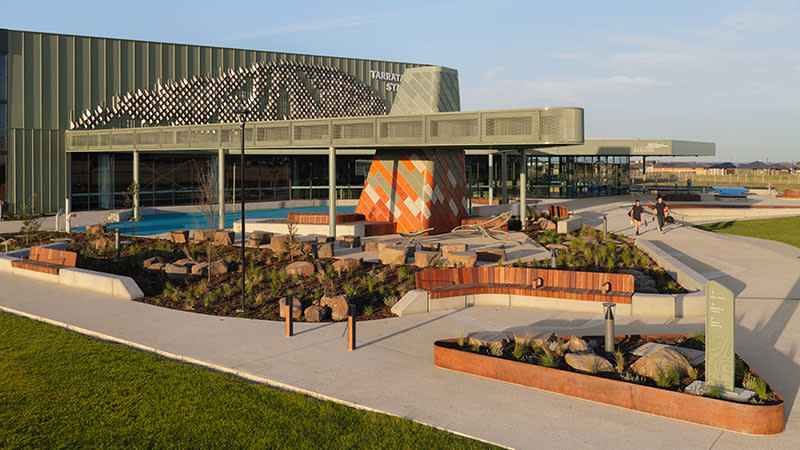
For Tarratarra Stadium at Armstrong Creek, that process turned a facility that “could frankly have been a shed” into a community hub for one of Geelong’s growth corridors.
“And we did it without blowing out the project budget … delivering the functional requirements as well as the tangible community benefits within the commercial reality we’re all working with,” Deans said.
Public art contributions are one requirement the practice often folds into its buildings.
Instead of a sculpture out front, as is common for many projects, Tarratarra layered a Wadawurrung moth narrative across its facade and added a forecourt folly that doubles as space for informal sport and play.
“If I were to be slightly provocative, this is probably the way art, public art and these buildings could, or maybe should, be approached: as an integrated piece the building wraps around or that wraps around a building,” Deans said.
Planning offers another incentive, he said, pointing to the Development Facilitation Program’s focus on public benefit.
“A lot of planning processes are looking for that anchor, that community benefit piece,” he said.
Gohns believes that partnership with Traditional Owners can change more than a facade, including where a building sits and how it handles water.
“For example, there are things in stormwater and flood mapping that don’t tell the whole story,” Gohns said.
“When you have true partners at the table with deeper knowledge, they can talk about old systems: a creek that was dammed up the road and changed the flow of the water, or a place that was once wetlands.”
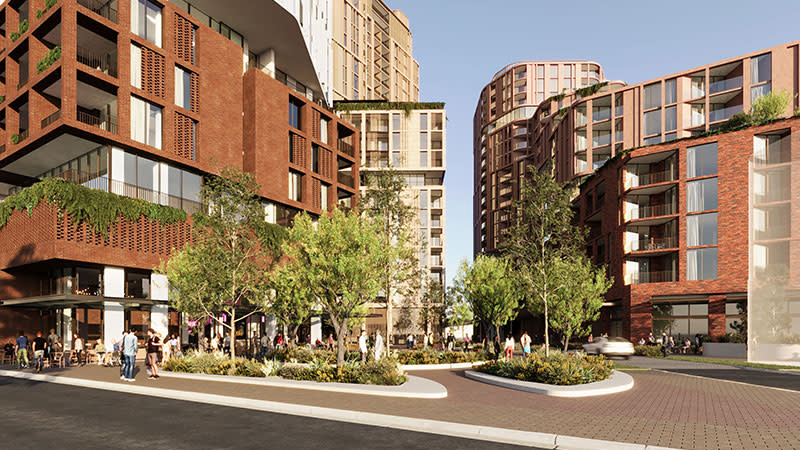
On AsheMorgan’s District Living build-to-rent project at Docklands, a Country-led ground plane developed with Arcadia and Greenshoot drew on a “lost blue lake” that existed there 10,000 years ago.
Value, Gohns said, is where the case ultimately rests for developers.
“If you invest in it, I think it has returns that are tangible to the bottom line, even if you probably can’t put a number to them,” he said.
“As long as you’re making change, stepping towards it and navigating that, one project leads to benefits that may influence another.”
Te Matakīrea, WAM’s Advanced Indigenous Design Unit, brings Indigenous perspectives into projects early in the design process.
It is one of the things the New Zealand business brings to Australian clients, according to Deans, who said the unit helps the firm “enrich our design”.
Mass timber, an in-house specialty, can also ease feasibility pressure, Gohns said.
Rather than rely on estimates, WAM principal Simon Topliss sourced real-time pricing and delivery timelines from European suppliers, replacing what Gohns called “industry hearsay” in cost reports for the firm’s student accommodation projects.
“We were getting parity between traditional build pricing and timber,” Gohns said.
WAM designed New Zealand’s largest mass timber office building, an eight-storey project at 90 Devonport Road, Tauranga, which developer Willis Bond and builder LT McGuinness delivered on time and under budget.
Principal Blair Johnston said the project had cracked the code on commercially viable mass timber construction.
“We can now apply those lessons around achieving low carbon outcomes within real world constraints and different contexts,” he said.
CNC-cut timber panels, Deans said, could arrive with conduits embedded, reducing risk and time on site.
1 of 3
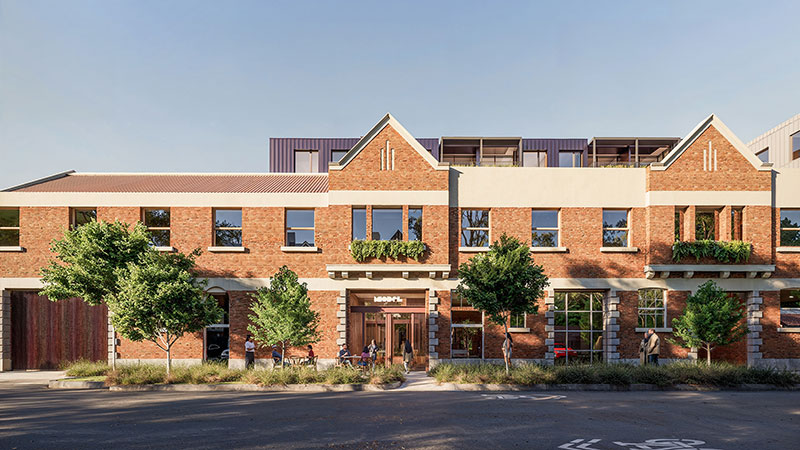
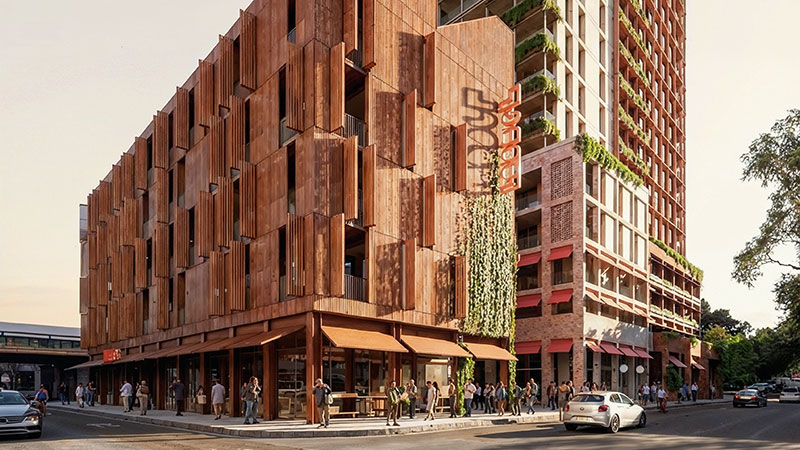
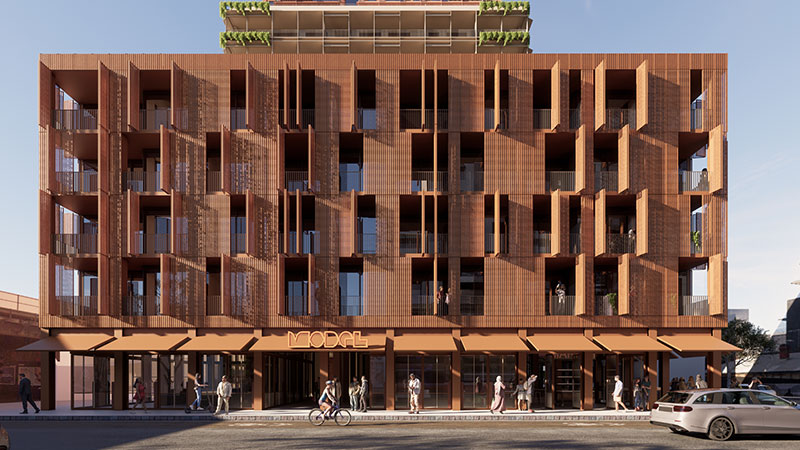
Model’s 151-apartment Lithgow Street build-to-rent project in Abbotsford will help test the approach, alongside the developer’s mass-timber, Passivhaus tower around the corner on Johnston Street.
Both [pictured above] were recognised at this year’s World Architecture Festival. Johnston Street won a 2026 WAFX Award, a special category for unbuilt proposals that tackle major global challenges.
Lithgow Street received a Highly Commended award in the Future Residential category from a global shortlist of 17.
According to WAM, both are intended as exemplars of modern methods of construction, showing how high-performing multi-residential projects can deliver healthier living at scale, lower emissions and high returns for investors across the life of the asset.
Staff in Australia and New Zealand work as what WAM calls one connected studio, a single team rather than separate offices.
Projects are staffed from wherever the expertise is, according to Deans.
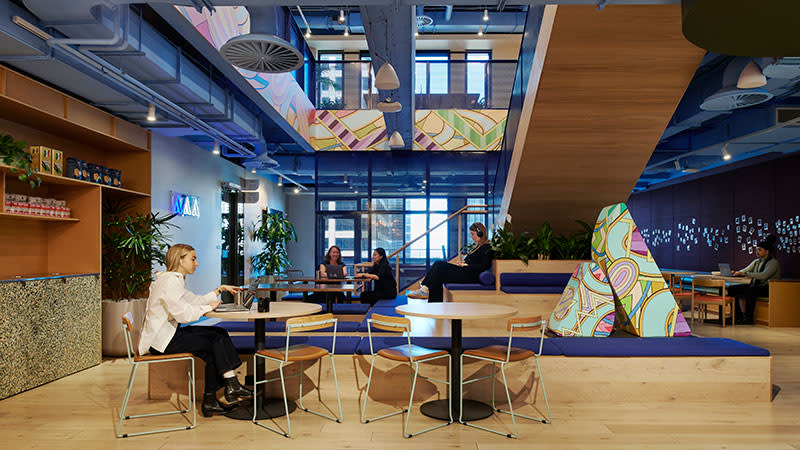
Atlassian’s Sydney workplace, which is about to start construction, is being designed and documented between the Sydney and Auckland offices.
Closer to home, District Living was designed and documented with help from a Christchurch team whose members have been with the business for about 15 years.
Financial results are reported at group level rather than by studio, a structure Deans credited with removing rivalry between offices.
Deans described the model as the way to “enable another 70 years of growth”.
Now part of a 325-person trans-Tasman practice, the Australian studio plans to double in size over the next five years and expand into broader institutional sectors.
Gohns said the shift was a move from “a New Zealand engine with outposts in Melbourne and Sydney” to an Australasian base that would become a springboard to the world.
Distance shaped how the firm works with others.
“The necessity of our location in New Zealand meant we had to partner for expertise in the past,” Deans said.
“We were collaborating before it was cool.”
What began as a necessity at the edge of the world is now, in the pair’s view, a way to make Australian projects stack up, provided cost discipline and collaboration go hand in hand.
“The two are stapled together: collaboration, and constraint as a catalyst, not an impediment,” Gohns said. “They all work together.”
Australian projects caught between rising costs and rising expectations may find this Kiwi playbook a good fit.

Lindsay Saunders