

Land & CommunitiesLeon Della BoscaTue 13 Oct 26
Melbourne Landfill Rezoned for 1100 Homes After Decade-Long Fight

A former quarry and unregulated landfill in Melbourne’s south-east has been rezoned for 1100 homes after a decade-long planning battle, despite council opposition and significant remediation challenges.
Victorian planning minister Sonya Kilkenny approved the planning scheme changes for Talbot Village, an 18.8ha site at 1221-1249 Centre Road at Oakleigh South acquired by Sterling Global in November of 2010.
“We are turning a site that has sat unused for more than 30 years into a new neighbourhood with more homes, open space and community facilities,” Kilkenny said.
Redevelopment had been “held up by the council for over a decade”, according to a government statement. The Monash City Council resolved to object to the amendment in May last year.
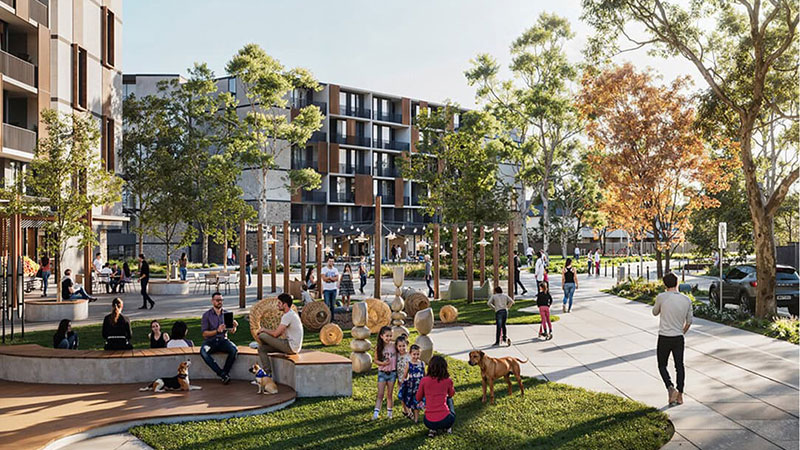
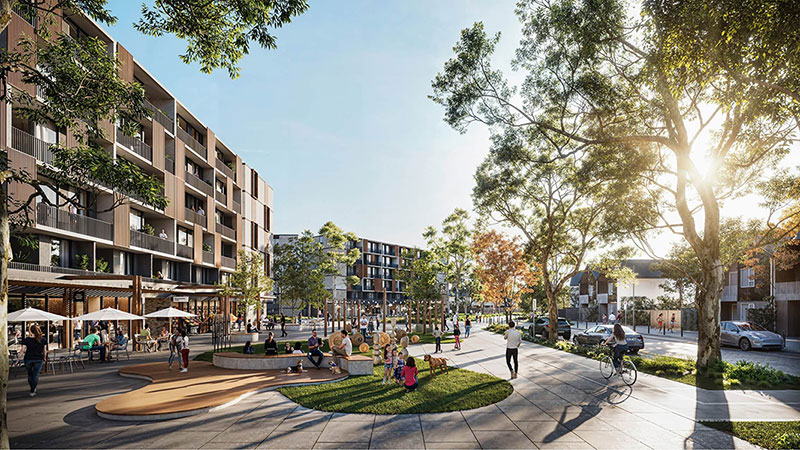
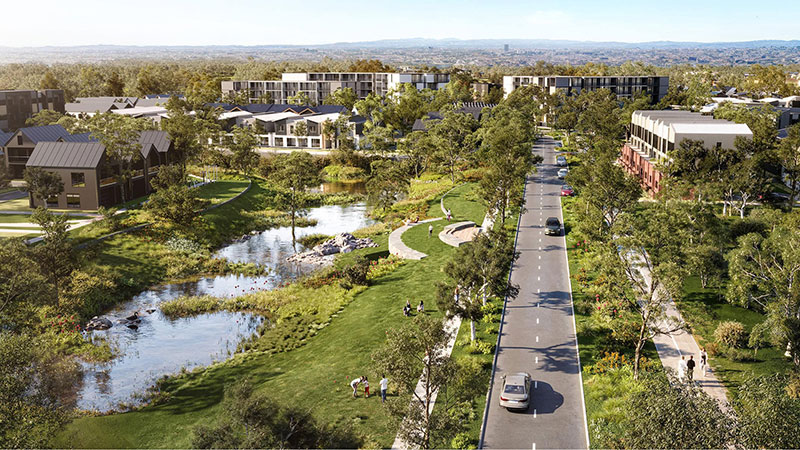
Plans by Hatch, Tract and Urbis show apartments, terraces and townhouses across five precincts around a village centre with shops, cafes, childcare and a kindergarten.
Mixed-use apartment buildings of four to six storeys would sit at the village centre, while apartments and terraces of three to six storeys would front Huntingdale Road.
Homes backing on to existing houses would be limited to two storeys with a 5m rear setback.
Open space would cover 2.87ha, including a wetland, a civic square and local parks. Access would come from a new signalised intersection on Huntingdale Road and a new intersection on Centre Road at an extended Talbot Avenue.
Ten per cent of the homes would be affordable housing.
The development project itself is subject to further planning permits and approvals.
Quarrying for sand was undertaken at the site from the 1950s to the 1990s. From the 1970s until 1992 the pits were used as unregulated landfill for putrescible waste, rubble and clay slimes.
Methane from part of the buried waste and settlement of the soft fill were the main environmental risks referred for review.
1 of 3
An advisory committee report found the land could be remediated and developed for housing, although ground improvement and construction could take up to nine years, according to the report.
Committee members also said the amendment and development plan had “notable deficiencies and serious drafting issues” to be resolved before approval.
Recommendations included limiting basements to one part of the site and having a single entity remediate and manage the central area, where landfill gas risk is highest.
Among its recommendations, the committee did not support a request to waive Monash’s 7.61 per cent public open space contribution. Proposed open space of 2.87ha includes a wetland, which the committee found should not count towards that contribution.
Landowner-funded works at the Huntingdale Road and Centre Road intersection were recommended before the first statement of compliance in stage four.
“We’re creating a foundation for the people who are going to live here for generations, to become engaged with one another,” Sterling Global director Brandon Yeoh said.
In Melbourne’s CBD, Sterling Global appointed Hacer Group in March as builder for its $610-million redevelopment of 623 Collins Street.
Completion of the 42-storey, 320-home tower is targeted for the fourth quarter of 2029.