
ResidentialTue 02 Dec 25
People Are Coming, But Land Isn’t: SEQ Crunch Deepens

South-East Queensland’s undersupplied land market is coming under intensifying pressure, with new data showing lot registrations have plunged to their lowest level in more than a decade just as population growth surges to near-record highs.
RPM Group’s latest SEQ Greenfield Market Report reveals a widening structural gap between the rate at which people are moving into the region and the number of lots being brought to market.
It’s creating a perfect storm for escalating prices, constrained project pipelines, and increasingly complex development economics.
“Queensland added almost 99,000 residents in the year to March 2025, growing 1.8 per cent—well above the national average,” RPM Group managing director for Queensland and New South Wales Clinton Trezise said.
“Overseas migration accounted for just over half that growth, and interstate arrivals delivered another quarter.”
While overseas arrivals have eased from last year’s peak, they continue to sit above long-term averages—fuelling demand for both rental and owner-occupier housing in a market that has little room to move.
Record population growth meets record-low land supply
Detached lot registrations fell to 8180 in the 2025 financial year, with total residential lot registrations—including apartments—at 21,632.
That figure is at a decade low and far below the region’s estimated annual requirement of 34,500 new homes.
That leaves an annual shortfall of nearly 13,000 lots, a gap RPM says is now baked into the market.
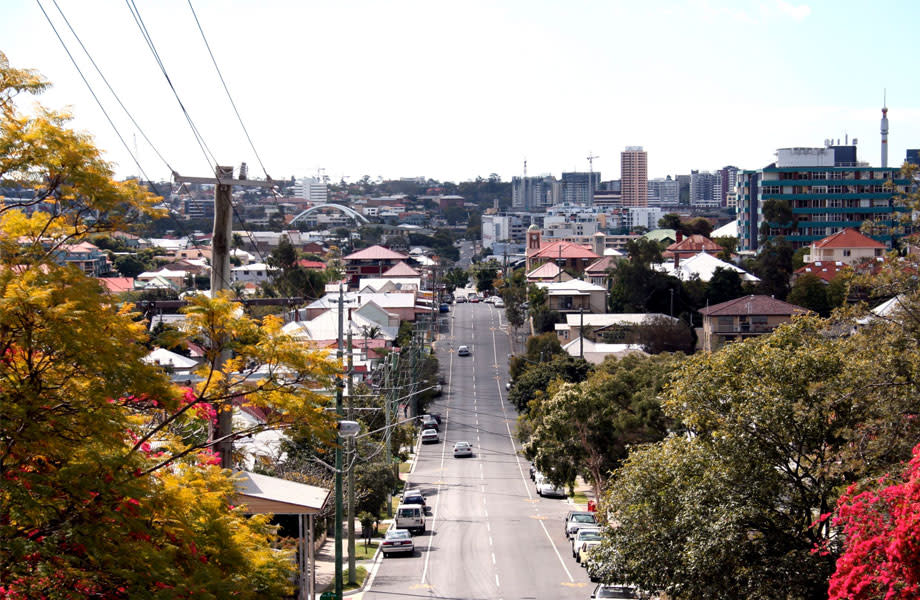
Critically, the local government areas with the most potential greenfield capacity—Logan, Moreton Bay and Ipswich—are also those with the most acute supply shortages.
Available land is sitting below one month’s supply in all three markets based on current sales rates, according to RPM. Logan, in particular, has less than a week’s worth of serviced lots available.
“There’s a real mismatch between how fast people are moving in and how many lots are being built,” Trezise says.
“People are coming, but there’s still not enough land or dwellings.”
Greater Brisbane’s rental market underscores that pressure: the vacancy rate is 0.9 per cent, one of the tightest in the country, while new dwelling registrations fell 16 per cent through FY25 and established house listings dropped 8 per cent.
Land values push up as affordability tightens
The imbalance is reshaping price points across SEQ.
Almost half of SEQ lot sales in the past 12 months were above $500,000. This is in stark contrast to just 1 per cent of sales below $300,000, compared to 26 per cent three years ago.
According to RPM data, a typical house-and-land package now costs $966,000, which remains below the median established house price of $1.03 million.
Median land prices have climbed 21 per cent year-on-year to $474,900, while price-per-square-metre rates are up 21 per cent to $1131 per sq m across the region.
Despite the affordability squeeze, demand remains persistent.
Recent interest rate cuts have boosted borrowing capacity from $621,444 at the 2023 peak cash rate to $694,000 today, with further increases expected if the RBA follows through with forecast rate reductions in 2026.
That shift, RPM said, was creating more competition at a time when stock levels have never been lower.
Developers shift to shovel-ready sites as easy land vanishes
“The market has shifted quickly,” RPM’s Queensland director of transactions and advisory James Matley said.
“Groups with real-time market intelligence who can move fast are the ones making deals. Those working off old benchmarks are going to get left behind.”
The era of straightforward greenfield development is ending. Most zoned and serviceable land has already been absorbed, Matley said, meaning today’s opportunities increasingly involve complexity—fragmented ownership, infrastructure constraints, environmental overlays, topography, or planning risks.
Developers are now prioritising shovel-ready or DA-advanced sites, where delivery timelines and revenue assumptions are clearer.
‘Unless planning keeps up, market will keep tightening’
The fundamentals underpinning the region—strong population growth, record-low supply, rising buyer budgets, and constrained development pipelines—will continue to push land values higher.
“SEQ’s fundamentals of high demand and low supply are likely to sustain upward pressure on prices,” Trezise said.
“Population growth will continue, housing pipelines are thin, and lot sizes have stabilised while prices rise.”
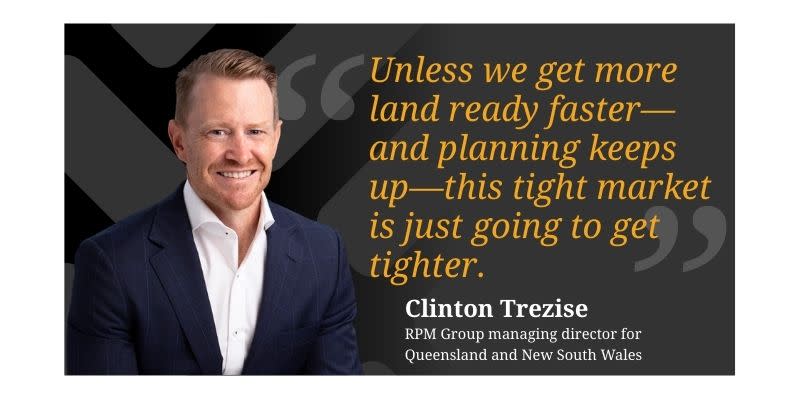
“Entry-level affordability will increasingly depend on product design, pricing strategy and location. Unless we get more land ready faster—and planning keeps up—this tight market is just going to get tighter.”





