
Sponsored ContentPartner ContentFri 12 Dec 25
Contractors’ Appetite for Risk: The Deciding Factor in All-Risk Delivery

When it comes to all risk contracting in the demolition sector, a contractor’s appetite for risk remains a decisive factor in achieving predictable project outcomes.
While the model offers considerable benefits for asset owners and developers, it also demands strong technical, commercial and operational capability, particularly during early project stages where many unknowns are first uncovered.
Not every contractor is willing, or able, to take on the level of responsibility an all risk contract demands.
For many, that level of exposure is simply too high.
How risk appetite shapes delivery
All risk demolition requires contractors to manage unforeseen conditions that frequently surface during investigations or early works.
These may include concealed hazardous materials, unexpected structural behaviour, undocumented alterations, or ageing live services.
Contractors with a lower appetite for risk often rely on allowances, exclusions or provisional sums to buffer uncertainty.
While commercially understandable, this approach can shift the burden back on to developers once works are under way, increasing the potential for cost escalation and programme impacts.
Contractors with a higher appetite for risk tend to approach unknowns differently.
They invest heavily in early investigations and planning long before machinery arrives on site.
For these organisations, early involvement isn't an add on, it’s the method that makes all risk delivery possible.
The result is a clearer definition of real vs perceived risk.
DEMEX is a contractor that operates confidently within this all risk environment.
With more than 15 years of national project experience across industrial, mining and commercial contaminated sites, they are structured to manage complex, high risk conditions where clarity, planning and innovative methodology are essential to successful outcomes.
Why early engagement strengthens all risk contracting
When a contractor carries full responsibility, the ability to understand the asset early becomes even more critical. Across the industry, Early Contractor Involvement (ECI) has emerged as one of the most effective ways to build this clarity.
ECI gives contractors the time to investigate the project properly, by testing assumptions, uncovering constraints and refining the delivery approach before programme, pricing and methodology are locked in.
In the context of an all risk model, this early visibility directly enhances commercial certainty, safety and constructability.
Industry examples demonstrating the value of early insight
Recent projects delivered by DEMEX highlight the practical benefits of early involvement within an all-risk framework:
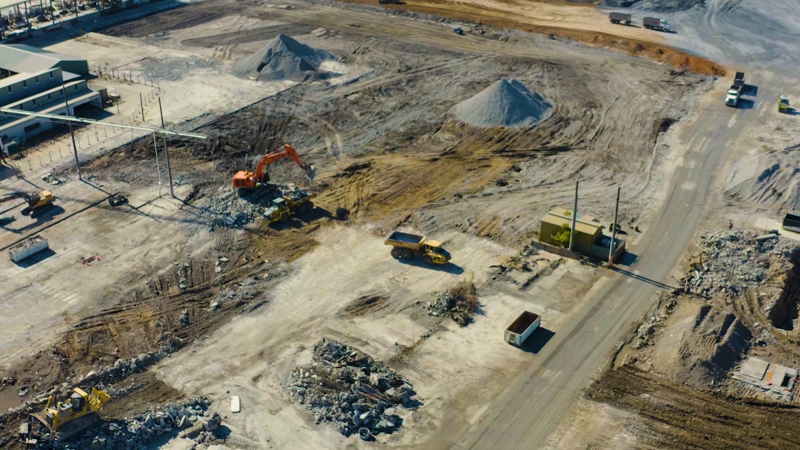
Value optimisation: In an 18ha light industrial site, DEMEX’s ECI methodology included early collaboration with a geotechnical engineer and strategic material sourcing. These efforts, combined with feasibility analysis, delivered $5 million in bottom line savings for the developer.
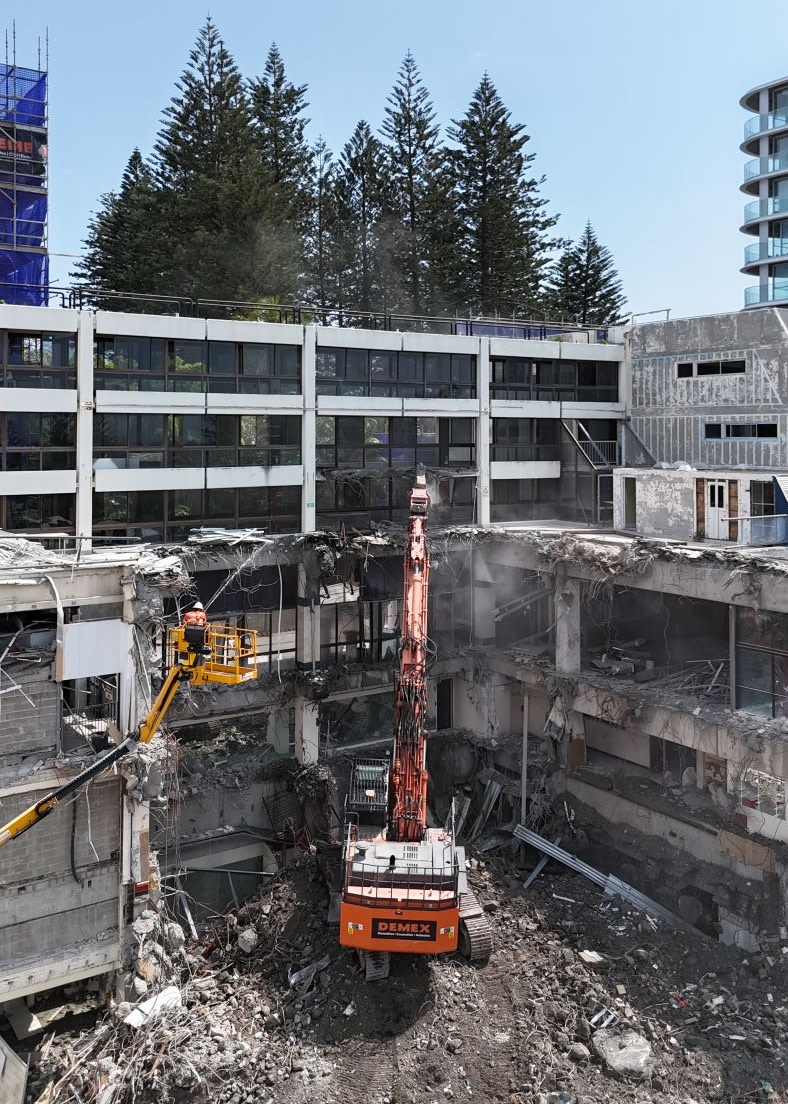
Enhanced Project Sequencing: On a Gold Coast beachfront redevelopment project, early insights allowed DEMEX to address a critical sewer placement issue. This mitigated design challenges, reduced basement construction costs and shortened timelines
In demolition and enabling works, a contractor’s appetite for risk is more than a commercial stance, it is a marker of capability.
All risk projects rely on organisations that are willing to take ownership of unknowns and have the systems, governance and expertise to manage them responsibly.
As the industry continues to deal with ageing assets, legacy contamination and increasingly complex urban environments, the combination of a strong risk appetite and early investigations is becoming essential for delivering safe, predictable and commercially stable outcomes.
Risk appetite as a capability marker
In demolition and enabling works, a contractor’s appetite for risk is more than a commercial preference, it reflects the organisation’s capability and confidence to operate in uncertainty.
As the sector continues to face increasingly complex built environments, ageing infrastructure and unknown above-ground conditions, the combination of a strong risk appetite and early investigation is becoming essential for delivering safe, predictable and commercially stable outcomes.