
Sponsored ContentPartner ContentThu 15 Oct 26
Demolition Contractor Takes a Wrecking Ball to Price Variations

Ask a developer about variations on demolition and asbestos removal and most will have a story to tell. A new contractor launching in South-East Queensland has built its business around making sure there are fewer of them.
CWI Demolition is an asbestos removal and demolition contractor working with builders and developers across Queensland and New South Wales.
Its focus is complex commercial and light industrial sites that need engineered methodologies for both hazardous materials removal and structural demolition, with everything from soft strip to site clearance held under one contract.
New player, deep bench
The business is independently run but sits alongside two sister contractors, Industrial Demolition Services and Industrial Major Projects Group.
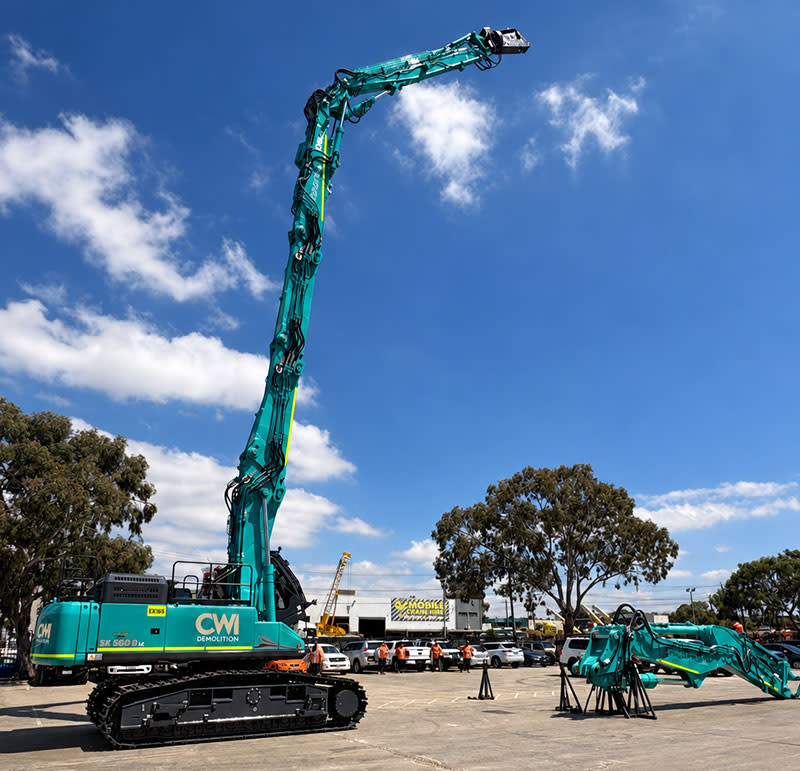
That gives CWI access to heavy plant, including high-reach excavators and machines of up to 120 tonnes.
It also brings in director Graham Cressey, who has more than four decades in demolition under his belt and is president of the Demolition and Asbestos Industry Association of Victoria.
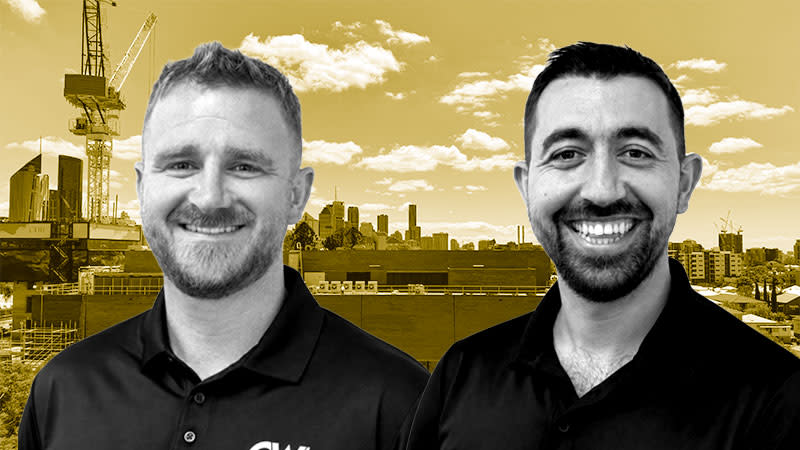
Fellow directors Scott Chalmers and Oli White bring more than three decades of combined demolition experience across Australia and the UK, with Chalmers leading delivery and White responsible for scoping, pricing and tender risk.
“I’d like to say we’ve come up against pretty much anything you can come up against in this industry,” White says.
The directors spent months building the systems and processes behind the business before launching, and CWI already has two projects underway, two more starting within six weeks and work secured through to mid-2027.
Aiming for zero variations
“When you’re working with developers, they just want certainty. Sometimes that’s hard to give, because you go below ground and nobody can see what’s there. But it’s about being upfront and being honest,” White says.
The problem is that as-built drawings are rare, hazardous materials surveys often cannot reach parts of a building and tender periods are short.
“If you get a building with a week to price it, no plans and an old hazmat survey that doesn’t have much information in it, unfortunately your price is going to be a lot more expensive than you want, because I’m going to build risk into it,” Chalmers says.
Too often, a job is won at one price and variations push it well beyond that once work begins.
“Anyone will find that gap difficult when they’ve already gone to finance,” White says.
Certainty starts before price
For developers, certainty starts with getting CWI on site as early as possible.
“Let us get through the building and identify those risks. Then clients can go to their finance and say, ‘This is what we’re dealing with here,’” White says.
On larger projects, the team could spend a week to 10 days investigating the building as part of its pricing, at no cost to the client.
“We want to give you certainty because that gives us the best chance of being successful on the project as well,” Chalmers says.
“Understanding the risks means we don’t need to over-cover on the pricing. That allows us to give a competitive price that covers both sides, because a project should be shared risk between the client and the subcontractor.”
Where a risk cannot be confirmed, CWI provides a best-case and worst-case range and firms up the price before work starts.
Systems built in-house
Rather than adapting software built for other industries, CWI developed its own project management platform with a focus on improving safety standards and increasing productivity on site.
The system brings together site safety tasks, inspections, progress reporting, financial management and client communication to give project teams greater control over delivery.
“We appreciate that clients can’t be on our sites every day, so the system keeps them fully up to date on productivity, progress and timescales,” White says.
More than wrecking balls
The directors also want to shift how demolition is viewed across construction.
“It’s got a bit of a bad rep within the wider construction and development industry, that it’s just wrecking balls and explosives, which it really is not,” White says.
Chalmers wants the industry to attract more young and technically minded people, and to be seen “alongside the people delivering bridges and building skyscrapers and cities”.
That ambition starts with the business he’s building at CWI, where he aims to create an environment for talented people to develop their careers, contribute to better ways of working and take pride in the projects they deliver.
Size is not the measure of success for CWI.
“The aim is to work with a select group of clients we can build relationships with, rather than getting into a race-to-the-bottom tendering exercise with anyone and everyone,” White says.
The Urban Developer is proud to partner with CWI Demolition to deliver this article to you. In doing so, we can continue to publish our daily news, information, insights and opinion to you, our valued readers.