
In Partnership With WT
ConstructionLeon Della BoscaMon 28 Sep 26
Pulse Check: Developers Bracing for Tough Building Conditions

Ask a developer how they’re feeling about the year ahead and the mood has cooled noticeably on last year.
In The Urban Developer 2026 Industry Sentiment Survey, only 6 per cent of respondents say they are very optimistic about the year ahead, 35 per cent describe themselves as pessimistic or very pessimistic, and 60 per cent say their outlook has grown more pessimistic since this time last year.
Construction costs are an obvious culprit, but the survey suggests they’re just one symptom of a bigger problem.
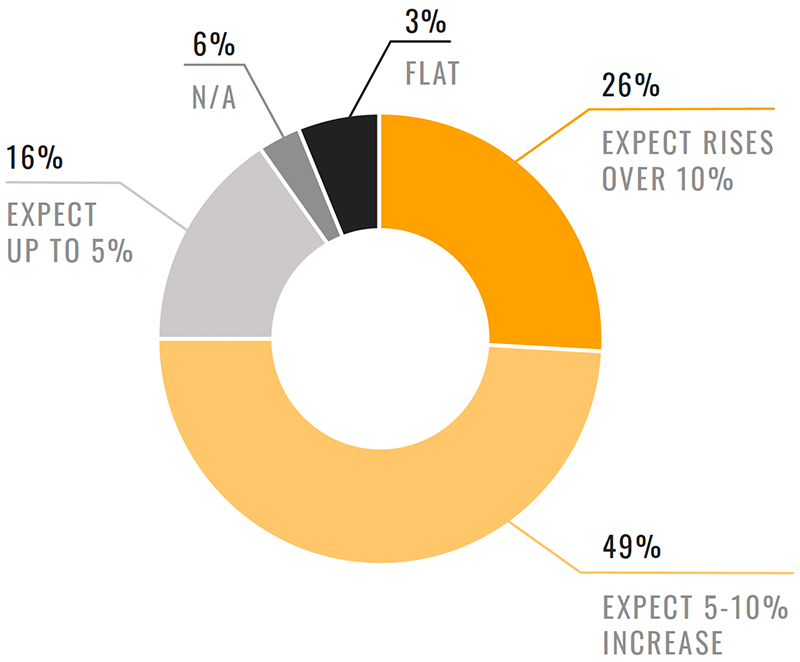
Ninety-two per cent expect construction costs to rise over the next 12 months, with 49 per cent forecasting increases of 5 to 10 per cent and 26 per cent bracing for a rise of more than 10 per cent.
Costs already rank as the single biggest factor weighing on project feasibility, and 59 per cent of respondents describe their current feasibilities as underperforming or completely unfeasible.
But labour has overtaken materials as the leading cost pressure for the first time, scoring 5.53 out of 7 against materials, at 5.23.
A shift years in the making
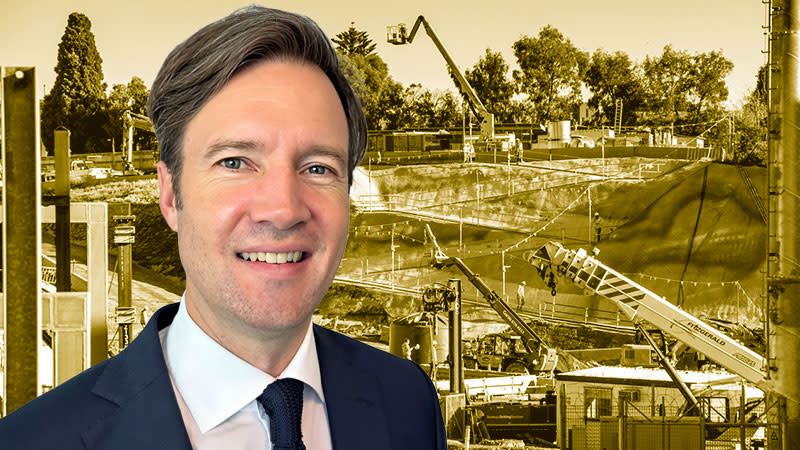
According to WT national director James Ford, the change has been building for years.
“Materials pressure dominated through the pandemic and the early stages of the war in Ukraine, but that’s since eased,” Ford told The Urban Developer.
“Labour escalation has stayed elevated because the training pipeline never really caught up. Trade completions plateaued after 2014 and didn’t exceed that peak again until late 2021, by which point activity had picked up, borders were shut, and the pressure was already locked in.”
Specialist building services trades, mechanical, electrical, hydraulic and fit-out work, are the tightest, according to Ford, showing up as longer lead times and thinner tender fields rather than simply higher prices.
Industrial and logistics assets are faring better, buoyed by mature delivery models and strong digital engineering and BIM-driven coordination.
“The differentiator there is certainty, not cost,” Ford said.
Certainty is a word doing a lot of work in WT’s reading of the results.
Seventy-three per cent of respondents expect builder insolvencies to worsen over the next 12 months, the same proportion expects contractor and subcontractor capacity to shrink, and 59 per cent expect the tendering environment to deteriorate further.
Ford said there’s no single fix.
“There’s no universal procurement model that solves this,” he said.
“The right approach depends on the project, with risk sitting where it can best be managed. What consistently attracts genuine interest from an increasingly selective contractor market is certainty: well-developed documentation, realistic programs and secured funding.”
Financing landscape compounding the squeeze
Elsewhere in the survey, 45 per cent of respondents expect debt financing to become more difficult to access over the next year, and 61 per cent expect it to become more expensive.
Fifty-nine per cent also believe liquidity issues among project financiers are likely over the next 12 months.
Meanwhile, 64 per cent think vendors need to lower their price expectations on development sites before the numbers will work again, a sign that cost pressure is now feeding back into land values as well as construction budgets.
Cost pressure is structural rather than cyclical
“Labour shortages, workforce demographics and rising complexity won’t resolve within one cycle,” Ford said.
“Meaningful relief needs a genuine productivity step-change: workforce investment, prefabrication, digital engineering and industrialised construction, coordinated across government, planners, developers and contractors alike.”
None of this means the industry is standing still, or that the mood is uniformly bleak.
Optimism and pessimism are running close to evenly split, 48 per cent describe themselves as optimistic or very optimistic against 35 per cent pessimistic or very pessimistic, and almost a quarter say they’re looking to grow rapidly despite the conditions.
Industrial is the only asset class with a 12-month value outlook above the midpoint, and it ranks highest of any sector on both feasibility fundamentals and expected value gains.
Ford has a clear view of what separates the developers still moving forward from those pulling back.
“They understand their market and product,” he said.
“They stress-test assumptions early, quantify project-specific risks upfront, and adapt their pricing and procurement to current conditions rather than waiting for the market to improve.”
That distinction, between pricing for the moment and pricing for the trajectory, is at the heart of The Construction Cost Crunch white paper, produced in partnership with WT.
The white paper and report breaks down all five construction-cost questions in detail, including the complete data behind the cost forecast, the ranked cost drivers, the delivery environment outlook, and WT’s on-the-ground insights into what experienced developers are doing differently in 2026.





