
InfrastructureLindsay SaundersThu 12 Mar 26
Transport, Energy Dominate Infrastructure 2026 Roadmap

A new national infrastructure roadmap has highlighted more than 60 transport, energy and water projects considered most critical to supporting Australia’s population growth, freight demand and transition to a low-carbon economy.
The 2026 Infrastructure Priority List identifies projects and reforms judged essential over the next decade to improve productivity, strengthen supply chains and support housing and economic development.
The list is Infrastructure Australia’s independent, evidence-based advice to the Australian Government on the highest-priority proposals that should be considered for investment over the next 10 years.
Transport proposals dominate much of the list, reflecting rising congestion in major cities and growing freight volumes between ports, industrial hubs and inland regions.
Major rail upgrades, freight network improvements and new transport corridors feature prominently, alongside projects designed to increase capacity around airports and ports.
Population growth across Australia’s largest cities is expected to place mounting pressure on existing infrastructure, with demand for road, rail and public transport projected to rise sharply through the next decade.
Sydney’s Western Harbour Tunnel, a 6.5km twin-tunnel motorway connecting the Warringah Freeway at Cammeray to the Rozelle Interchange to relieve congestion across Sydney Harbour crossings, is among those projects.
Freight movements are also forecast to increase significantly as trade volumes expand and supply chains become more complex, placing additional strain on road and rail networks.
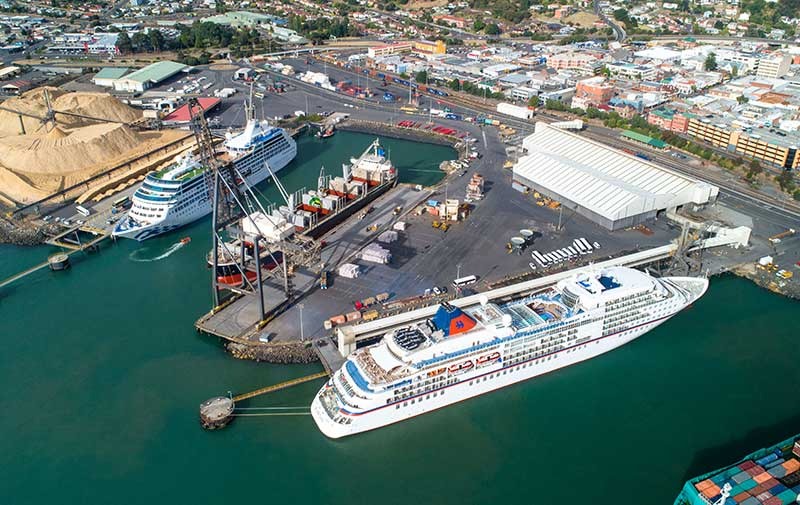
Port capacity and connectivity upgrades are identified as priorities to handle long-term trade growth, with container volumes at Australia’s largest ports expected to more than double in some locations over coming decades.
Energy infrastructure is another focus, particularly projects needed to support the transition to renewable power and improve electricity transmission between states.
Dozens of renewable energy generation, storage and transmission proposals are identified as critical to achieving net-zero targets while maintaining reliable electricity supply.
New interconnectors and grid upgrades are expected to enable renewable energy zones and large-scale clean energy projects to connect to the national electricity network.
Water security features on the priority list, with several proposals aimed at supporting growing populations and climate resilience in major cities and regional centres.
Desalination upgrades, dam improvements and water network expansions are among the projects highlighted as necessary to maintain reliable supply in areas facing increasing demand and changing rainfall patterns.
The report also highlights the scale of investment required to deliver the next wave of major infrastructure, with billions of dollars in projects needed across transport, energy, water and logistics systems.
Delivering these projects, the report said, will require co-ordinated planning across governments and industry as well as significant workforce, materials and financing capacity over the coming decade.
Ten landmark projects on the list
Inland Rail (Melbourne–Brisbane) $31 billion
A 1700km dedicated freight rail corridor linking Melbourne and Brisbane via regional NSW and Queensland to shift freight from road to rail and strengthen national supply chains.
Suburban Rail Loop East (Victoria) $30–$34.5 billion
A 26km underground orbital metro line linking Cheltenham and Box Hill to connect major employment, health and education precincts across Melbourne’s middle suburbs.
Western Harbour Tunnel (Sydney) $14 billion
A twin-tube motorway tunnel linking the Warringah Freeway at Cammeray with the Rozelle Interchange to ease congestion on Sydney Harbour crossings.
Brisbane to Gold Coast Faster Rail (Queensland) $12.6 billion
Major upgrades and new sections of rail to cut travel times and boost passenger capacity along one of Australia’s busiest commuter corridors.
Sydney Metro West $27-$29 billion
A new underground metro line linking Parramatta with the Sydney CBD to support population growth and relieve pressure on existing rail services.
Melbourne Airport Rail Link $13 billion
A rail connection between Melbourne Airport and the CBD designed to improve airport access and reduce congestion on the Tullamarine Freeway.
Burnie Port Capacity Upgrades (Tasmania) $200 to $300 million
Improvements to port infrastructure and freight handling capability to support growing container volumes and export supply chains.
Burnie–Hobart Freight Corridor (Tasmania) $1 to $2 billion
A program of road upgrades along Tasmania’s key north–south freight route aimed at improving travel times and reliability for heavy vehicles.
Energy Transmission Interconnectors (various states) $5 to $10-billion-plus per project
Major grid expansion projects linking renewable energy zones and enabling electricity to flow more easily between states.
Renewable Energy Zone Transmission Projects $1 to $5 billion each
High-voltage transmission infrastructure enabling large wind and solar projects to connect to the national electricity market.