

ResidentialClare BurnettTue 27 Jan 26
Tribunal Halves Victorian Financial Adviser’s Ban Period

A Melbourne financial adviser banned over an $85-million scheme that siphoned retirement savings into a property fund has had his penalty halved.
The Administrative Review Tribunal cut adviser Milutin Petrovic’s six-year ban to three at a hearing late last year.
The ban was handed down after a major investigation into the practices at a property investment trust by ASIC.
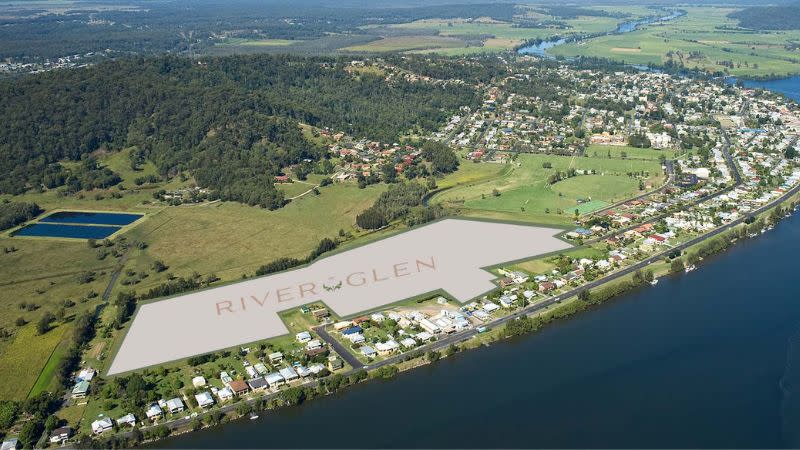
United Global Capital (UGC) and its representative Global Capital Property Fund (GCPF) invested in 15 property development projects across Australia, one of which was the proposed River Glen 157-lot subdivision at Maclean, in northern New South Wales.
Just one project reached completion—the rest were stalled or loss-making, according to Federal Court documents.
ASIC said that Petrovic told clients to set up self-managed superannuation funds and invest heavily in the GCPF, which has now been wound up.
Petrovic, a former UGC adviser, was banned for six years from providing financial services, performing any function involved in carrying on of a financial services business and controlling an entity that carries on a financial services business by the Australian Securities and Investments Commission (ASIC) in 2025.
Fund collapse
ASIC had been investigating entities related to GCPF and UGC over deficiencies in target market determination (TMD), which has also been identified as a major area of interest for ASIC in 2026.
Having an insufficient TMD means such entities fail to define who their product is suitable for, leading to a high risk of consumers acquiring inappropriate financial products.
In May 2022, two UGC-related companies lodged prospectuses seeking to raise $100 million each, but they lacked a TMD, according to ASIC.
They and further related companies were hit with stop orders in 2023 and 2024.
ASIC was concerned that UGC and its representatives “gave conflicted personal advice” to clients, to invest in “highly speculative investments” related to UGC director Joel Hewish.
In June 2024, Hewish was banned by ASIC for 10 years, and UGC’s financial services licence was cancelled.
ASIC took the company to the Federal Court in October 2024.
At the hearing, issues were raised over questionable management fees, as well as poorly secured and loss-making projects.
It was revealed that the GCPF fund had raised $85 million from retail investors, largely from their superannuation funds, and the Federal Court wound Global Capital up over a risk to public interest.
The following month, UGC went into voluntary administration, calling in administrators from SV Partners, and it was wound up in August 2024.
The Federal Court ordered GCPF into liquidation in October 2024, and liquidators reported around $16 million in assets remaining.
ASIC’s own investigations found that Petrovic failed in providing key advice obligations required in setting up self-managed superannuation funds, and advised them to invest a significant portion of investment savings in GCPF.
In his role in the wider funds management and property investment business, Petrovic was found to have provided inappropriate advice and made misleading statements, and not put his clients ahead of UGC or acted in their best interest.
Petrovic was banned for six years by ASIC, effective from January 2025.
Petrovic appealed to the Administrative Review Tribunal, asking it to review ASIC’s decision.
The tribunal, overseen by senior member Mark Harrowell, was told by Petrovic and his lawyers at Mackay Chapman that ASIC had “misunderstood” Petrovic’s role in the business, and that he was more of a junior staff member.
He said that ASIC was wrong in claiming it was “unreasonable” for Petrovic to reference a 13 per cent target return on the GCPF product he was selling, and this provided grounds for appeal.
His lawyers argued that there was no precedent for the ban and that it was an “overly harsh and disproportionate penalty”.
Tribunal senior member Harrowell said that the actions of Petrovic should be regarded as serious, “involving conduct that was misleading”.
Harrowell did not accept that he was a junior staff member, given he supervised at least one other person in the business.
The tribunal member also said that Petrovic “does not now appear to recognise, or at least fully accept his own responsibility. Rather, he continues to submit that the actions of his superiors significantly reduces his own culpability”.
However, Harrowell said, there was no dishonesty and no personal gain to Petrovic.
“Consequently, any ban should be at the lower end of the scale. As such, in my view a six-year ban is excessive,” Harrowell said.
Mackay Chapman director Michael Chapman said in a statement that his client had “implemented a system designed by others”.
“We think it important that enforcement actions, even when justified, remain subject to careful scrutiny about whether their scope is proportionate,” Chapman said.
“The tribunal decision demonstrates that ASIC had taken an overly heavy-handed approach in the first instance and a correction was required.”





