
Sponsored ContentPartner ContentTue 04 Aug 26
Why Dubai is Now a Magnet for Australian Property Investors

Australian investors have become a more visible force in Dubai’s premium real estate market and are now among the top four nationalities purchasing property in the city.
This goes beyond a short-term trend driven by one project or market cycle and shows how Dubai is considered a serious international wealth destination.
For Australian buyers, that appeal is shaped by income potential, residency value, tax efficiency and access to a luxury market that is rapidly maturing.
The financial argument is the strongest driver
Many investors from mature property markets are looking more carefully at income returns, especially as acquisition costs in cities such as Sydney and Melbourne remain high. Dubai offers a different equation.
Dubai’s average rental yield stands at 6.68 per cent, with apartments averaging 7.15 per cent, while a gross rental yield above four per cent is considered solid for a capital city investment property in Australia.
Dubai’s property performs as an income-generating asset while also offering personal use and long-term capital potential.
Australian investors are used to property as a wealth-building tool, but many are now looking beyond their domestic market for exposure to faster-moving global cities.
Dubai’s luxury real estate market gives them access to a large expatriate tenant base, strong tourism demand and a globally recognised lifestyle.
Lower tax, longer-term security
For many overseas buyers, property is now connected to mobility, family planning and long-term access to the region.
Australian resident income tax rates for 2025-26 reach 45 per cent on taxable income above $190,000, while Australian residents generally receive only a 50 per cent capital gains tax discount when eligible assets are held for at least 12 months.
By contrast, the UAE does not levy personal income tax, and capital gains tax is not imposed on UAE nationals or residents.
Real estate investors owning property worth AED$2 million or more can get a renewable 10-year residence permit or Golden Visa.
Alongside this, Dubai’s D33 agenda aims to double the size of the city’s economy by 2033 and position it among the world’s top three destinations for living, investing and working.
Together, these conditions have made the city attractive to globally mobile investors.
Quality now outweighs quick gains
For today’s property buyers, design quality, developer credibility, architecture, service standards and long-term value trump short-term gains, especially for overseas investors who may be assessing a project from miles away.
Dubai’s luxury market is going strong, with Knight Frank reporting 500 home sales above $10 million in Dubai in 2025, with the total value of these transactions reaching $9.05 billion. This shows the depth of demand at the top end of the market, while raising the standard for developers.
International buyers seek properties with lasting relevance, defined by strong design, quality execution and a clear development vision.
Savills has identified Dubai as the most active city globally for branded projects, accounting for 40 per cent of branded residence development in the Middle East and Africa by 2031.
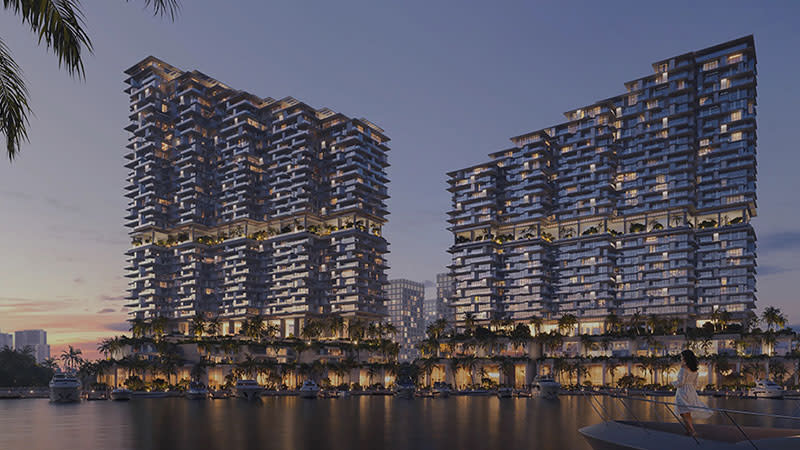
Mered’s work with globally recognised, award-winning industry giants such as Pininfarina and Herzog & de Meuron reflects how international design expertise is becoming more important in Dubai’s premium segment. Such collaborations instil confidence in prospective investors.
Closing the distance with buyers
As demand becomes more international, developers are also changing how they engage with overseas investors.
Roadshows and investor events are becoming an important part of the sales process because they allow buyers to understand the market, ask detailed questions and assess projects at a closer range.
This is particularly relevant in Australia, where many investors may know Dubai as a business or travel destination but need more clarity on ownership structures, payment plans, residency options and long-term value.
Mered’s recent Sydney roadshow is one example of how Dubai developers are taking premium projects directly to Australian investors rather than relying only on inbound demand.
A market built on conviction
Dubai has shifted from pitching itself to overseas investors to earning a place in their portfolios. This trust rests on steady policy working alongside considered design and dependable returns.
The investors moving into Dubai now are making a considered judgment about where global capital is heading next, and getting there before the crowd does.
Australian investors who move early are positioning themselves ahead of a market shift that is certainly gathering pace.
The Urban Developer is proud to partner with Mered to deliver this article to you. In doing so, we can continue to publish our daily news, information, insights and opinion to you, our valued readers.





