
ResidentialTaryn ParisMon 01 Dec 25
CDL’s Singapore Modular Towers Rise to Completion

City Developments Limited’s two 36-storey highrise modular residential towers have reached completion in Singapore’s Orchard/River Valley precinct.
The developer enlisted local studio ADDP Architects to design the modular building, while international design studio MVRDV created the variegated facade.
It is the Netherlands-based studio’s first foray into collaborating on an urban core residential project in Singapore and, according to MVRDV founding partner Nathalie de Vries, the development demonstrates that efficiency and cost-effectiveness can happily coexist with character and individuality.
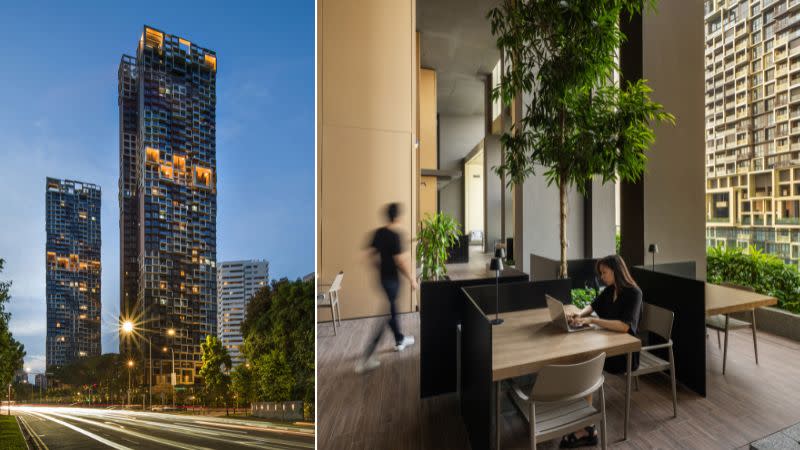
MVRDV’s facade design capitalises on the qualities of the prefabricated pre-finished volumetric construction (PPVC) system to create a “pixelated” facade, with each prefabricated unit creating one pixel.
The units are recessed or extended using metal frames, creating balconies in various configurations and adding depth to the building’s appearance.
This relief, combined with a colour scheme of gold and deep brown, forms an abstract pattern across the whole facade, inspired by the organic shapes of climbing plants, de Vries said.
“Over the decades, Singapore has shown itself to be a city of incredible innovation in architecture and urbanism”, de Vries said.
“The city is once again showing leadership in modular construction and is seeing the benefits of PPVC in reducing waste, carbon emissions, and disruption to city life.
“With Irwell Hill Residences, alongside ADDP Architects, we took aim at the next step in that story of innovation: a PPVC project that prioritises variety and liveability.”
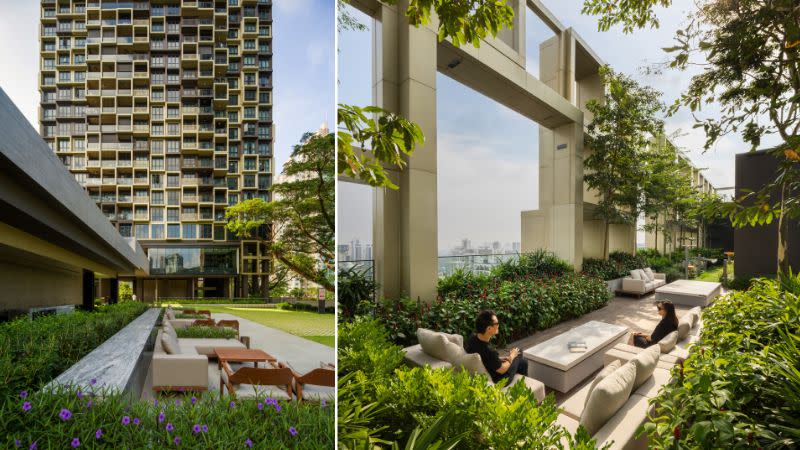
The buildings feature communal green spaces on Level 24 and the rooftop.
PPVC is a widely used methodology in Singapore, whereby entire rooms, including finished surfaces and facades, are built offsite in a factory and stacked together onsite.
It reduces the impact of labour shortages and reduces waste and carbon emissions.
Singapore’s Building and Construction Authority has established targeted regulations, frameworks, and accreditation schemes to advance the industry’s capability in construction methods that improve productivity.
MVRDV was brought on to add design values to break up the tower and give the illusion of variation within the repeating floorplan, de Vries said.